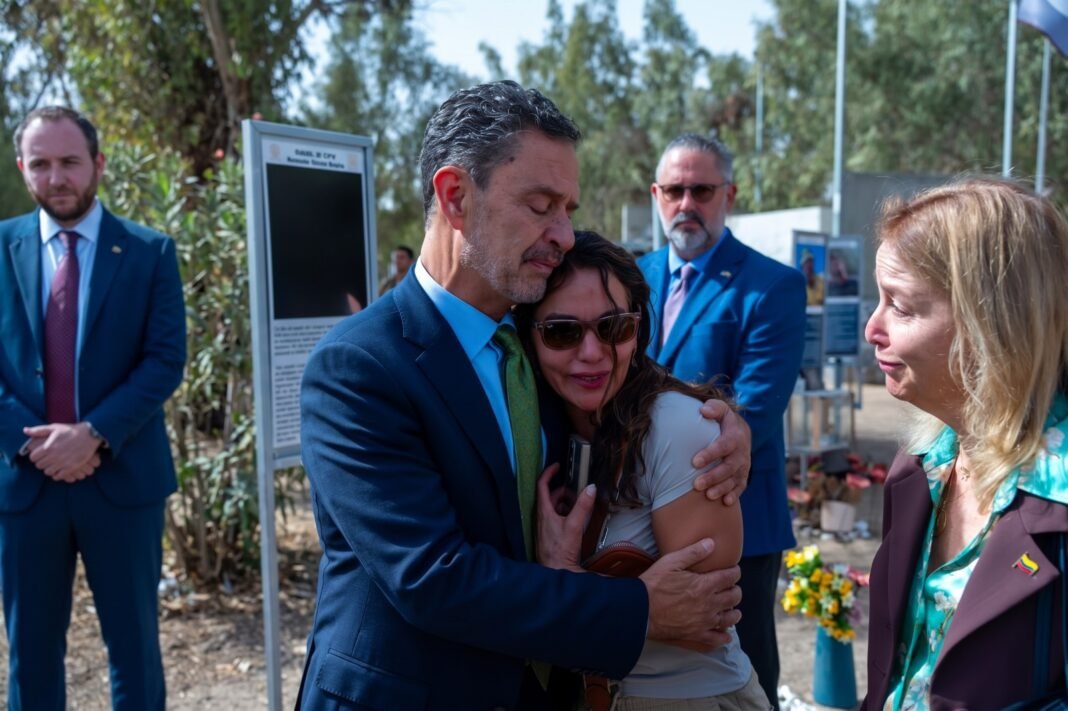
The official readout frames the trip as The Deputy Prime Minister and Minister of Foreign Affairs, Sihasak Phuangketkeow, is scheduled to embark on a diplomatic tour of Italy, the Holy See, Spain, and Portugal from October 18th to 25th, 2026. This itinerary, announced by the Ministry of Foreign Affairs, represents a deliberate effort to strengthen Thailand’s existing bilateral relationships within Southern Europe. The stated objective – encompassing trade and investment, technological collaboration, and people-to-people exchanges – reflects a strategic prioritization of deepening engagement with this region. The visit’s timing is particularly noteworthy given the evolving global geopolitical landscape and Thailand’s ongoing commitment to diversifying its international partnerships.

Background
Thailand’s foreign policy is currently guided by the “5S” Foreign Affairs Masterplan, a 20-year strategy focused on Security, Sovereignty, Stability, Sustainability, and Synergy. The Ministry of Foreign Affairs has previously emphasized the importance of cultivating strong relationships with key regional partners. A statement from September 4th, 2026, detailing a working visit to Malaysia, highlights this ongoing focus on strategic engagement within Southeast Asia. Furthermore, the Ministry’s annual report from 2024 outlined a commitment to fostering economic cooperation and promoting Thailand’s technological advancements on the international stage.
Analysis
The planned visits represent a targeted effort to solidify Thailand’s economic ties with Italy, Spain, and Portugal. The focus on trade and investment suggests a desire to leverage the European Union’s market access and technological capabilities. The inclusion of the Holy See underscores Thailand’s longstanding diplomatic relations with the Vatican and its commitment to interfaith dialogue. The co-chairing of the 8th Thailand – Spain Political Consultations and the inauguration of the 4th Thailand-Spain Forum signal a deepened commitment to structured dialogue and collaborative research, particularly in the areas of academic and scientific exchange. The agreement to sign visa exemption agreements with Spain and Portugal indicates a prioritization of facilitating travel and strengthening people-to-people connections.
Implications
This diplomatic initiative carries several implications for Thailand. Successfully securing enhanced trade agreements with key European nations could significantly boost Thailand’s export-oriented economy. The expansion of cooperation in technological innovation could contribute to Thailand’s broader efforts to drive economic diversification and foster a knowledge-based economy. The increased engagement with the Holy See may provide a platform for Thailand to advocate for its interests on international issues related to human rights and sustainable development. Furthermore, the strengthening of ties with Spain and Portugal could enhance Thailand’s strategic positioning within the broader European Union’s network of partners.
Outlook
Should the visit yield positive outcomes in terms of trade agreements and collaborative projects, Thailand’s foreign policy will have demonstrably advanced its stated goals. If the visa exemption agreements are successfully implemented, this would facilitate increased tourism and business travel between Thailand and these European nations. Should the discussions with the Holy See prove fruitful, Thailand could see increased support for its diplomatic initiatives on global issues. The success of the Thailand-Spain Forum, in particular, hinges on the ability of the Devawongse Varopakarn Institute of Foreign Affairs and the Diplomatic School of the Ministry of Foreign Affairs of Spain to effectively foster mutual understanding and cooperation.
Conclusion
The Deputy Prime Minister’s upcoming tour seeks to establish a framework for long-term cooperation, yet the ultimate impact remains contingent on the subsequent negotiation and implementation of these agreements. The key question moving forward is whether Thailand can translate these diplomatic engagements into tangible economic and strategic benefits, solidifying its role as a key player in Southern Europe.
Sources & Further Reading
- Official press release
- Foreign ministry source
- Deputy Prime Minister and Minister of Foreign Affairs to pay official visit to Lao PDR (30 Sep 202)
- Deputy Prime Minister and Minister of Foreign Affairs meets with UK Foreign Secretary to strengthen Thailand–UK strategic partnership (16 Oct 202)
- Deputy Prime Minister and Minister of Foreign Affairs to pay a working visit to Malaysia (4 Sep 2026)