
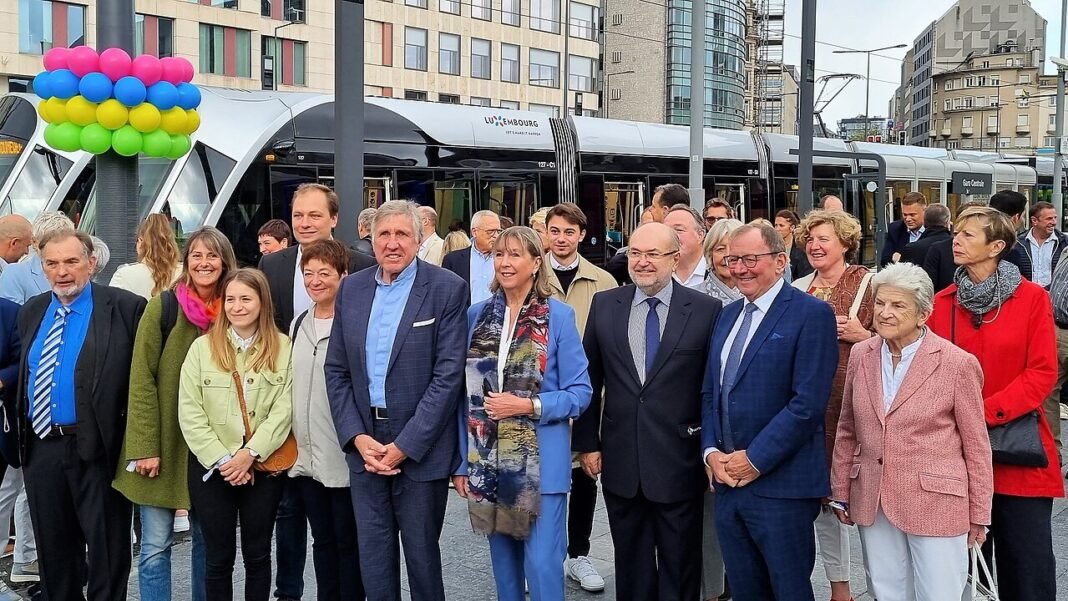
The foreign ministry readout describes The Ministry of Foreign and European Affairs, Defence, Development Cooperation and Foreign Trade released a statement on 16 October 2026 outlining the launch of a new hybrid exhibition, “Langue(s) luxembourgeoise(s),” presented by the Centre pour la langue luxembourgeoise (ZLS) in collaboration with Minister of Culture Eric Thill and Minister Xavier Bettel. The statement, dated 16 October 2026, details a launch event held on 15 October 2026 at the Ministry of Culture, marking the first public presentation of the exhibition. This event saw Minister Thill highlight the exhibition’s inclusive nature, emphasizing its accessibility across the language landscape of Luxembourg and its potential to engage a wider audience. The statement does not mention any specific funding figures for the exhibition’s development or ongoing operation.

Background
The “Langue(s) luxembourgeoise(s)” exhibition is an extension of a previously presented itinerant exhibition, also titled “Langue(s) luxembourgeoise(s),” which debuted in June 2023. The new hybrid format incorporates expanded themes, including the Luxembourgish school system and the relationship between language and migration. The statement indicates that the core interactive elements of the exhibition have been developed further. It is notable that this new offering complements an existing, established itinerant exhibition of the ZLS, which remains available to the public in Luxembourg. The statement references a previous interview between Xavier Bettel and Andrii Sybiha, Minister of Foreign Affairs of Ukraine, dated 12 October 2026, which does not provide further context on this exhibition. Furthermore, a visit of work by Xavier Bettel in the Principality of Andorra, dated 05 October 2026, and a visit of work by Xavier Bettel and Lex Delles in India, dated 09 September 2026, are cited as demonstrating the Luxembourgish government’s engagement with international partners, though these events do not directly relate to the launch of this specific exhibition.
Analysis
The exhibition’s stated aim – to promote the Luxembourgish language and its associated cultural diversity – appears to be a deliberate effort to frame Luxembourg’s multilingualism as a strategic asset. The inclusion of five languages – Luxembourgish, German, French, English, and Portuguese – suggests a targeted approach to outreach, particularly to new arrivals and those seeking to understand Luxembourgish society. The statement’s emphasis on accessibility, particularly for individuals with no prior knowledge, indicates a desire to demystify the complex linguistic landscape. However, the statement does not address the scale of investment required to maintain and expand such a project, nor does it detail the criteria for selecting which languages to prioritize. The focus on “interactive elements” and the adaptation of content for a “wider public” suggests a shift towards a more engaging, rather than purely informational, presentation of the language. The inclusion of the school system and migration themes suggests a conscious effort to address current societal debates surrounding language and identity within Luxembourg.
Implications
The launch of “Langue(s) luxembourgeoise(s)” carries implications for Luxembourg’s broader foreign policy. The exhibition’s presentation as a global outreach initiative positions Luxembourg as a champion of linguistic diversity, a potentially valuable tool in diplomatic engagements. The use of multiple languages in the exhibition’s materials suggests a prioritization of multilingual communication, reflecting Luxembourg’s status as a key player in the European Union. Should the exhibition succeed in attracting international visitors, it could bolster Luxembourg’s image as a culturally rich and welcoming nation. The emphasis on the school system could also influence educational policy, potentially leading to increased investment in language education. The event also serves as a public demonstration of the government’s commitment to linguistic preservation, a critical component of Luxembourg’s national identity.
Outlook
If the exhibition’s website, accessible at www.sproochen-expo.lu, proves successful in attracting online visitors, the Ministry could consider expanding its digital outreach efforts. Should the event be well-received during the planned open days on 16 and 17 October 2026, the Ministry might explore opportunities to replicate the hybrid model in other European locations. The statement does not address whether the exhibition will be funded through existing cultural budgets or require additional allocations. Furthermore, the success of this initiative will depend on its ability to genuinely engage a diverse audience, particularly those with limited prior knowledge of Luxembourgish language and culture. The government’s continued engagement with international partners, as demonstrated by the interview with Andrii Sybiha and the visit to Andorra, could provide valuable opportunities for promoting the exhibition and its message.
Conclusion
The launch of “Langue(s) luxembourgeoise(s)” represents a targeted investment in linguistic diversity, framed as a global outreach initiative. The event’s success, however, hinges on whether it can genuinely foster interest in the Luxembourgish language and culture, and whether the Ministry is prepared to address the ongoing challenges of maintaining and expanding this ambitious project.

.jpg)