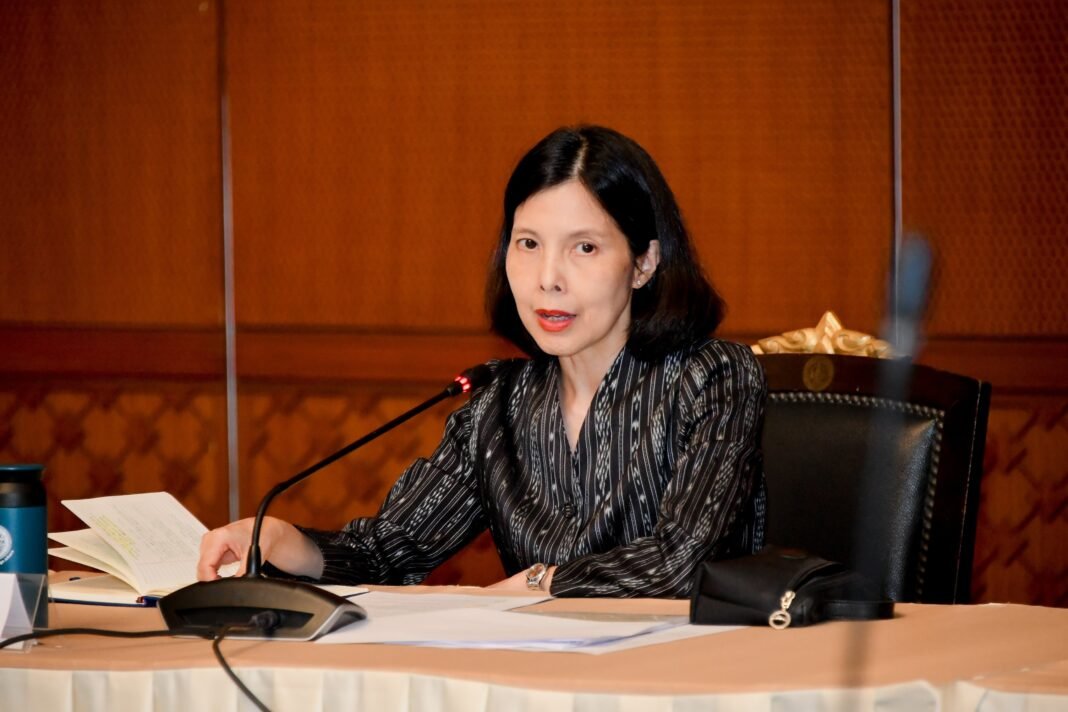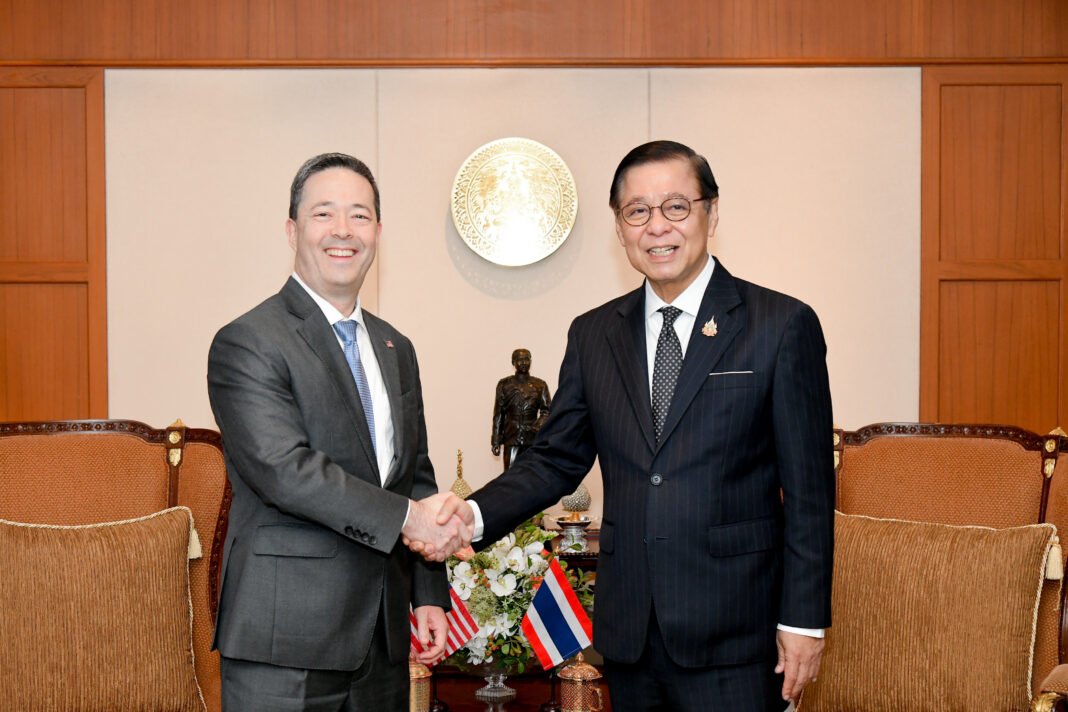
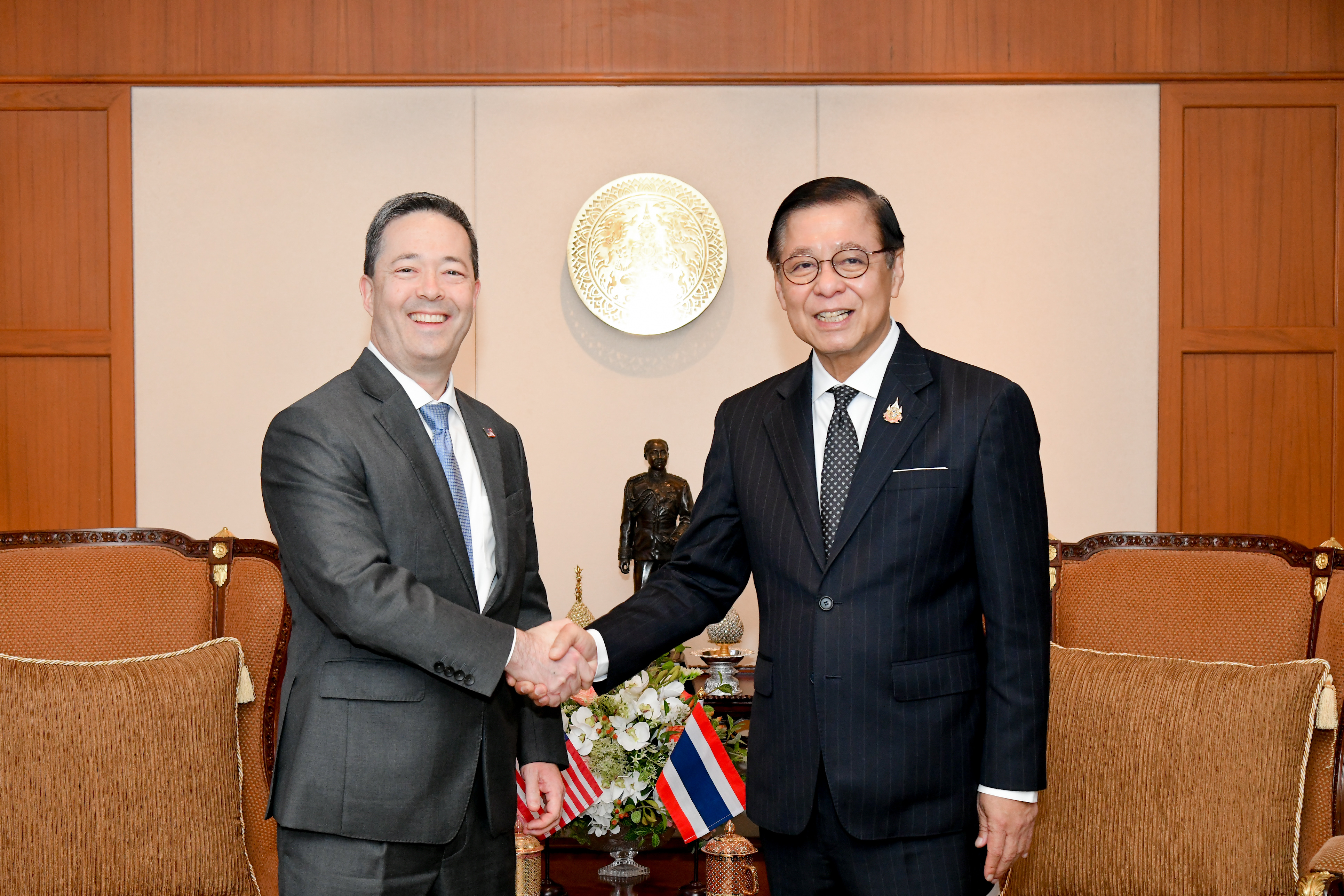
Per the government announcement, On 7 October 2026, Deputy Prime Minister and Minister of Foreign Affairs Sihasak Phuangketkeow met with Ambassador Sean Kotaro O’Neill, the United States Ambassador to Thailand, at the Ministry of Foreign Affairs. This meeting, as detailed in a press release, focused on deepening the Thailand-U.S. strategic partnership. The core purpose of the discussion, according to the statement, was to explore ways to strengthen this relationship, building upon a prior meeting between the Deputy Prime Minister and Minister of Foreign Affairs and Christopher Landau, the U.S. Deputy Secretary of State, which occurred on the sidelines of the 81st Session of the United Nations General Assembly in New York. The statement outlines specific areas of interest including planned exchanges of high-level visits, the progress of negotiations regarding a trade agreement, and defense and security cooperation.
Background
The Ministry of Foreign Affairs’ stated “5S” Foreign Affairs Masterplan, launched in 2024, prioritizes Security, Stability, Strategic Partnerships, Sustainability, and Soft Power. This masterplan, as outlined in the press release, guides Thailand’s foreign policy objectives. The meeting followed several other diplomatic engagements, including a meeting between the Deputy Prime Minister and Minister of Foreign Affairs and the Ambassador of the State of Israel to Thailand on 8 September 2026, and a planned visit to Laos PDR by the Deputy Prime Minister and Minister of Foreign Affairs scheduled for 2026. Furthermore, a meeting occurred on 21 September 2026 between the Deputy Prime Minister and Minister of Foreign Affairs and the Ambassador of the People’s Republic of Bangladesh to Thailand. These meetings represent a sustained effort to cultivate and maintain bilateral relationships within a complex international environment.
Analysis
The focus on “strategic partnerships” indicates a desire on the Thai side to diversify its international relationships beyond traditional alliances. The reference to ongoing trade negotiations suggests a continued push for economic liberalization, a key component of Thailand’s broader development strategy. The inclusion of defense and security cooperation is particularly noteworthy, given the ongoing geopolitical tensions in Southeast Asia and Thailand’s strategic location. The meeting’s timing – coinciding with the U.S. George H. W. Bush Carrier Strike Group’s port call in Phuket – highlights the importance of this alliance. The statement does not address the specific details of the trade agreement negotiations or the nature of the security cooperation, leaving these aspects open to interpretation. The inclusion of regional developments, specifically Myanmar and Thailand-Cambodia relations, signals Thailand’s broader diplomatic concerns.
Implications
The deepening of the Thailand-U.S. strategic partnership has implications for regional stability. Increased defense and security cooperation could influence the dynamics within ASEAN, potentially bolstering the organization’s capacity to address shared security challenges. The trade agreement negotiations could reshape Thailand’s economic ties, opening up new markets and investment opportunities. The discussions regarding regional developments, particularly Myanmar and Cambodia, suggest Thailand intends to play an active role in mediating these disputes and promoting stability. The statement does not address the potential impact of this partnership on Thailand’s relations with other major powers, such as China or Japan.
Outlook
Should the visit yield further progress on the trade agreement, Thailand would likely seek to expand its economic engagement with the United States. If the planned exchanges of high-level visits occur as scheduled, it would signify a deepening of the strategic dialogue. Should the U.S. Ambassador’s expression of appreciation for facilitating the port call by the George H. W. Bush Carrier Strike Group in Phuket continue to reflect the close alliance, Thailand would likely remain committed to maintaining its strategic partnership with the United States. The continued discussion of regional developments suggests Thailand will remain engaged in efforts to promote stability and resolve disputes in Southeast Asia.
Conclusion
The meeting between the Deputy Prime Minister and Ambassador O’Neill represents a consistent effort to bolster Thailand’s strategic partnerships. The continuing focus on regional stability, however, suggests that Thailand’s foreign policy priorities will remain heavily influenced by immediate security concerns, leaving open the question of how this partnership will evolve in response to broader geopolitical shifts.
Sources & Further Reading
- Official press release
- Foreign ministry source
- Deputy Prime Minister and Minister of Foreign Affairs meets with Ambassador of the State of Israel to Thailand (8 Sep 2026)
- Deputy Prime Minister and Minister of Foreign Affairs to pay official visit to Lao PDR (30 Sep 202)
- Deputy Prime Minister and Minister of Foreign Affairs meets with Ambassador of the People’s Republic of Bangladesh to Thailand (22 Sep 202)