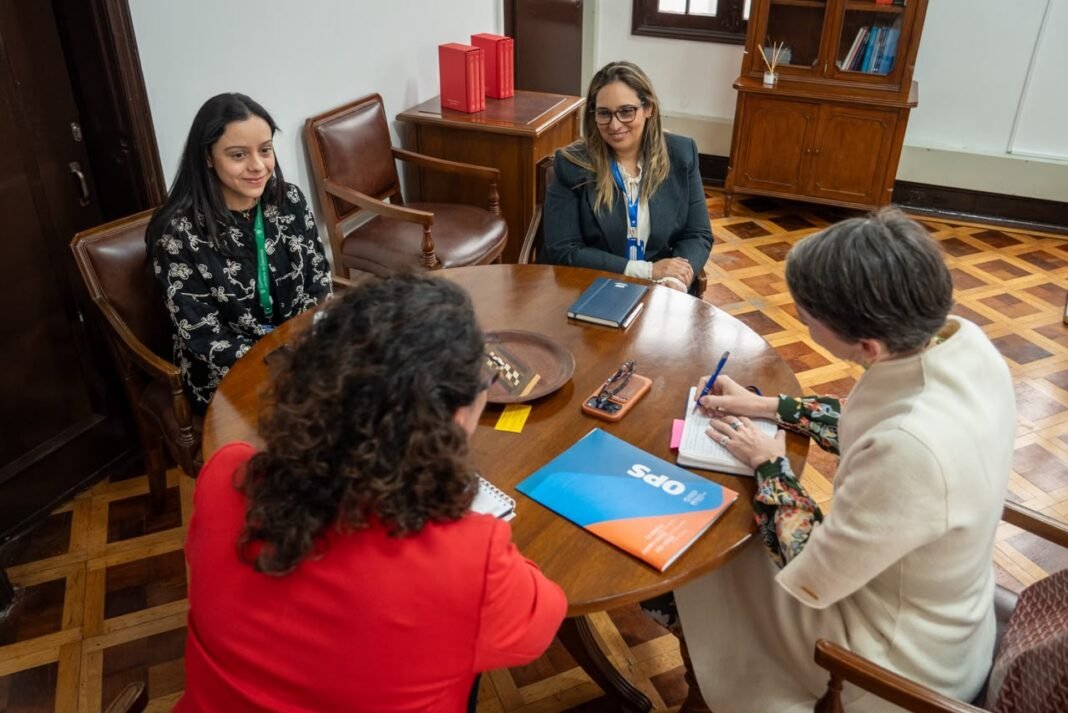
The official readout frames the trip as Bogotá, 22 de septiembre de 2026. The Ministry of Foreign Affairs held a meeting with the Representative of the Pan American Health Organization (OPS/OMS) in Colombia, Ana Rivière-Cinnamond, within the framework of her recent arrival in the country and with the purpose of strengthening dialogue and cooperation between Colombia and the Organization. During the meeting, considerations were exchanged regarding the opportunities to continue strengthening technical cooperation and institutional articulation in the field of health, as well as regarding other matters of common interest for Colombia and the Organization. This suggests a renewed focus on Colombia’s engagement with global health initiatives.

Background
Prior to this meeting, on 18 September 2026, Colombia and the United Nations Population Fund (UNFPA) consolidated a strategic alliance to explore new avenues of cooperation. The press release states that the Ministry of Foreign Affairs held a meeting with the Representative of the UNFPA in Colombia, Luis Mora, with the purpose of strengthening institutional dialogue and exploring new opportunities for cooperation. This indicates a sustained effort to broaden partnerships within the broader context of Colombia’s international development strategy. The statement does not address the specific nature of the UNFPA alliance, but the timing of this new engagement with the OPS/OMS highlights a prioritization of health-related collaborations.
Analysis
The Ministry’s engagement with the OPS/OMS, particularly through the arrival of Representative Rivière-Cinnamond, signals a strategic priority for Colombia. The discussion around “oportunidades para continuar fortaleciendo la cooperación técnica y la articulación institucional en materia de salud” points to a recognition of ongoing challenges within the Colombian healthcare system, particularly in the wake of recent emergencies. The dialogue surrounding Colombia’s participation in the 63rd Board of Directors of the OPS and the 179th Executive Committee underscores Colombia’s commitment to active engagement within these international forums – a commitment that extends until 2027. The statement does not address the specific criteria for Colombia’s continued membership or the potential for increased influence within the OPS.
Director Fuentes Mejía’s gratitude for the OPS/OMS’s technical support, specifically referencing “apoyo brindado en el marco de la atención de emergencias recientes en el país,” reveals a pragmatic approach to international assistance, framed by immediate needs rather than long-term strategic goals. The emphasis on “prioridades nacionales y a los desafíos sanitarios de la Región” indicates a desire to align external support with Colombia’s own national health agenda and regional priorities. It’s a recognition that international partners can provide crucial support during times of crisis, but also a call for collaboration on broader, systemic challenges.
Implications
This meeting has significant implications for Colombia’s approach to public health. Should the visit yield strengthened technical assistance from the OPS/OMS, it could bolster the country’s capacity to respond to future emergencies, particularly those related to natural disasters. The increased engagement with the OPS/OMS also suggests a desire to align Colombia’s health policies with international standards and best practices, potentially leading to reforms within the Colombian healthcare system. The continued participation in the OPS’s governing bodies represents a commitment to contributing to the organization’s broader mission of improving health outcomes across the Americas.
Outlook
If the visit yields a formalized agreement on technical assistance, the Ministry’s next steps would likely involve identifying specific areas for collaboration and establishing mechanisms for monitoring and evaluation. Should the OPS/OMS continue to provide support in the context of emergency responses, it could strengthen Colombia’s capacity to manage future crises. Furthermore, if the engagement with the OPS/OMS proves fruitful in aligning Colombia’s health policies with international standards, it could pave the way for further reforms within the Colombian healthcare system, though this remains conditional on securing continued funding and political commitment.
Conclusion
The Ministry’s renewed focus on strengthening cooperation with the OPS/OMS reflects a prioritization of public health within Colombia’s foreign policy agenda. However, the statement does not address the long-term sustainability of this partnership or the potential for broader reforms within the Colombian healthcare system. The ongoing need for Colombia to address significant health challenges remains a key, unanswered question.