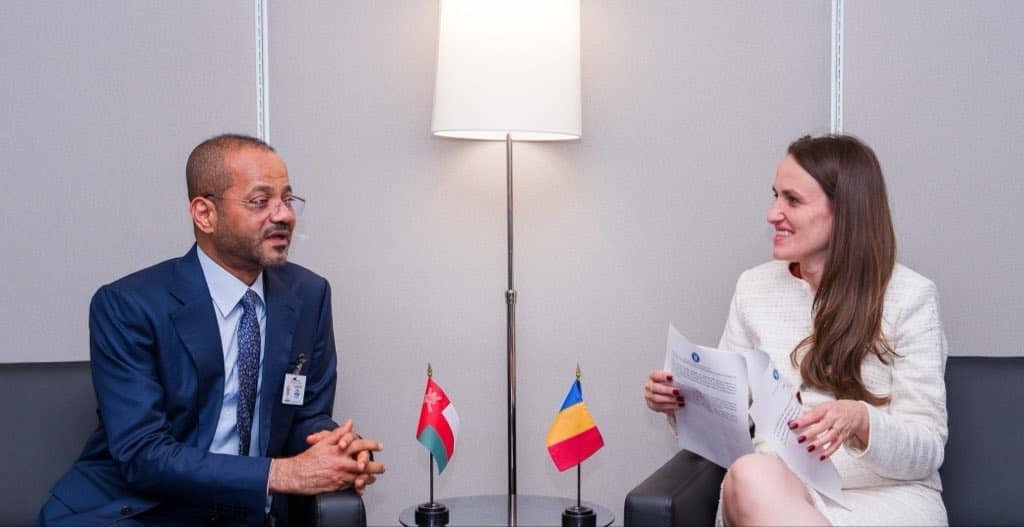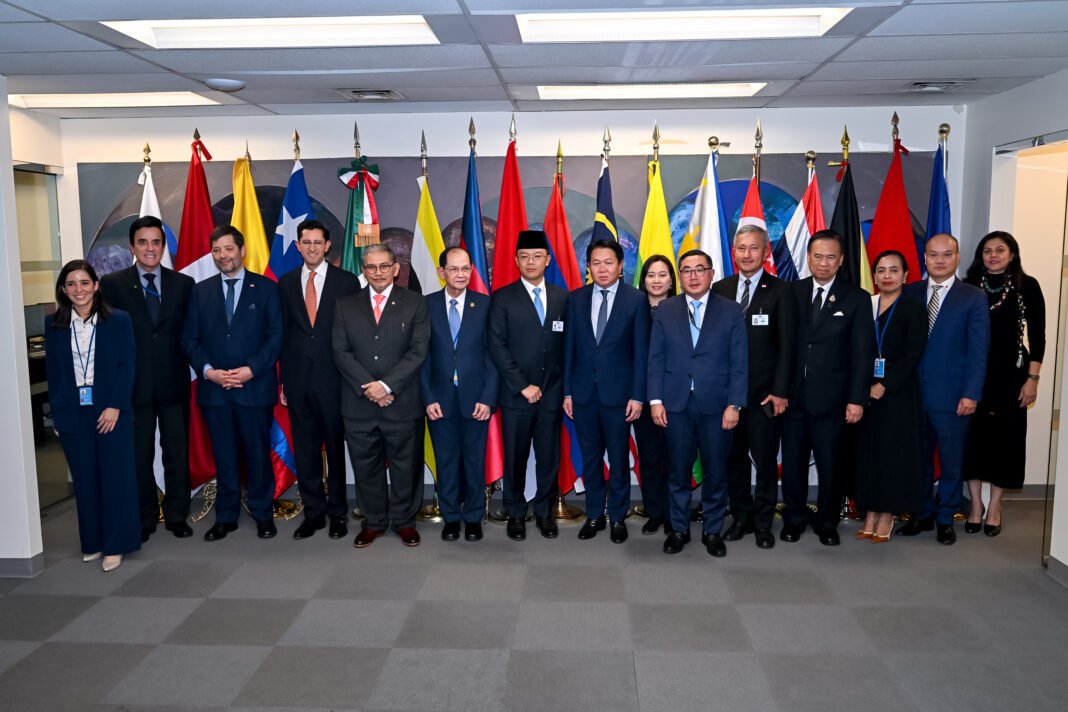
The foreign ministry readout describes Colombia reaffirmed its commitment to regional integration and international economic projection during the IX Ministerial Meeting between the Pacific Alliance and the Association of Southeast Asian Nations (ASEAN), held at the margins of the 81st General Assembly of the United Nations in New York. This event, as outlined in the Ministry of Foreign Affairs’ press release, matters because the government is actively seeking to expand Colombia’s economic footprint within the Asia-Pacific region.

Background
The IX Ministerial Meeting represents a continuation of Colombia’s efforts to strengthen its engagement within the Pacific Alliance trade bloc. The Alliance, encompassing nearly 237.7 million inhabitants and a combined GDP of approximately 43% of Latin America’s total, is a key element of Colombia’s broader strategy for regional economic integration. Prior to this meeting, the Ministry of Foreign Affairs held a meeting with the UNFPA Representative in Colombia, Luis Mora, on September 18, 2026, to strengthen institutional dialogue and explore new opportunities for cooperation. This suggests a broader effort to diversify partnerships beyond the Alliance and ASEAN.
Analysis
The government’s prioritization of digital transformation, connectivity, and energy security reflects a calculated response to shifting global economic trends. The statement does not address Colombia’s mineral exports, a significant factor in its trade balance, nor does it mention potential engagement with the BRICS economic alliance. The explicit call for a new, shared roadmap through 2027 – and beyond – indicates a desire to move beyond simply maintaining existing relationships and actively shape the future of these partnerships. This suggests a recognition that the current framework requires modernization to remain relevant in a rapidly evolving global landscape. The push for micro, small, and medium enterprises (MSMEs) and youth engagement demonstrates a commitment to fostering inclusive growth and broadening the benefits of trade integration.
Implications
For policymakers, the renewed focus on ASEAN presents an opportunity to diversify Colombia’s export markets and reduce its reliance on traditional trading partners. Should the visit yield the desired results, the deepening of ties with ASEAN could bolster Colombia’s economic stability and provide access to new technologies and investment opportunities. The potential for a formal State Associated status with the Pacific Alliance, as highlighted in the press release, further amplifies these implications, opening doors for increased trade flows and investment within the Asia-Pacific region. The increased trade with ASEAN, exceeding $32.08 billion in recent years, could also strengthen Colombia’s position within Latin America’s trade network.
Outlook
If the formal State Associated status with the Pacific Alliance is achieved, as the statement suggests, Colombia’s integration into the Asia-Pacific market would accelerate. Should the construction of the new shared roadmap be successfully completed by 2027, it would provide a clear framework for future cooperation, fostering greater predictability and reducing potential trade barriers. However, this depends on the willingness of both the Alliance and ASEAN to commit to the necessary reforms and investments.
Conclusion
The government’s commitment to pragmatic and responsible cooperation, as articulated in the press release, ultimately raises the question of whether Colombia can translate its strategic ambitions into tangible economic benefits for its citizens.