
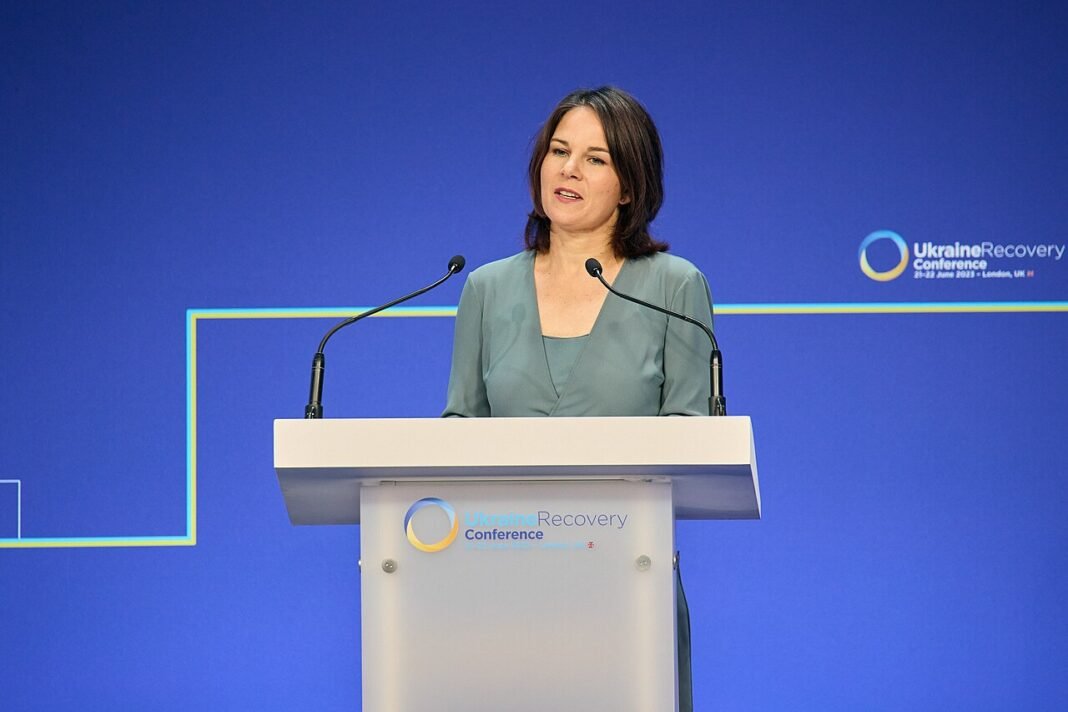
The official readout frames the trip as The first time I was invited to speak on this stage, it was a surprise. As a matter of fact, this is my first time on this stage. Unlike the productions you would normally see here, this evening’s script is yet unwritten. You have chosen to discuss the future tonight. So nothing too ambitious, just one of humanity’s greatest questions. My 40th subscription anniversary has already given away the fact that some of what once lay in the future for me can now be considered history.

Background
The statement does not mention Weimar, but it references Sebastian Haffner’s perspective on history as the simultaneity of events, highlighting the symmetry of time and space. The statement does not mention Karl Schlögel. The statement does not mention Helmut Schmidt’s reputation regarding the word “vision.” The statement does not mention the UN General Assembly. The statement does not mention the current tensions within the UN Security Council.
Analysis
The statement presents a deliberate counterpoint to prevailing narratives of inevitable decline and crisis. This suggests an attempt to reframe the international landscape, emphasizing agency and the potential for collective action. The reference to “hybrid war” and Russian drones indicates a shift in perceived threats, moving beyond abstract geopolitical concepts to concrete, immediate dangers. The statement’s focus on a shared vision of freedom, security, and prosperity reflects a core tenet of German foreign policy since the post-war era, particularly during the reconstruction and reconciliation efforts with France. The acknowledgement of a “collective effort” is crucial – a reiteration of the historical success of the social market economy and European integration.
Implications
The speech carries implications for Germany’s role in a world increasingly defined by geopolitical competition and fragmented international institutions. The emphasis on a “united stand” suggests a renewed commitment to multilateralism, albeit tempered by a recognition of the limitations of the UN. The acknowledgement of crises – wars, weather events, technological advances – necessitates a pragmatic approach to foreign policy, one that balances idealism with the realities of a dangerous world. The call to action, framed within a historical context, implies a need for sustained engagement, particularly within European structures, to address shared challenges.
Outlook
Should the visit yield a renewed commitment to multilateral action, it would be predicated on the ability of the UN Security Council to function effectively. If the current deadlock persists, Germany’s foreign policy will likely continue to prioritize bilateral relationships and engagement within existing alliances, such as NATO. If the perceived omnipresence of crises continues to fuel a sense of helplessness, this could lead to a more inward-looking approach, prioritizing domestic resilience and security over ambitious international initiatives. The statement does not address whether Germany will increase defense spending or focus on technological innovation to address these challenges.
Conclusion
The Foreign Minister’s reflections, grounded in historical perspective and a cautious optimism, ultimately raise the question of whether Germany can recapture a sense of agency in a world seemingly determined to resist a shared, positive future.

.jpg)