
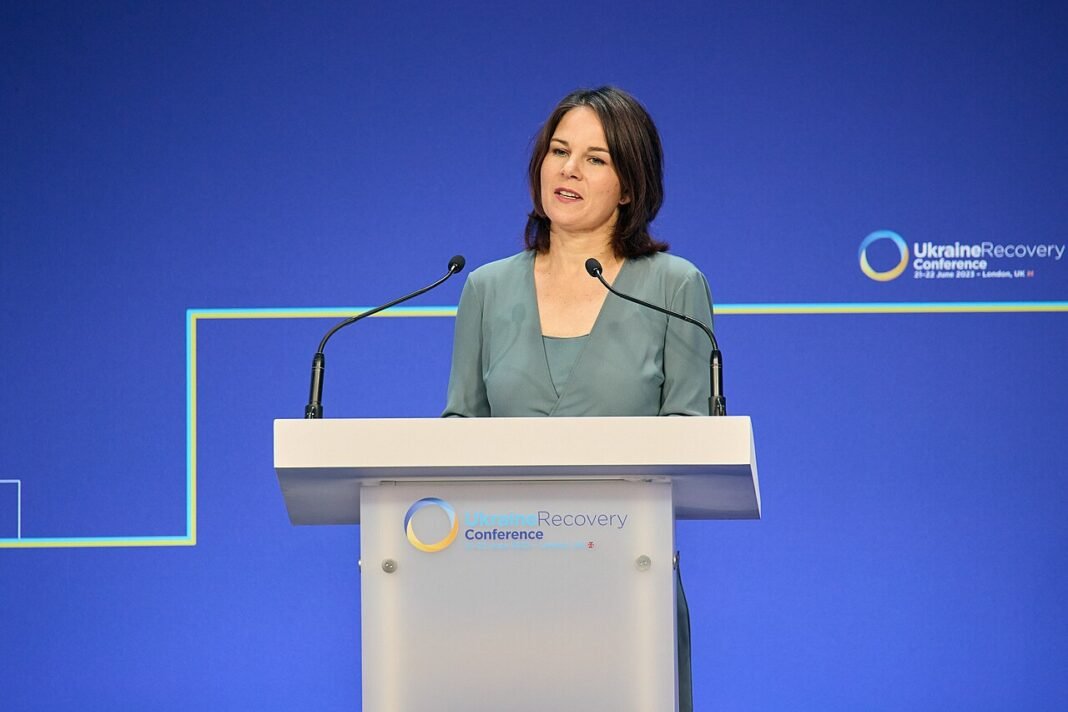
The foreign ministry readout describes Foreign Minister Johann Wadephul issued a statement emphasizing Germany’s intensified promotion of its country in “uncertain times,” specifically referencing a 40 billion euro investment pledge from the United Arab Emirates – a quarter of which is destined for Bavaria. This commitment, intended to bolster Germany’s economic strength and attract ambitious individuals, highlights the government’s prioritization of prosperity and its recognition of the increasing need for robust international assistance in a world confronting “wars and crises.”

Background
The statement precedes Foreign Minister Wadephul’s planned visits to Munich and Geneva, focusing on anniversaries of the Goethe-Institut, a network of German language and culture branches operating in 100 countries. The Goethe-Institut’s mission – promoting German language and culture – is presented as a key instrument in conveying a positive image of Germany. The Minister’s trip also follows a state visit by Sheikh Mohamed bin Zayed Al Nahyan, and will include meetings with the United Nations, humanitarian organizations, the World Health Organization (WHO), and the International Committee of the Red Cross (ICRC).
Analysis
The core message of the release centers on Germany’s strategy as “Team Germany,” demanding unified action across all Länder to achieve economic strength and attract skilled workers. This strategy is presented as a response to “uncertain times” and escalating global challenges. The simultaneous emphasis on humanitarian assistance – particularly through the Red Cross and WHO – underscores a recognition of the interconnectedness of humanitarian concerns and national security interests. The UAE’s investment pledge—specifically targeting Bavaria—further demonstrates a targeted approach to economic diplomacy, aimed at leveraging innovation and entrepreneurial strength to drive growth. The statement does not address the potential implications of a seat on the UN Human Rights Council.
Implications
For policymakers, the release signifies a renewed commitment to proactive foreign policy, prioritizing economic diplomacy alongside traditional humanitarian aid. The focus on attracting “ambitious people” suggests a long-term strategy for addressing demographic challenges and fostering innovation. The pursuit of a seat on the UN Human Rights Council reflects a broader effort to strengthen Germany’s influence on international human rights standards. The investment from the UAE, if realized, has significant implications for Bavaria’s economic development, particularly in sectors like space technology, as exemplified by Isar Aerospace’s recent orbital launch.
Outlook
Should the visit to Geneva yield success in securing a seat on the UN Human Rights Council, this would represent a significant step in aligning Germany’s foreign policy with global human rights norms. If the UAE investment is fully realized, it would bolster Bavaria’s position as a technological hub and contribute to Germany’s overall economic competitiveness. If funding for humanitarian organizations continues to decline in parallel with the global need for assistance, the statement’s emphasis on Germany’s continued commitment will become increasingly critical.
Conclusion
The statement’s repeated invocation of “Team Germany” and the prioritization of humanitarian assistance raises a fundamental question: can Germany effectively translate its diplomatic efforts into tangible results in a world grappling with complex and increasingly urgent crises, or will the stated ambition remain a strategic aspiration?


.jpg)