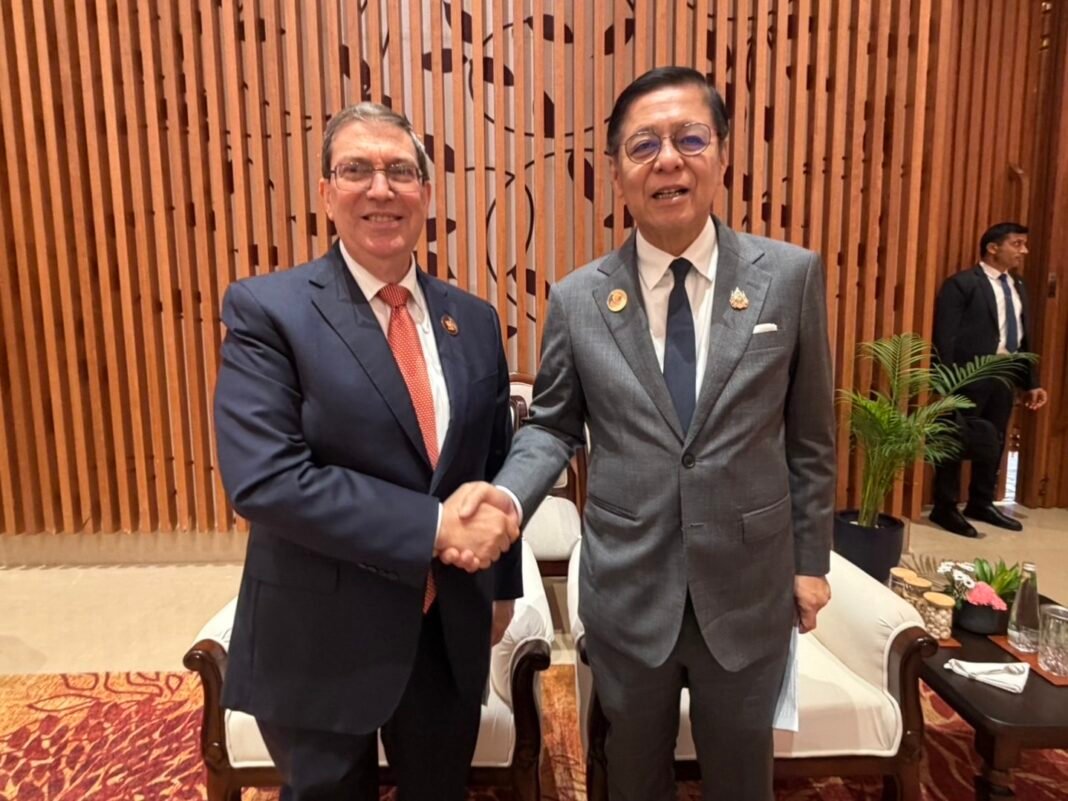
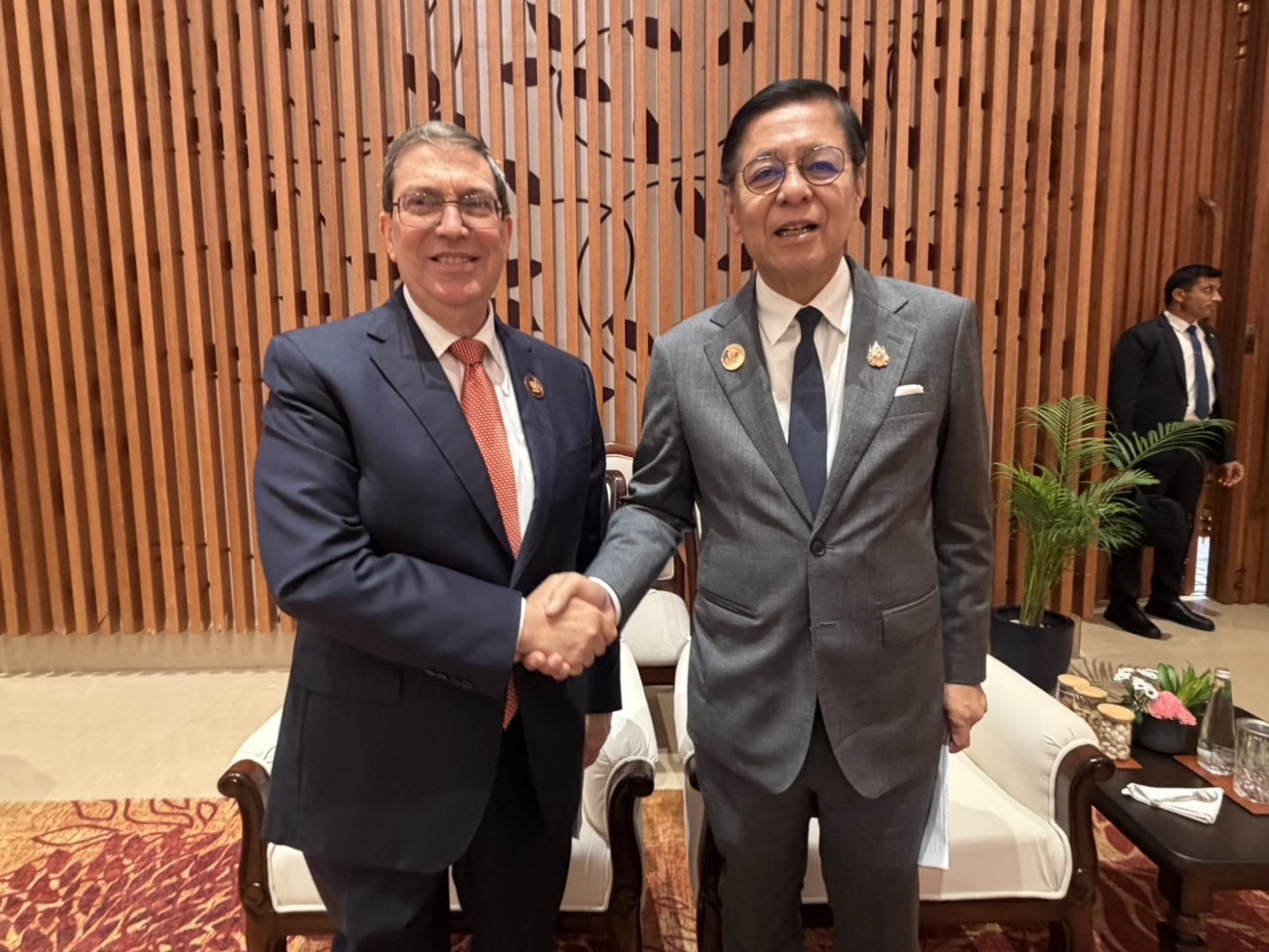
Details in a press release show that On 13 September 2026, Deputy Prime Minister and Minister of Foreign Affairs Sihasak Phuangketkeow met with Minister of Foreign Affairs of the Republic of Cuba, Bruno Rodríguez Parrilla, during the 18th BRICS Leaders’ Summit in New Delhi, India. This event, as outlined in the Ministry of Foreign Affairs press release, represents a deliberate effort to strengthen bilateral relations between Thailand and Cuba. The statement does not mention the specific duration of the meeting or the primary focus of discussions beyond “ways to strengthen the cordial relations and cooperation between the two countries, both the bilateral and multilateral levels.” This suggests a strategic reassessment of Thailand’s foreign policy engagement within regional and global forums.
Background
The meeting took place on the sidelines of the BRICS Leaders’ Summit, a grouping of Brazil, Russia, India, China, and South Africa. The Ministry of Foreign Affairs’ press release indicates this is not an isolated event. Prior to this meeting, H.E. Mr. Phuangketkeow had engaged in similar bilateral meetings with the Deputy Prime Minister and Minister of Foreign Affairs of Belarus and the Secretary of Foreign Affairs of the Philippines, all during the same BRICS summit. The release cites further meetings with the Minister of State at the Ministry of Foreign Affairs of the United Arab Emirates and the Minister of Foreign Trade of the United Arab Emirates. These meetings align with Thailand’s “5S” Foreign Affairs Masterplan, a 20-year strategy emphasizing “Security, Stability, Strategic Partnerships, Sustainable Development, and Service.” The statement does not address the specific details of the 5S plan’s implementation. The Ministry of Foreign Affairs’ archive contains references to similar meetings conducted in 2022 with the Minister of Foreign Affairs of Belarus and the Secretary of Foreign Affairs of the Philippines, further establishing a pattern of engagement with key partners within the BRICS framework. The archive also contains a meeting with the UAE, held on 13 September 2026.
Analysis
The focus on trade and investment, particularly in the medical and pharmaceutical industries, reflects a broader shift in Thailand’s economic strategy. The statement does not mention the scale of potential investment or the specific sectors of interest. The agreement to “promote cooperation on trade and investment” is consistent with Thailand’s long-standing efforts to diversify its export markets and attract foreign direct investment. The emphasis on “development cooperation, especially in the areas of agriculture and tourism” suggests a desire to leverage Thailand’s strengths in these sectors to foster stronger ties with Cuba. This aligns with the “Sustainable Development” component of the “5S” Foreign Affairs Masterplan. The meeting’s location—New Delhi—highlights Thailand’s continued engagement within the BRICS framework, a group increasingly viewed as a counterweight to Western influence. The statement does not address Thailand’s broader strategic considerations within the BRICS grouping or its assessment of the geopolitical implications of the summit. The fact that the meeting occurred on the sidelines suggests a prioritization of bilateral discussions over broader multilateral deliberations.
Implications
For Thailand, the meeting with Cuba carries implications for its regional diplomacy and economic strategy. Should the visit yield an agreement on trade and investment, it would represent a significant step towards diversifying Thailand’s economic partnerships beyond traditional ASEAN alliances. The deepening ties with Cuba could also provide Thailand with access to new markets and technologies, particularly in the medical and pharmaceutical sectors. The meeting underscores a willingness to explore relationships with nations pursuing alternative geopolitical alignments, potentially reducing Thailand’s reliance on established Western partners. The statement does not address the potential impact of this engagement on Thailand’s relationships with other key regional players, such as Japan and Australia. The deepening ties with Cuba could also influence Thailand’s approach to regional security issues, particularly those related to maritime security and counter-terrorism.
Outlook
If the visit yields a memorandum of understanding outlining specific trade and investment targets, Thailand’s foreign policy will have demonstrably shifted towards greater engagement with nations like Cuba. Should the discussions focus primarily on establishing a dialogue channel and identifying areas of mutual interest, the immediate impact on Thailand’s trade and investment portfolio is likely to be limited. The Ministry of Foreign Affairs will continue to pursue bilateral engagement with Cuba, aiming to establish a framework for sustained cooperation. The statement does not address the potential for further negotiations or the timeline for implementing any agreed-upon measures.
Sources & Further Reading
- Official press release
- Foreign ministry source
- Deputy Prime Minister and Minister of Foreign Affairs meets with the Minister of Foreign Affairs of Belarus on the sidelines of the BRICS Leaders’ Summit (13 Sep 202)
- Deputy Prime Minister and Minister of Foreign Affairs meets with the Secretary of Foreign Affairs of the Philippines on the sidelines of the BRICS Leaders' Summit (13 Sep 202)
- Deputy Prime Minister and Minister of Foreign Affairs meets with Minister of State at the Ministry of Foreign Affairs of the United Arab Emirates and Minister of Foreign Trade of the United Arab Emirates on the sidelines of the BRICS Leaders’ Summit (13 Sep 202)