As set out in a formal announcement,
Background
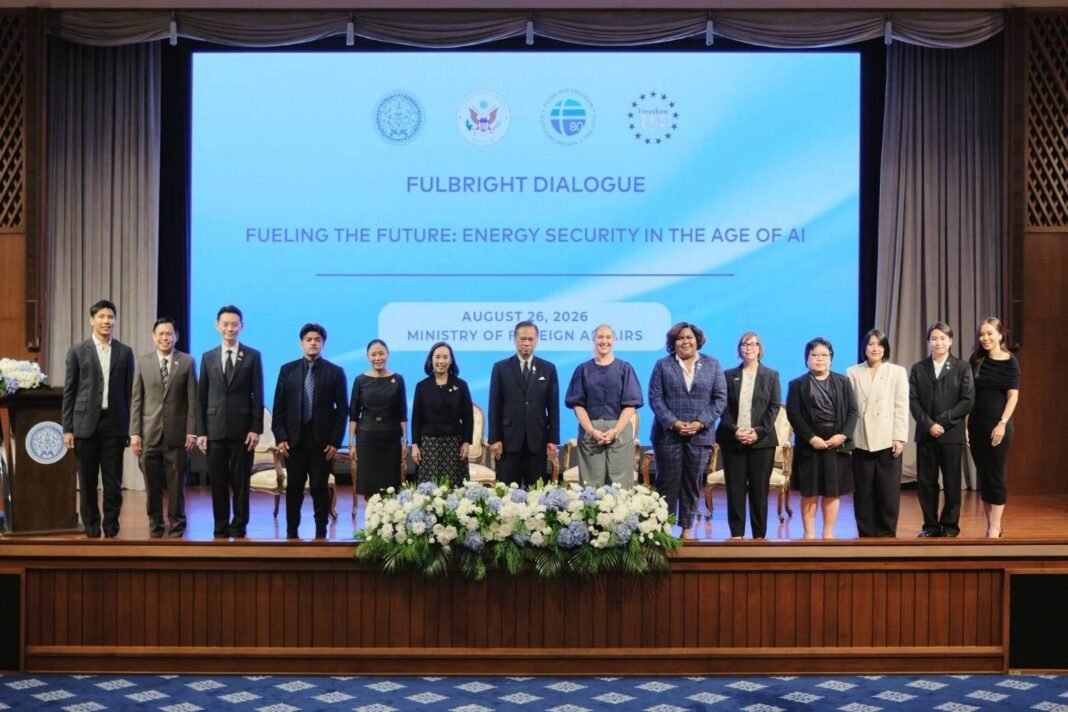
The statement does not mention the specific history of the Fulbright program or the 250th anniversary of American independence. It references the 80th anniversary of the Fulbright program, a key milestone in the Thailand-U.S. Educational Foundation’s (TUSEF) activities. The event is jointly organized by the Ministry of Foreign Affairs, the U.S. Embassy in Thailand, and TUSEF, indicating existing collaborative frameworks for educational initiatives. The statement does not address the context of recent energy policy shifts within Thailand. Prior to this dialogue, the ministry’s September 3rd joint statement with Singapore highlighted a “Forward-Looking Strategic Partnership,” suggesting ongoing engagement with key regional partners. A Director-General of Information Department and Spokesperson of the Ministry of Foreign Affairs met with the U.S. Embassy spokesperson on September 1st, indicating continued diplomatic exchanges.
Analysis
The dialogue’s focus on “Fueling the Future: Energy Security in the Age of AI” reflects a recognized global trend – the increasing demand for energy driven by advancements in artificial intelligence. This demand presents challenges to established energy security models and necessitates adaptation towards sustainable development. The inclusion of Dr. Poonpat Leesombatpiboon, Secretary-General of the Energy Regulatory Commission (ERC), suggests a direct engagement with domestic policy considerations regarding energy strategy and regulation. The discussion around balancing energy security, access to energy, and sustainability highlights potential tensions inherent in pursuing these objectives simultaneously. The event’s framing underscores a need for proactive preparation within Thailand’s energy landscape, integrating climate-related risks into business decisions and capital allocation – a common theme across developed nations.
Implications
The 2026 Fulbright Dialogue carries implications for Thailand’s evolving foreign policy, particularly concerning technological cooperation. The focus on AI and energy security signals an alignment with global trends and potentially strengthens ties with the United States, a major player in both sectors. Should the visit yield discussions on collaborative research and development, it could contribute to Thailand’s transition towards renewable energy sources – a key element of the “5S” Foreign Affairs Masterplan. The dialogue’s emphasis on integrating climate risks into business decision-making reflects broader international pressure for sustainable investment practices.
Outlook
If the discussion yields concrete proposals for collaborative research in AI applications within the energy sector, Thailand could benefit from access to advanced technologies and expertise. Should the visit result in a strengthened framework of academic cooperation between TUSEF and MFU, it would support capacity building within Thailand’s universities – aligning with the 20-Year “5S” Foreign Affairs Masterplan. The dialogue’s focus on sustainable energy transition suggests that Thailand will continue to pursue policies promoting renewable energy sources; however, this depends on securing sufficient investment and regulatory frameworks.
Sources & Further Reading
- Official press release
- Foreign ministry source
- Director-General of Information Department and Spokesperson of the Ministry of Foreign Affairs meets with Spokesperson of the U.S. Embassy in Thailand (1 Sep 2026)
- Deputy Prime Minister and Minister of Foreign Affairs to pay a working visit to Malaysia (4 Sep 2026)
- Joint Statement of the Thailand – Singapore "Forward-Looking Strategic Partnership" (3 Sep 2026)