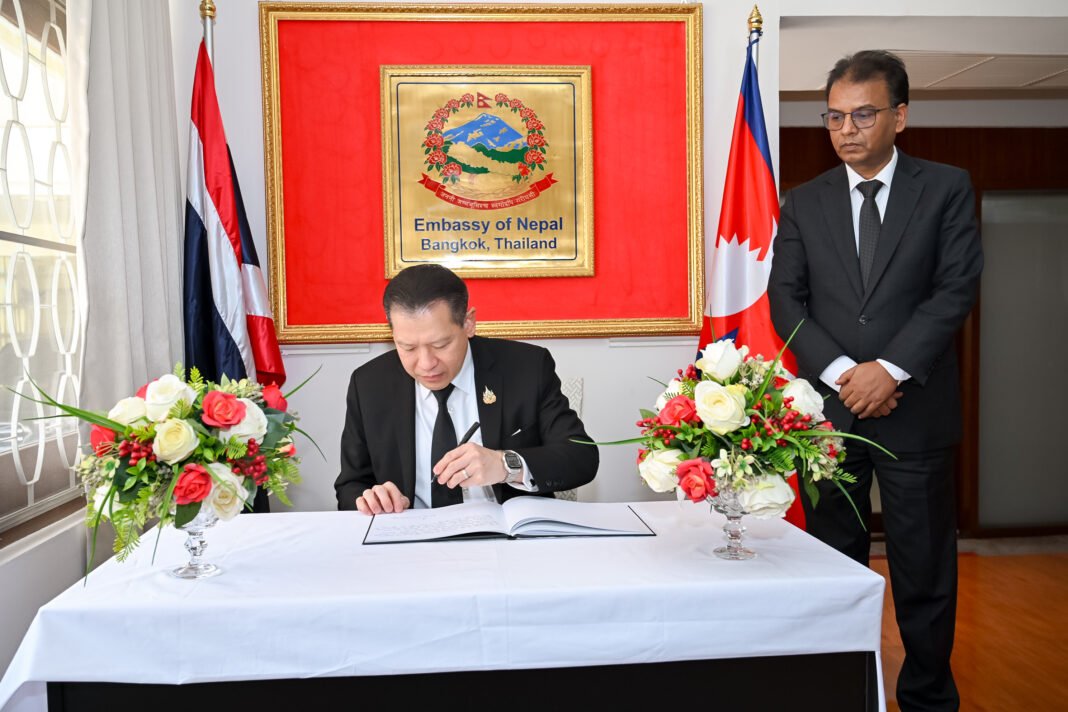
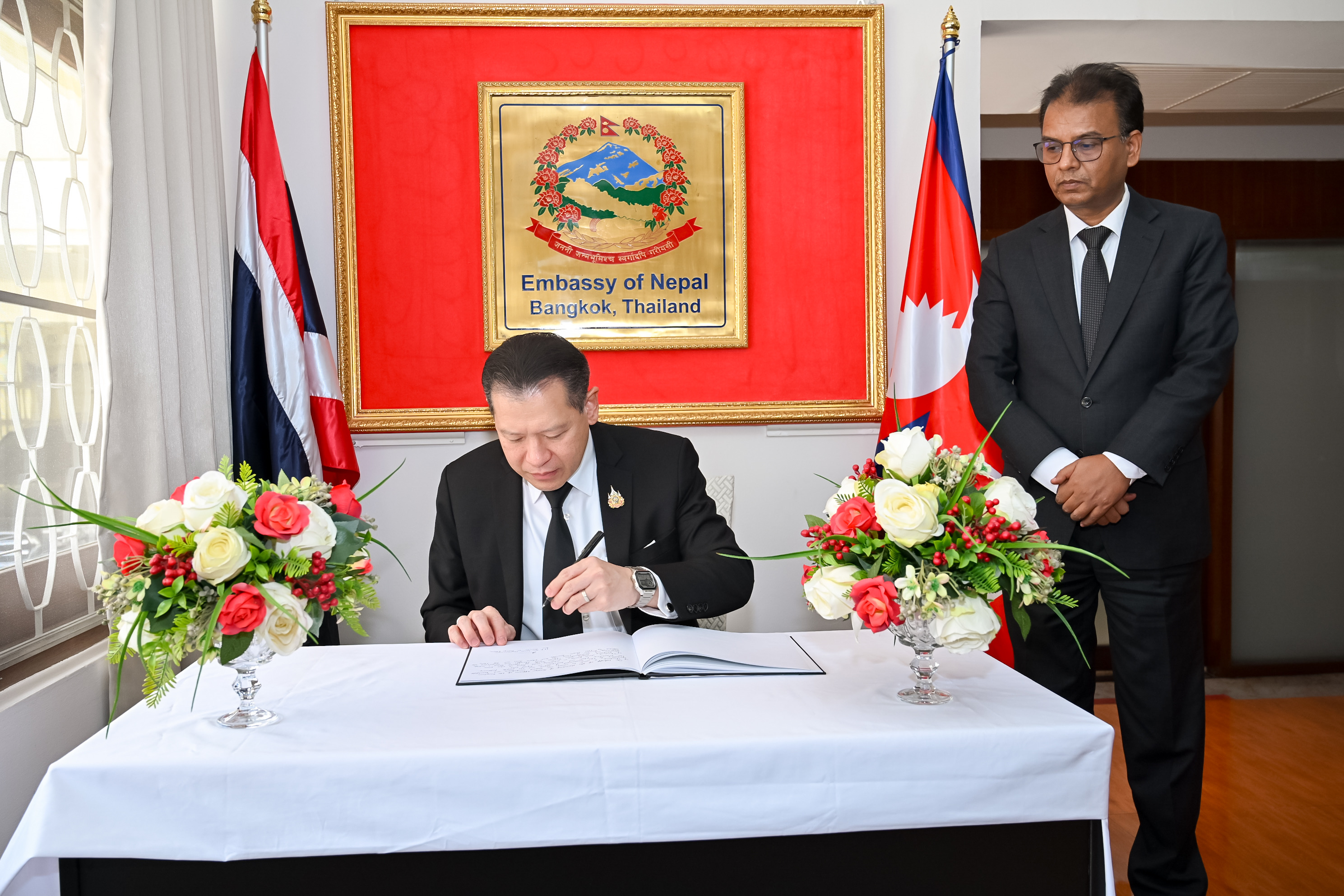
Details in a press release show that On 3 September 2026, the Vice Minister for Foreign Affairs, H.E. Mr. Sarun Charoensuwan, signed the condolence book at the Embassy of Nepal in Bangkok – this marks the first formal expression of sympathy from Thailand following the devastating flash floods and landslides that have claimed over 1,200 lives and left more than 4,000 missing in Nepal. The sheer scale of the disaster, as reported by the Ambassador, H.E. Mr. Dhan Bahadur Oli, underscores the urgent humanitarian need within the region; Thailand’s response represents a procedural step, not an immediate deployment of resources.
Background
The Ministry of Foreign Affairs’ stated commitment to international cooperation is detailed in the “5S” Foreign Affairs Masterplan – a 20-year strategic framework outlined in the annual report. In March 2026, the Director-General of Information Department and Spokesperson of the Ministry of Foreign Affairs met with the Spokesperson of the U.S. Embassy in Thailand. The Deputy Prime Minister and Minister of Foreign Affairs was scheduled to pay a working visit to Malaysia on 4 September 2026 – this event remained unannounced at the time of the condolence book signing.
Analysis
The Vice Minister’s act of signing the condolence book signifies Thailand’s adherence to diplomatic protocol. The statement does not address the specific nature of assistance being offered, or whether it aligns with previous commitments regarding disaster relief. Given the escalating crisis in Nepal – with casualties and missing persons continuing to rise – Thailand’s response appears reactive rather than proactive. If implemented as described, this gesture primarily serves to maintain diplomatic relations with Nepal, a key ASEAN partner.
Implications
This limited initial response has implications for regional stability. Should the visit yield no concrete commitments regarding aid, it could strain Thailand’s relationships with neighboring countries facing similar disaster risks. Furthermore, the lack of detail concerning assistance – particularly regarding capacity-building for future disaster prevention, as referenced by the Vice Minister – suggests a cautious approach to engagement. The event does not address Thailand’s trade relationship with Nepal or any potential security implications arising from the crisis.
Outlook
If the situation in Nepal continues to deteriorate and requires more substantial assistance, Thailand’s willingness to provide meaningful support remains conditional on a sustained escalation of the disaster. Should the Ambassador’s briefing accurately reflect the ongoing circumstances – with casualties continuing to rise – then Thailand may be compelled to reconsider its initial response. The statement does not address the possibility of coordination with international organizations like ASEAN or the United Nations.
Conclusion
The signing of the condolence book represents a formal acknowledgement of Nepal’s suffering, but it raises fundamental questions about Thailand’s commitment to genuine humanitarian engagement in the face of significant regional crises. The lack of immediate action leaves open the possibility that Thailand’s response will be primarily symbolic – reflecting diplomatic obligations rather than concrete support.
Sources & Further Reading
- Official press release
- Foreign ministry source
- Director-General of Information Department and Spokesperson of the Ministry of Foreign Affairs meets with Spokesperson of the U.S. Embassy in Thailand (1 Sep 2026)
- Deputy Prime Minister and Minister of Foreign Affairs to pay a working visit to Malaysia (4 Sep 2026)
- Deputy Prime Minister and Minister of Foreign Affairs and spouse sign the condolence book on the passing of His Majesty King Harald V of Norway (4 Sep 2026)