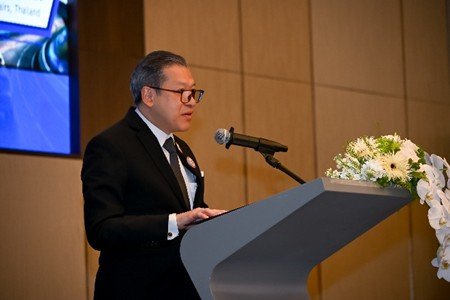
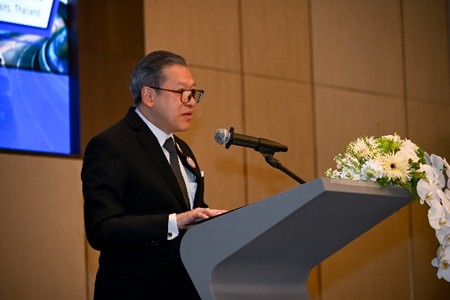
A ministry communiqué confirms that On August 28, 2026, H.E. Mr. Sarun Charoensuwan, Vice Minister for Foreign Affairs, delivered a keynote address at the 19th ATRANS International Annual Conference. The event, organized by the Asian Transportation Research Society (ATRANS) under the theme “Resilient Mobility and Transportation Beyond Disruption,” took place at the Chatrium Grand Hotel in Bangkok. This statement matters because it reveals Thailand’s calculated response to intensifying global instability – a landscape marked by geopolitical competition impacting transport routes and supply chains.
Background
The 19th ATRANS Annual Conference focused on “Resilient Mobility and Transportation Beyond Disruption.” This suggests Thailand views disruption, specifically driven by geopolitical factors, as a core challenge to its strategic objectives. The statement does not address the specific countries involved in this competition or the nature of these competing interests. The development of transport routes connecting destinations within Thailand and with neighboring countries is presented as a key element in bolstering Thailand’s role as a regional connectivity hub. This reinforces the Ministry’s stated “5S Foreign Affairs Masterplan,” aiming for stability, security, sustainability, serviceability, and synergy.
Analysis
The Vice Minister’s framing of the situation – intensified geopolitical competition – implicitly acknowledges a significant risk to Thailand’s economic growth. The statement does not address the potential impact on Thai trade or investment. Enhancing infrastructure, technology, and human resources are identified as crucial factors in strengthening Thailand’s long-term competitiveness; this suggests a recognition of existing vulnerabilities within its economy. Building partnerships with countries and relevant stakeholders is presented as essential for developing more resilient transport networks and supply chains – a strategy aimed at mitigating the impact of global uncertainties.
Implications
The Vice Minister’s focus on regional connectivity has significant implications for Thailand’s trade relationships. Should this approach yield success, it could solidify Thailand’s position as a crucial transit point for goods moving between Asia and other regions. The emphasis on infrastructure development raises questions about investment priorities and potential collaborations with international partners. Enhancing capacity in these areas would be key to bolstering Thailand’s long-term competitiveness – a goal that may require significant capital expenditure.
Outlook
If Thailand continues to leverage its geographical advantages, the country could attract increased trade and investment. Should the partnerships outlined by the Vice Minister prove fruitful, it would demonstrate a proactive approach to managing global disruptions. The statement does not address potential risks associated with over-reliance on external partners or the possibility of shifting geopolitical dynamics.
Conclusion
The Vice Minister’s emphasis on resilience and connectivity ends with an open question: can Thailand effectively translate this strategic intent into tangible economic benefits, particularly given the scale and complexity of the global challenges it faces?