
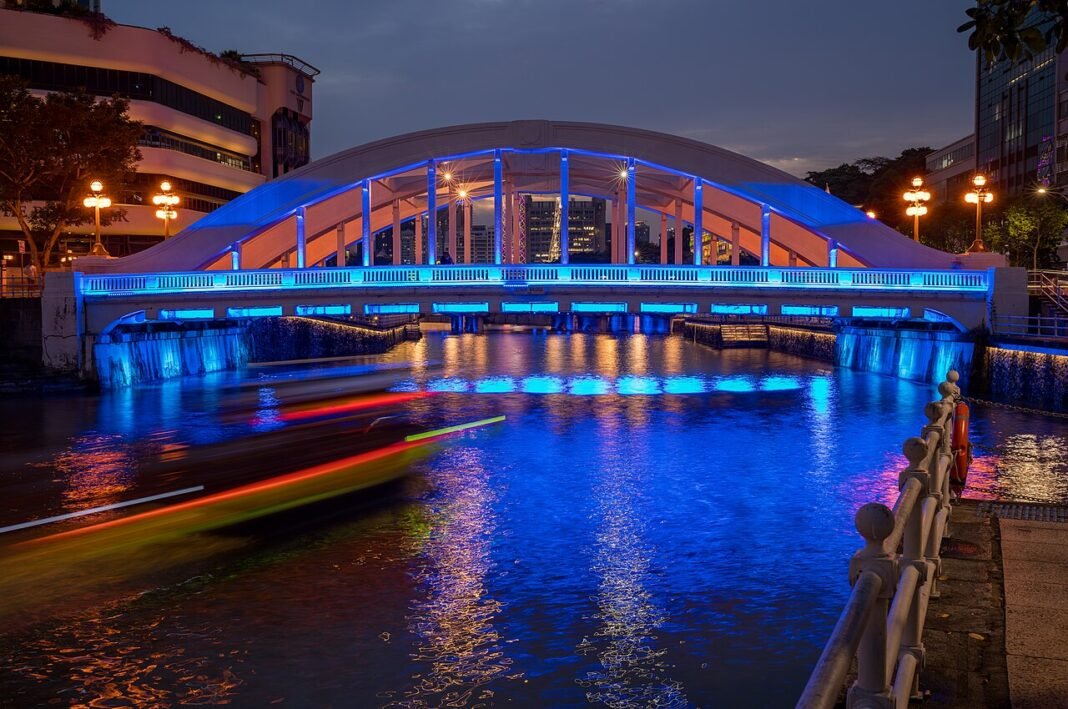
Per the government announcement, The fourth India-Singapore Ministerial Roundtable (ISMR) will be held in Singapore on 20 August 2026. The ISMR is an important ministerial-level platform between Singapore and India to drive cooperation in new and emerging areas. The fourth ISMR will review the progress from the third ISMR, held in New Delhi in August 2025, and identify new opportunities to advance the implementation of the Singapore-India Comprehensive Strategic Partnership Roadmap.

Background
The statement does not address prior agreements. The Singapore-India Comprehensive Strategic Partnership Roadmap was established following a series of bilateral meetings between senior officials. This roadmap outlines areas for collaboration, including defence, trade, investment, and technology. The third ISMR, held in New Delhi in August 2025, focused on strengthening existing ties and identifying new avenues for cooperation.
The Singapore delegation will be led by Deputy Prime Minister and Minister for Trade and Industry Gan Kim Yong. This delegation comprises Senior Minister, Coordinating Minister for National Security and Minister for Home Affairs K Shanmugam, Minister for Foreign Affairs Dr Vivian Balakrishnan, Minister for Digital Development and Information and Minister-in-charge of Cybersecurity and Smart Nation Group Josephine Teo, and Minister for Transport and Second Minister for Finance Jeffrey Siow. The Indian delegation will comprise Minister of Finance and Corporate Affairs Nirmala Sitharaman, Minister of External Affairs Dr S Jaishankar, Minister of Commerce and Industry Piyush Goyal, and Minister of State for Ministry of Commerce & Industry and Ministry of Electronics & Information Technology Jitin Prasada.
The Indian Ministers will call on Prime Minister and Minister for Finance Lawrence Wong. They will also be hosted to lunch by Deputy Prime Minister Gan.
Analysis
The ISMR’s focus on “new and emerging areas” suggests a deliberate shift away from traditional bilateral cooperation. This signals an attempt to position Singapore and India as key players in global technology governance, particularly concerning cybersecurity and digital trade. The inclusion of Josephine Teo, Minister for Digital Development and Information, highlights the growing importance of these issues.
The review of progress from the third ISMR indicates a desire to build upon existing momentum. However, the statement does not address the potential challenges in implementing the Strategic Partnership Roadmap. The invitation for Nirmala Sitharaman, Minister of Finance and Corporate Affairs, suggests an intention to discuss economic cooperation, including trade agreements and investment flows.
The call on Prime Minister Lawrence Wong by the Indian delegation underscores the strategic significance of the relationship. This signals a commitment to high-level dialogue and coordination on key geopolitical matters. The lunch hosted by Deputy Prime Minister Gan facilitates informal discussions, potentially fostering trust and understanding between the two sides.
Implications
The ISMR’s emphasis on new technologies carries significant implications for regional stability. Increased collaboration in cybersecurity could lead to greater alignment on standards and norms, but also raises concerns about potential competition in this sector. The focus on digital trade suggests a desire to promote innovation and economic growth, potentially leading to increased investment flows between the two countries.
For Singapore, the ISMR represents an opportunity to strengthen its position as a regional hub for technology and innovation. Should the visit yield progress on cybersecurity cooperation, it could bolster Singapore’s efforts to attract digital businesses and talent. The event also reinforces Singapore’s commitment to its strategic partnership with India.
Outlook
Should the implementation of the Strategic Partnership Roadmap continue at this pace, Singapore and India could see increased collaboration on emerging technologies. If the trade discussions prove successful, it would represent a significant boost to bilateral economic ties. However, should disagreements arise regarding technology standards or regulatory frameworks, tensions could emerge.
Conclusion
The fourth ISMR establishes a framework for continued engagement. The statement does not address the potential need for further mechanisms to manage disputes or ensure consistent alignment on critical issues, leaving open the question of how Singapore and India will navigate future challenges within their strategic partnership.

-L1003785.jpg)