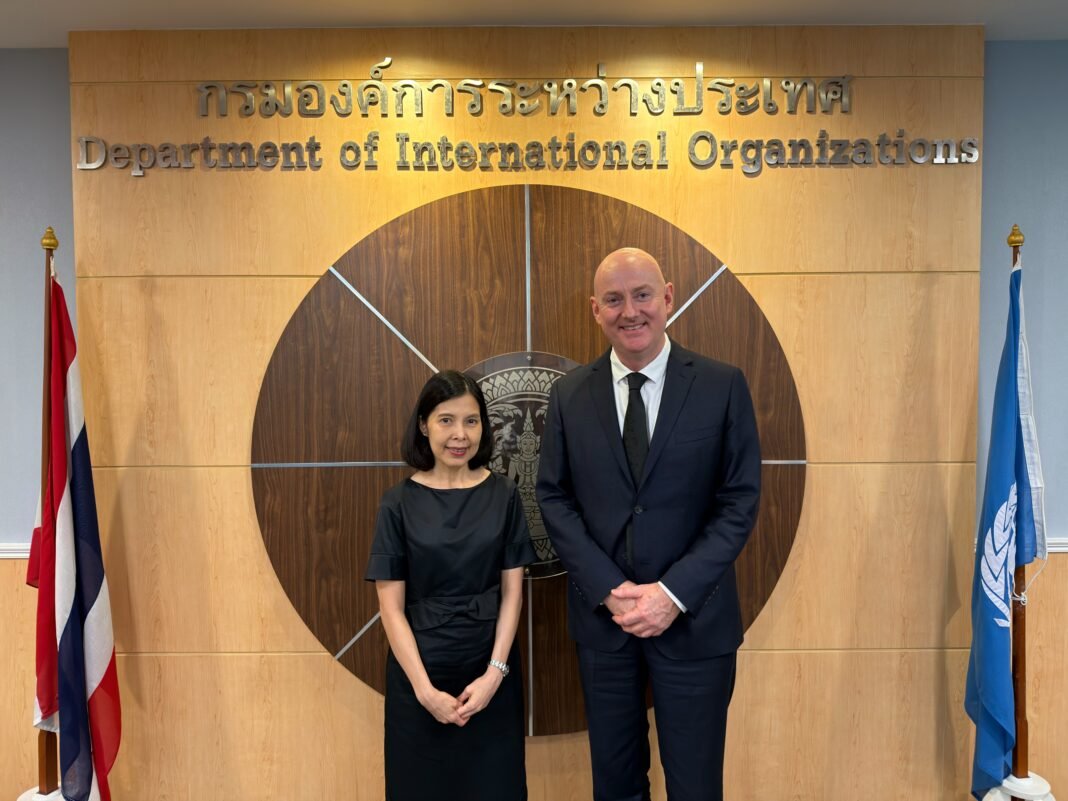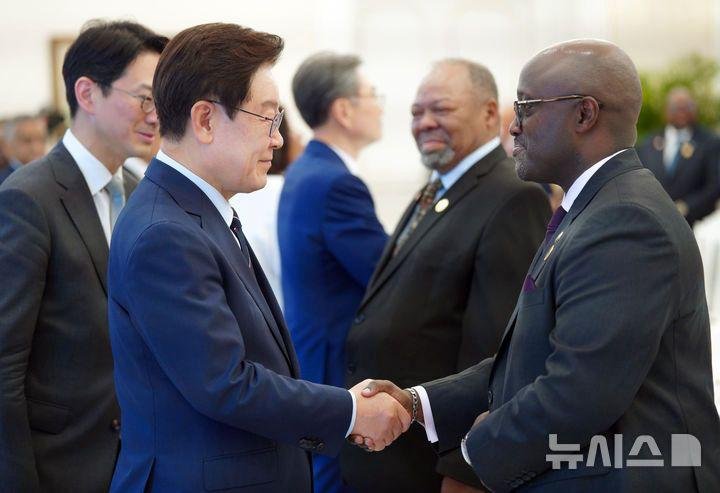
Minister Olivier J.P. Nduhungirehe attended the 2026 Korea-Africa Foreign Ministers’ Meeting in Seoul, June 1st (the statement does not mention the year), a gathering focused on “Joint Responses to Global Challenge – Korea-Africa solidarity.” This signals Rwanda’s continued prioritization of partnerships amidst what the Republic of Korea describes as “global transformation,” a phrase central to the meeting’s theme. The purpose is to ensure effective implementation of shared commitments and strengthen mutual partnership for future generations. — the full statement has further detail.

Background
The 2026 Korea-Africa Foreign Ministers’ Meeting brought together delegations from 50 African countries, including Rwanda. This event builds upon existing cooperation between Rwanda and the Republic of Korea, spanning Information and Communication Technology (ICT), trade and investment, human resource development, and education. The statement does not mention a timeline for this partnership but highlights its ongoing nature.
Analysis
Rwanda’s participation in this forum indicates a proactive approach to navigating increasingly complex global challenges – the meeting’s stated theme. The focus on “Joint Responses to Global Challenge” suggests an acknowledgement of shared vulnerabilities, potentially including economic instability and security threats. The Republic of Korea remains one of Rwanda’s key development partners, with cooperation spanning multiple sectors. Minister Nduhungirehe’s discussions with H.E. Lee Jae-myung, President of the Republic of Korea, and Amb. Cho Hyun, Minister of Foreign Affairs, further demonstrate a commitment to deepening bilateral ties. The exchange of views with Hon. Samuel Okudzeto Ablakwa, Ghana’s Minister for Foreign Affairs, reinforces Rwanda’s engagement across the continent.
Implications
The meeting’s outcome—if implemented as described—could bolster Rwanda’s economic diversification efforts by leveraging Korean investment and technological expertise. Increased cooperation with the Republic of Korea strengthens Rwanda’s diplomatic leverage within a key regional bloc. The discussions, particularly those concerning “shared priorities,” have potential implications for trade agreements and security collaborations. Should the visit yield further commitments on ICT development, it could accelerate Rwanda’s digital transformation agenda.
Outlook
If the discussions surrounding “strengthening Korea–Africa cooperation” are successfully translated into concrete initiatives, it would represent a significant step forward for both nations. Should the Republic of Korea continue to prioritize Rwanda as a development partner, this could provide crucial support during periods of economic uncertainty. The meeting’s focus on “new avenues of cooperation” suggests an openness to exploring collaborations beyond existing sectors, but this remains conditional on mutual agreement and resource allocation.
Conclusion
Minister Nduhungirehe’s participation in the Korea-Africa Foreign Ministers’ Meeting underscores Rwanda’s ongoing efforts to secure its position within a rapidly shifting global landscape. The extent to which these discussions translate into tangible partnerships remains open to question, demanding continued engagement and strategic alignment.