
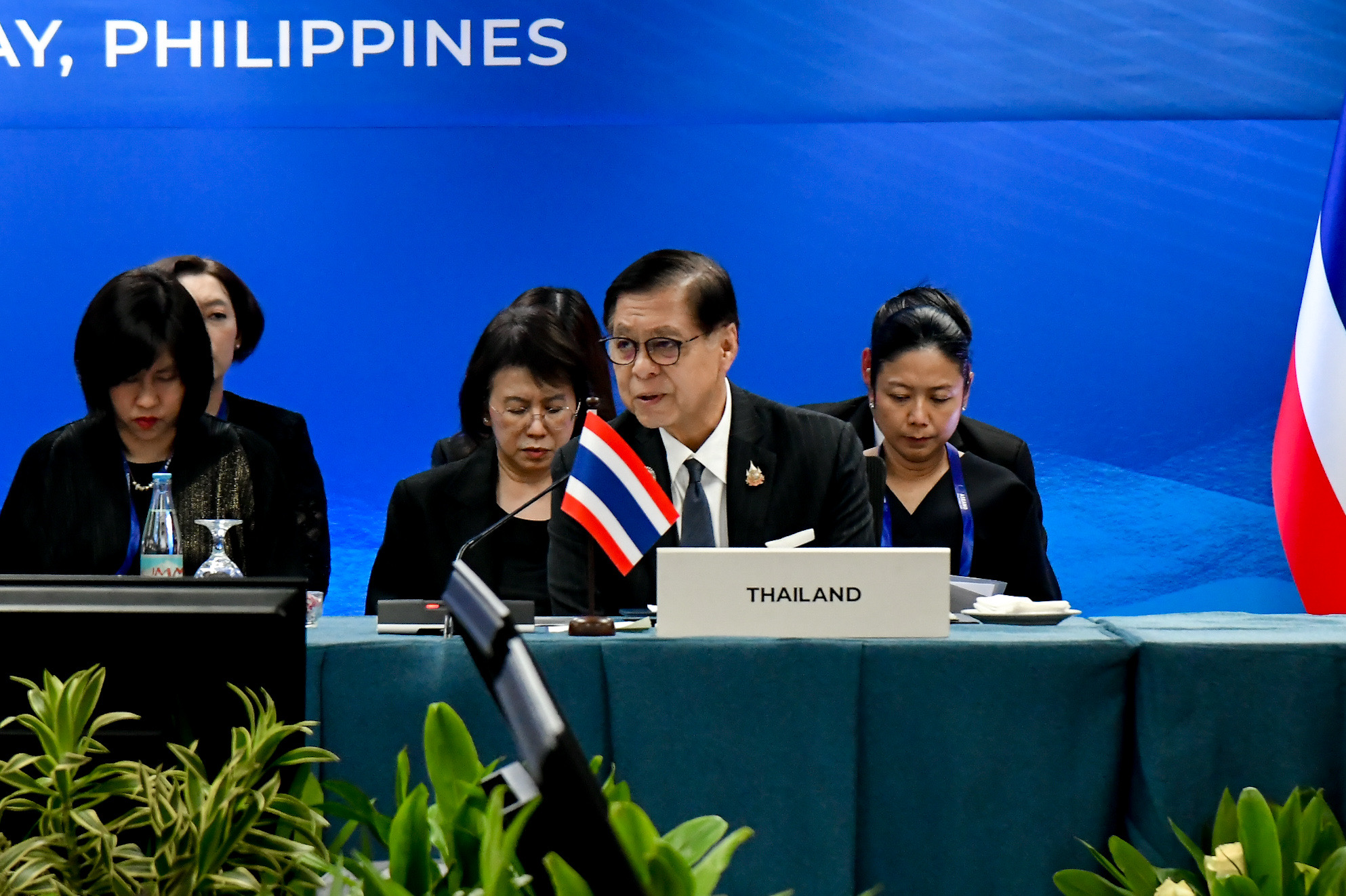
The official readout frames the trip as The statement of 23 July 2026 reveals that H.E. Mr. Sihasak Phuangketkeow, Deputy Prime Minister and Minister of Foreign Affairs, co-chaired the 2026 Mekong – Republic of Korea Foreign Ministers’ Meeting in Manila. This event matters because it represents Thailand’s formalized articulation of its strategic priorities within the increasingly complex Mekong subregion framework – a region facing demonstrable environmental pressures and evolving geopolitical dynamics. The meeting confirmed that Bangkok intends to leverage the existing Mekong-ROK cooperation mechanisms to proactively address shared vulnerabilities.
Background: The 2026 Mekong – Republic of Korea Foreign Ministers’ Meeting (Mekong – ROK FMM) builds upon previous iterations of this annual forum, established as a key component of the broader Mekong Cooperation Initiative. This initiative, formalized by the “5S” Foreign Affairs Masterplan, aims to foster sustainable development and economic integration across the six countries – Thailand, Cambodia, Laos, Myanmar, Vietnam, and Malaysia – with South Korea. The existing Ayeyawady – Chao Phraya – Mekong Economic Cooperation Strategy (ACMECS) framework provides a foundational structure for this collaboration. Furthermore, preparations are underway for the forthcoming Mekong – ROK Leaders’ Meeting and the Mekong – ROK Business Forum, indicating a desire to broaden engagement beyond governmental officials and business leaders.
Analysis: Thailand’s stated priorities—responding to subregional challenges, promoting sustainable development, and strengthening synergies with other frameworks—reflect a calculated response to mounting pressures. Specifically, the emphasis on water resources and air pollution highlights the demonstrable vulnerabilities within the Mekong basin – issues increasingly aggravated by climate change. The focus on the green economy and digital economy aligns with South Korea’s own technological ambitions and signals an attempt to attract investment and drive economic diversification in the region. Simultaneously, the call for strengthening synergies with ACMECS suggests a recognition of existing infrastructure limitations and a desire to maximize the impact of limited resources. This approach reveals Thailand’s intention to maintain its leadership role within the Mekong while acknowledging the need for adaptable strategies. The statement does not address potential tensions arising from differing national development priorities among the Mekong states or the evolving influence of other external actors in the region.
Implications: The outcome of this meeting, should the visit yield a commitment to the new Plan of Action (PoA), carries significant implications for regional stability and trade. A renewed focus on water management could mitigate potential conflicts over dwindling resources – a persistent source of friction among Mekong nations. Furthermore, prioritizing sustainable development through green and digital economies positions Thailand as a key facilitator of economic growth in the subregion. The planned development of a new PoA for 2027-2031 will shape future cooperation efforts and potentially unlock further investment opportunities. However, this also depends on reaching an agreement with South Korea regarding the direction and priorities of this plan – which remains to be seen.
Outlook: If the meeting successfully concludes with the establishment of a new Mekong – ROK Plan of Action for 2027-2031, Thailand’s influence within the subregion will be further solidified. Should the agreement prioritize enhanced water management strategies and investment in renewable energy infrastructure, it could demonstrably mitigate some of the region’s most pressing environmental challenges. Conversely, if the PoA remains vague or fails to secure concrete commitments from South Korea regarding resource allocation, Thailand’s ability to effectively address these challenges will be hampered.
Conclusion: The Mekong – ROK FMM in Manila underscores a strategic recalibration for Thailand – prioritizing proactive engagement within a region confronting escalating environmental and economic pressures. The question remains whether Bangkok can translate this renewed focus into tangible action, fundamentally reshaping the landscape of subregional cooperation or simply reaffirming existing commitments.