
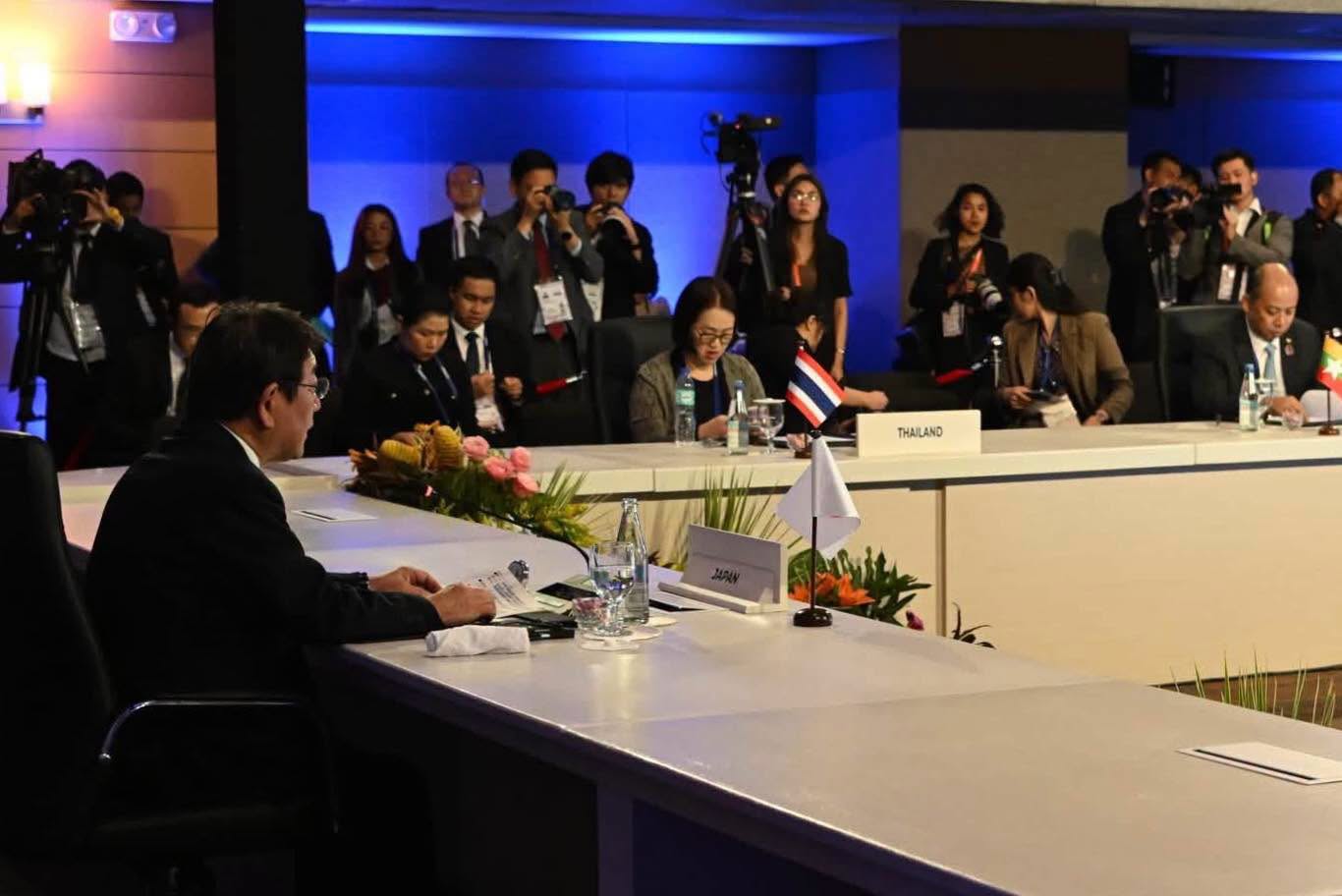
Per the government announcement, The Ministry of Foreign Affairs announced on 22 July 2026 that Deputy Director-General Chatvadee Chindawongse attended the ASEAN Post-Ministerial Conference with Japan in Manila, Philippines. This meeting’s primary focus— advancing the ASEAN – Japan Comprehensive Strategic Partnership (CSP)— matters because it signals a deliberate Thai effort to deepen economic engagement with Japan, particularly concerning initiatives like the Asia Zero Emission Community Platform (AZEC) and POWERR Asia. The statement does not address Thailand’s broader strategic calculations within Southeast Asia or its relationships beyond the immediate Japanese context.
Background
The event occurred on the sidelines of the 59th ASEAN Foreign Ministers’ Meeting and Related Meetings. This annual gathering serves as a key mechanism for ASEAN’s engagement with regional partners, including Japan. The ASEAN Outlook on the Indo-Pacific (AOIP), launched in 2016, is a strategic framework for ASEAN’s engagement with the Asia-Pacific region. Japan’s updated Free and Open Indo-Pacific (FOIP) initiative complements this, aiming to promote trade, investment, and security cooperation across Southeast Asia. The statement does not mention any specific historical context regarding previous meetings or agreements related to the CSP.
Analysis
The Thai government’s prioritization of the CSP reflects a calculated attempt to diversify its economic partnerships beyond traditional Western powers. Promoting synergies between the AOIP and Japan’s FOIP suggests an effort to leverage Japanese investment and technological expertise, particularly in sectors like the digital economy and cybersecurity. The discussion around energy security – specifically clean energy through AZEC and POWERR Asia— indicates Thailand’s growing concerns regarding climate change mitigation and its dependence on fossil fuels. Should the visit yield further commitments in these areas, it would represent a significant step towards realizing Thailand’s ambitions for sustainable economic development. If implemented as described, this signals an attempt to balance competing geopolitical pressures.
Implications
This engagement with Japan has implications for regional stability. Japan’s active role in supporting peace and stability within the region could be seen as a counterweight to increasing Chinese influence in Southeast Asia – though the statement does not explicitly state this. The focus on clean energy through initiatives like AZEC and POWERR Asia suggests Thailand is seeking to reduce its vulnerability to global energy market fluctuations, a key concern given its reliance on imports. The deepening trade ties with Japan could further integrate Thailand into broader East Asian economic networks, potentially altering the dynamics of regional trade agreements.
Outlook
If the visit yields concrete commitments regarding investment in clean energy technologies and cybersecurity cooperation, Thailand’s alignment with the CSP will appear strengthened. Should this cooperation not materialize beyond preliminary discussions, it would raise questions about the effectiveness of Thailand’s strategic partnerships. Furthermore, if Japan continues to actively promote its FOIP framework within Southeast Asia, Thailand faces a potential challenge to its own AOIP strategy – particularly concerning maritime security and access to resources.
Conclusion
The participation in this ASEAN-Japan conference underscores the importance of Thailand’s strategic engagement with Japan. However, the statement does not address whether these discussions will translate into tangible benefits for Thailand, particularly regarding its long-term economic and security objectives within a rapidly evolving regional landscape.