
A ministry communiqué confirms that The statement does not mention any specific figures involved beyond those listed in the press release. On 29 June 2026, the Representation of the European Commission to the Grand-Duché of Luxembourg, in collaboration with the Ministry of Mobility and Public Works as well as the National Roads Administration, held an event to commemorate the 140th anniversary of Robert Schuman’s birth (1886-1963). This action underscores the ongoing significance of Luxembourg within the European Union, a fact reflected by the unveiling of a new tourist panel dedicated to Schuman. The event’s core purpose was to acknowledge Schuman’s contribution to European integration and reinforce Luxembourg’s historical role as one of the EU’s six founding states.
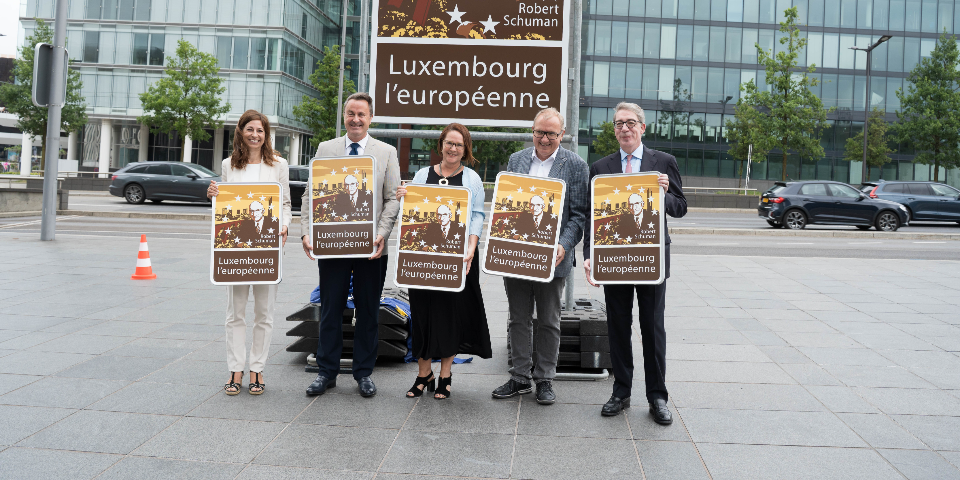
The press release establishes Robert Schuman as a “grande figure politique européenne”, frequently described as the “Père de l’Europe.” His pivotal 9 May 1950 proposal for cooperation between France and Germany – leading to the creation of the European Coal and Steel Community (ECSC) – remains a cornerstone of the EU’s origins. The statement details that Luxembourg is a member founding state of the ECSC, marking its early engagement with the nascent project of European integration. This foundational agreement established the framework for what would become the European Union.
The event’s focus on Robert Schuman reflects the continued importance placed on his legacy within Luxembourgish political culture and European identity. The ministry’s action signals an effort to maintain a connection with the EU’s historical roots, particularly given Luxembourg’s unique institutional concentration. The presence of Xavier Bettel, Vice-Premier minister for Foreign Affairs and Commerce, indicates a prioritization of diplomatic engagement focused on reinforcing Luxembourg’s position within the European framework. The unveiling of the tourist panel seeks to promote tourism linked to Schuman’s legacy and the Kirchberg district.
The commemorative event has implications primarily for Luxembourg’s image as a key player in the EU. Reinforcing Schuman’s role may serve to bolster confidence within the Grand Duchy regarding its continued influence on European policy-making. The placement of the panel along the A6 motorway, near Luxembourg-Centre Bertrange, suggests an effort to leverage tourism tied to the EU’s institutional presence – a significant concentration of European institutions within the capital. The event does not address any potential impacts on trade or security agreements between member states.
Should the visit yield continued support for Luxembourg’s position as a central hub for EU institutions, this suggests a commitment to maintaining its role in shaping European policy. If the panel proves successful in attracting tourism related to Schuman and the Kirchberg district, this could further incentivize investment within that area – an area already heavily concentrated with institutional activity. The statement does not address any potential shifts in voting patterns or strategic alliances within the EU following this event.
The commemoration of Robert Schuman’s birth serves as a reminder of Luxembourg’s foundational role in European integration, yet it remains unclear whether this event will translate into tangible advancements for the Grand Duchy’s influence within the evolving landscape of the European Union.