
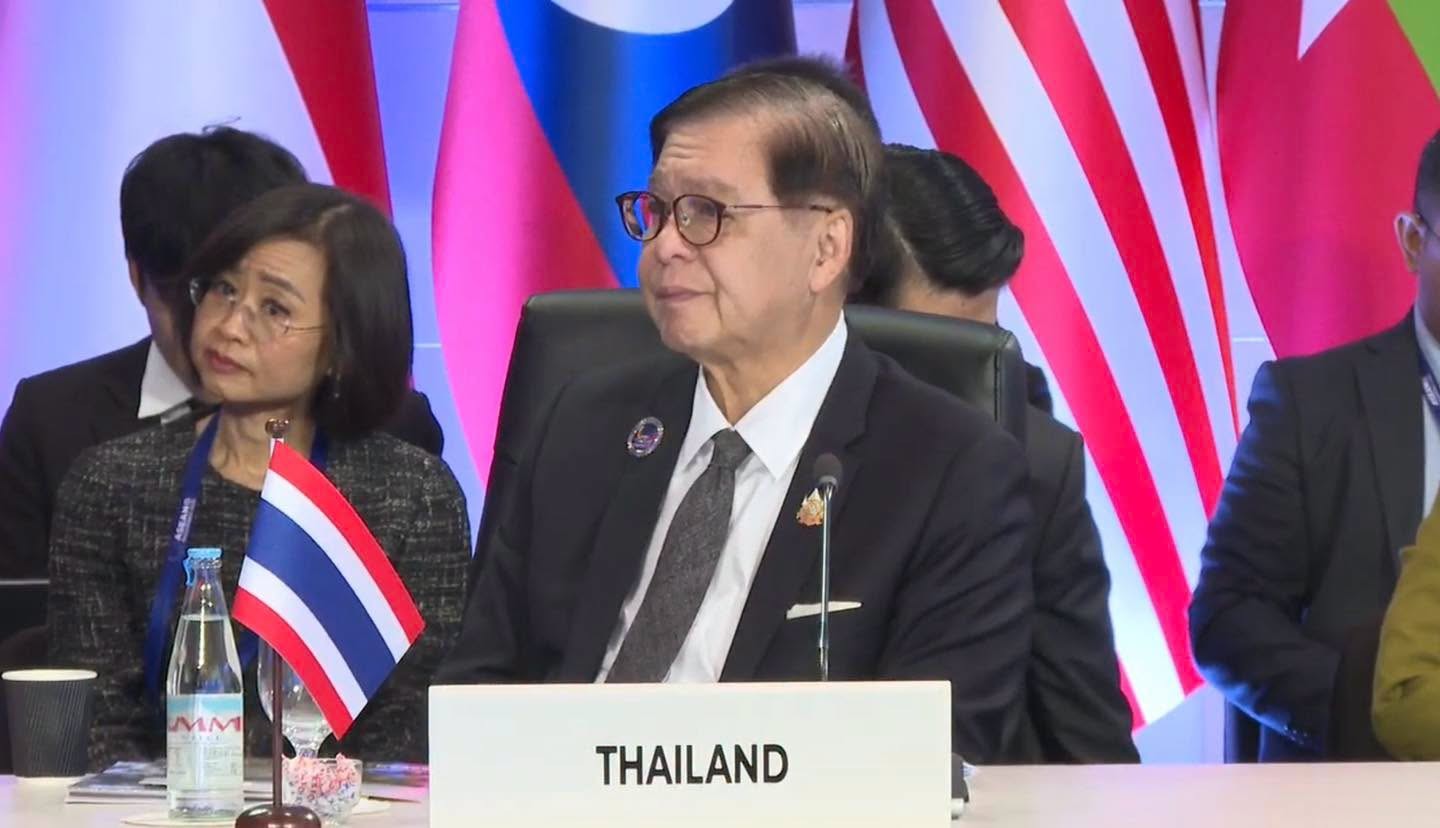
A ministry communiqué confirms that On 22 July 2026, Deputy Prime Minister and Minister of Foreign Affairs Sihasak Phuangketkeow participated in the ASEAN Post-Ministerial Conference with India in Manila, the Philippines – a move designed to advance the ASEAN – India Comprehensive Strategic Partnership (CSP). This engagement, anchored within the 2026-2030 Plan of Action (POA), reflects a concerted effort to solidify Thailand’s role as a central actor within ASEAN while simultaneously broadening its strategic alliances. The statement does not address specific economic benefits or potential political ramifications of this expanded partnership, focusing instead on established frameworks and cooperative objectives.
Background
The Meeting advanced the ASEAN – India Comprehensive Strategic Partnership (CSP) through the 2026 – 2030 Plan of Action (POA), based on ASEAN Centrality. This framework represents a long-standing strategic objective for Thailand, prioritizing ASEAN’s collective influence in regional affairs. The event occurred alongside the 59th ASEAN Foreign Ministers’ Meeting and Related Meetings. The statement does not mention any specific prior meetings or agreements that led to this conference.
Analysis
Thailand’s participation underscores a strategic recalibration. The emphasis on the 2026-2030 POA indicates a commitment to tangible outcomes, yet the statement lacks detail regarding Thailand’s priorities within this plan. Promoting synergies between ASEAN and India – through the ASEAN Outlook on the Indo-Pacific (AOIP) and India’s Indo-Pacific Oceans Initiative (IPOI) – suggests an attempt to navigate growing maritime competition in Southeast Asia. The inclusion of 2026 as the ASEAN – India Year of Maritime Cooperation signals a specific focus, though the statement does not detail the nature of collaborative activities planned.
Implications
The deepening relationship with India carries significant implications for Thailand’s regional standing. Successfully concluding the review of the ASEAN-India Trade in Goods Agreement (AITIGA), as discussed, could bolster Thai exports and strengthen economic ties within the region. The focus on connectivity—including digital infrastructure, trade, investment, and energy security—indicates a broader agenda aimed at diversifying Thailand’s economic partnerships beyond traditional routes. Should the review succeed, it would represent a tangible step towards realizing greater economic integration with India.
Outlook
If implemented as described, this strategy could yield increased trade flows between Thailand and India, particularly within sectors aligned with the AOIP and IPOI. However, should India’s approach to maritime security continue its current trajectory – a factor not directly addressed in the statement – it may create tensions within ASEAN. The emphasis on combating online scams highlights a shared concern regarding cybersecurity threats, suggesting potential collaborative initiatives. If the AITIGA review is delayed or stalled, Thailand’s economic leverage within the agreement could be diminished.
Conclusion
The Manila conference represents a step towards reinforcing Thailand’s role as an ASEAN central actor alongside India, but the statement offers little insight into the strategic rationale driving this engagement. The focus on cooperation frameworks leaves open the question of how Thailand intends to balance its regional commitments with evolving geopolitical dynamics in Southeast Asia.