
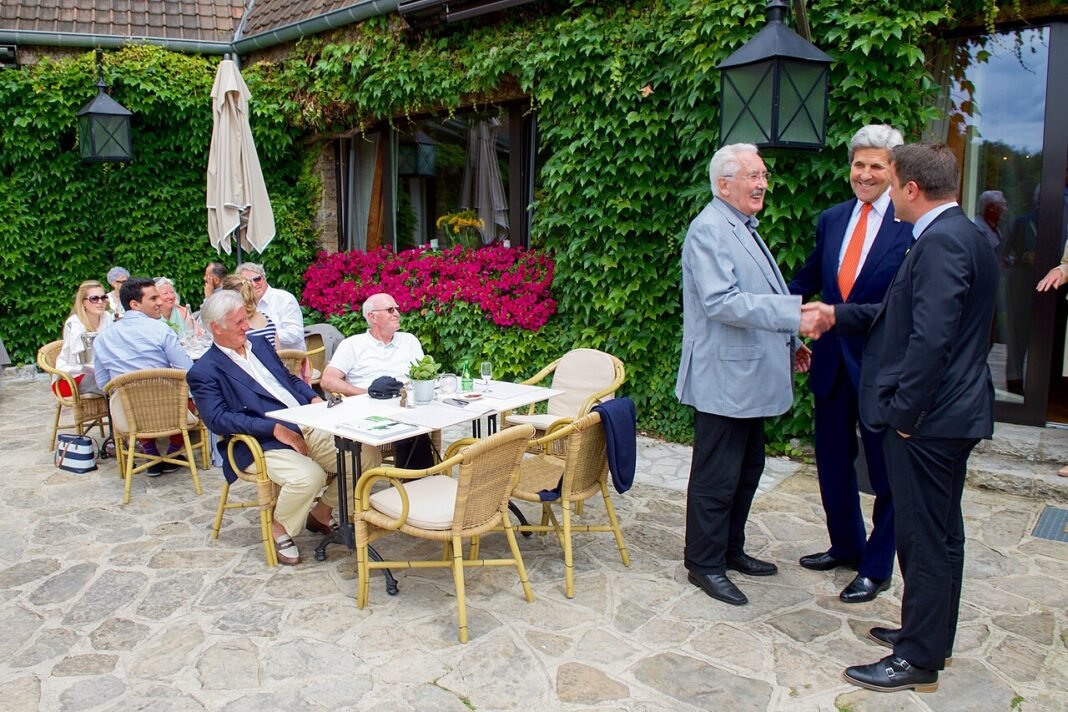
Per the government announcement, The 15th of September 2026 saw Luxembourg’s Vice-Premier and Minister of Foreign Affairs and Commerce, Xavier Bettel, attend Prinsjesdag in The Hague, at the invitation of the Dutch Minister of Foreign Affairs, Tom Berendsen. This event, the first of its kind for Benelux ministers, marks a significant moment in the relationship between the Netherlands and Luxembourg. The statement does not mention the number of attendees.

Background
Prinsjesdag is a cornerstone of Dutch political life, established in 1899. Each third Tuesday of September, the King of the Netherlands delivers the annual State of the Nation speech before the combined chambers of parliament, officially opening the new parliamentary year. The government utilizes this occasion to present its priorities and budget for the upcoming year. The event was held under the leadership of Rob Jetten, the current Prime Minister of the Netherlands, who assumed office in February 2026.
Prior to this event, the ministry stated on 9 September 2026, that “Partager sur Facebook Share on Instagram Partager sur X Share on BlueSky Share on LinkedIn Partager par e-mail Communiqué Created on 09.09.2026 Dernière modification le 09.09.2026,” that Xavier Bettel and Lex Delles were undertaking a working visit to India on 7 and 8 September 2026. Similarly, on 3 September 2026, the ministry announced that Bettel participated in the Informal Council of Foreign Affairs (Gymnich) held on 2 September in W. The statement does not mention the purpose of these visits.
Analysis
The invitation to participate in Prinsjesdag represents a strategic move by Luxembourg to reinforce its established relationships within the Benelux bloc. This suggests a deliberate effort to maintain a visible presence within a key European partnership, particularly as the statement does not address broader geopolitical tensions. The timing, coinciding with the inauguration of the new government under Prime Minister Jetten, underscores the commitment to continued collaboration. The fact that this is the first time foreign ministers from the Benelux have been invited to this institution highlights a potentially evolving approach to multilateral engagement.
The emphasis on “strengthening partnerships” indicates a recognition of the need for robust alliances in a world characterized by increasing competition. The statement does not address the potential motivations behind this initiative, but the inclusion of Maxime Prévot, the Belgian Vice-Premier Minister, suggests a broader ambition to foster cooperation across the entire Benelux region. The event marks a shift in Luxembourg’s diplomatic priorities, moving beyond traditional bilateral relationships to embrace a more inclusive approach to European governance.
Implications
For policymakers, this invitation carries implications for Luxembourg’s foreign policy strategy. Should the visit yield increased cooperation with the Netherlands and Belgium on issues such as trade, security, and climate change, it would represent a significant success. The event signals a willingness to engage actively in shaping the European agenda, a key objective outlined by the Bettel administration. The statement does not address potential ramifications for Luxembourg’s relations with other European partners.
Regionally, this move strengthens the Benelux alliance, a critical element of European stability. The event reinforces the bloc’s commitment to multilateralism and demonstrates a willingness to engage in dialogue with key partners. The enhanced cooperation could have positive ramifications for trade and security within the region. The statement does not mention any specific security implications arising from the event.
Outlook
If the visit yields positive discussions regarding trade agreements and collaborative defense initiatives, it could signal a renewed commitment to strengthening the Benelux partnership. Should the visit yield a joint statement on energy security, it would demonstrate a coordinated approach to addressing the challenges posed by the ongoing energy transition. The statement does not address the potential for future collaborative projects.
Conclusion
The invitation to Prinsjesdag represents a carefully calibrated diplomatic gesture, but the underlying motivations remain somewhat opaque. The event compels Luxembourg to articulate its broader strategic vision within the context of a rapidly changing European landscape. The question remains: will this engagement translate into tangible benefits for Luxembourg, or merely serve to reinforce a foundational alliance?
Sources & Further Reading
- Official press release
- Foreign ministry source
- Xavier Bettel et Lex Delles en visite de travail en Inde (09 Septemb)
- Xavier Bettel a participé au Conseil informel des affaires étrangères en Irlande (03 Septemb)
- Visite de travail de Diene Keita, directrice exécutive du Fonds des Nations unies pour la population (04 Septemb)

.jpg)