
Background
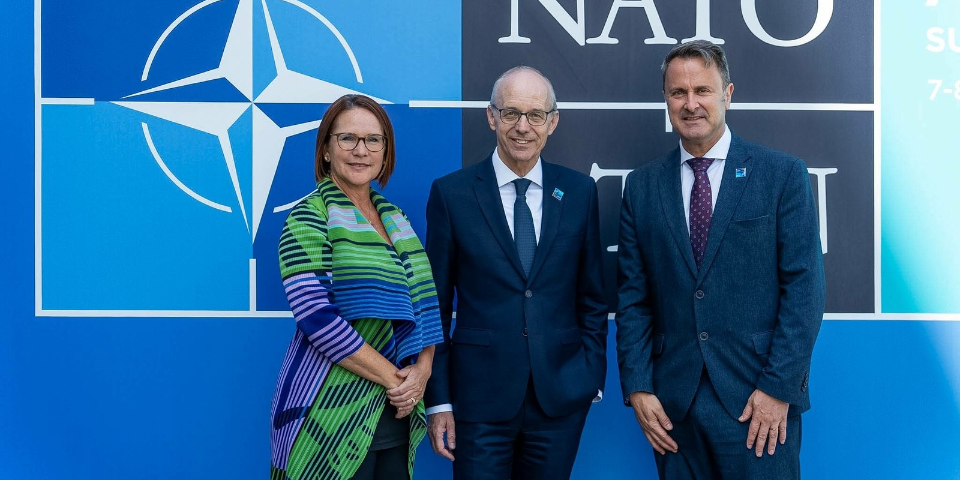
The statement does not mention previous meetings or agreements directly preceding the Ankara summit. It references the NATO Hague Summit, framing the current event as a follow-on to financial commitments made there. The context provided is primarily the broader geopolitical situation – described as “a more unstable world” – and the ongoing conflict in Ukraine, explicitly linked to Allied support for Ukraine’s sovereignty and defence rights. The statement does not detail specific prior discussions or negotiations leading up to this particular summit.
Analysis
The core incentive driving Luxembourg’s participation is presented as bolstering European defence capabilities within NATO. This is achieved through a dual strategy: firstly, transforming previously allocated financial commitments into tangible military assets and forces, as stated by Frieden. Secondly, the proposed creation of the Defence, Security and Resilience Bank (DSRB) – a partnership between Luxembourg and Canada – seeks to mobilize private capital specifically for this purpose. This represents a shift from solely relying on governmental funding towards leveraging private investment in bolstering defence industry and security infrastructure. The statement highlights a contradiction: while reaffirming Allied support for Ukraine, the focus shifts to strengthening NATO’s own defensive posture through industrial capacity. This suggests an acknowledgement of potential limitations in immediate military assistance and a desire to create sustainable long-term capabilities. If implemented as described, this strategy could potentially reduce reliance on direct military aid from member states. The emphasis on industry reinforces a broader trend within the alliance towards greater self-reliance and technological advancement in defence.
Implications
For policymakers, this initiative signals a move toward a more diversified approach to security funding within NATO. It suggests a willingness to explore alternative sources of capital beyond traditional defense budgets. Regionally, the DSRB could act as an investment catalyst for European defence industries, potentially stimulating economic growth and innovation in sectors related to military technology and security services. The commitment from nine countries—including Ukraine—indicates a broader recognition of the need for enhanced collective defence capabilities. Trade-wise, increased industrial capacity within Europe could lead to greater self-sufficiency in supplying NATO with necessary equipment and components. Security-wise, the stated goal of “enhanced deterrence” implies a response to perceived threats and a commitment to maintaining an active military presence in the Euro-Atlantic area.
Outlook
Should the visit yield success in securing commitments for the DSRB, further development hinges on attracting private investment. If Luxembourg can demonstrably demonstrate the bank’s viability and attract sufficient capital, this could become a model for other NATO members. If the initiative fails to gain traction among private investors, the statement does not address whether alternative funding mechanisms will be pursued. Should the commitment from Ukraine prove insufficient, it would raise questions about the sustainability of long-term support for the country’s defence needs. The success of this approach depends critically on demonstrating the bank’s ability to effectively channel capital into strengthening European defence capabilities and fostering a more resilient Euro-Atlantic security architecture.