
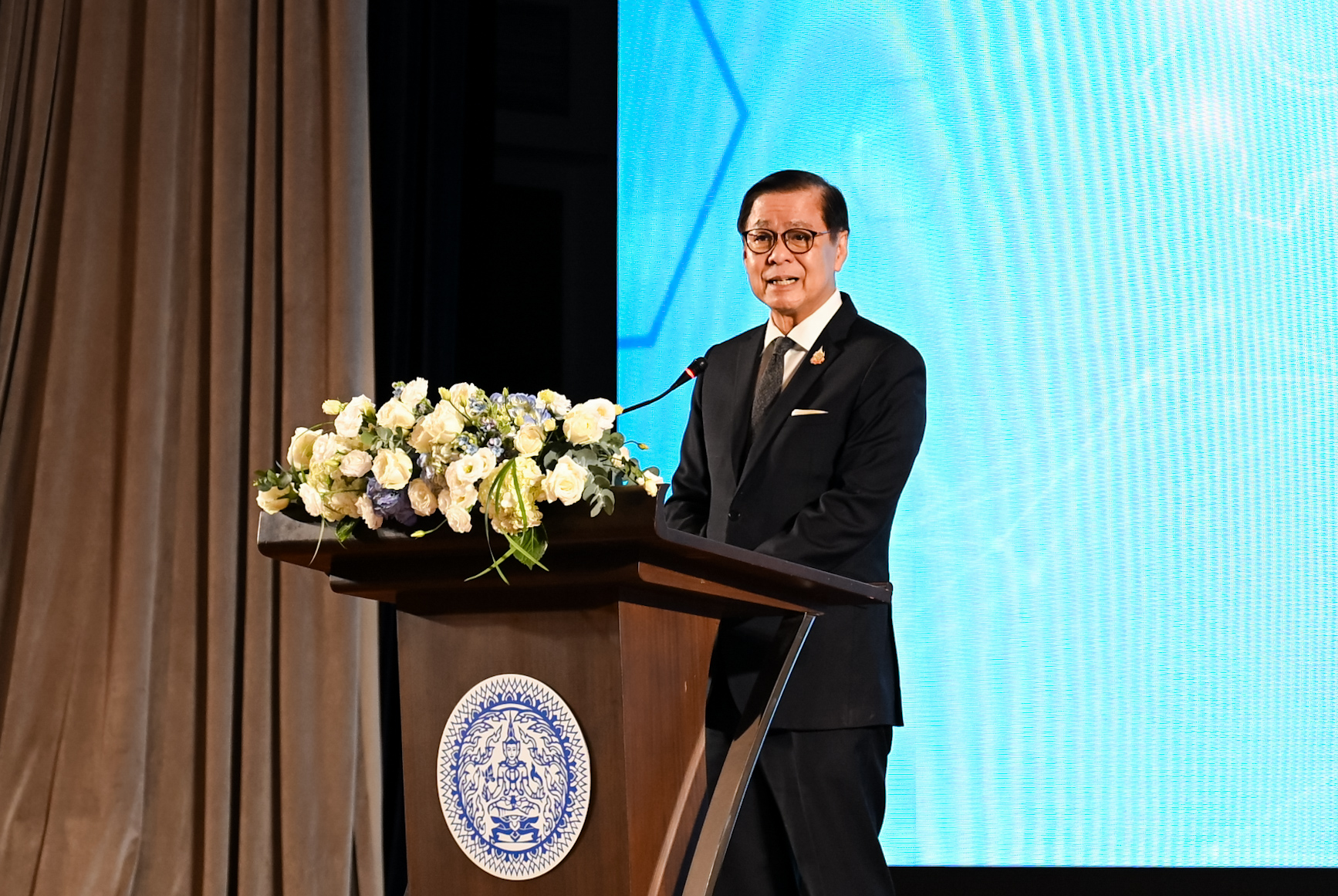
A ministry communiqué confirms that On 16 July 2026, H.E. Mr. Sihasak Phuangketkeow, Deputy Prime Minister and Minister of Foreign Affairs, and H.E. Prof. Dr. Yodchanan Wongsawat, Deputy Prime Minister and Minister of Higher Education, Science, Research and Innovation, witnessed the launch of the Letter of Intent on Cooperation in Advancing Science, Research and Innovation (SRI) Diplomacy at Vithes Samosorn, Ministry of Foreign Affairs. The statement does not mention specific funding amounts or overall budget allocations for this initiative. This event marks a significant shift within Thailand’s foreign policy strategy, prioritizing collaborative engagement in advanced scientific fields rather than solely relying on traditional diplomatic channels.
Background: The launch aligns with the broader ‘5S Foreign Affairs Masterplan’, a 20-year strategic framework outlined by the Ministry of Foreign Affairs, as detailed in excerpts from the Council of Ministers’ Policy Statement. This masterplan emphasizes “S” – Sustainability, Security, Service, Sovereignty and Strength – across Thailand’s diplomatic operations. The implementation of this Letter of Intent builds upon previous efforts to integrate economic diplomacy with scientific advancement, a recognized area for strategic development within Thai foreign policy. The Ministry of Foreign Affairs’ existing network of Royal Thai Embassies and Consulates-General serves as the foundational mechanism for executing this expanded role.
Analysis: Deputy Prime Minister Sihasak’s emphasis on integrated collaboration – between public and private sectors – suggests an acknowledgement of Thailand’s need to bolster its scientific capabilities. This initiative appears designed to translate international cooperation into tangible outcomes, a common objective articulated in the ‘5S’ masterplan. The selection of Australia, Germany, Japan, the United Arab Emirates, Israel, and Saudi Arabia as pilot countries indicates targeted engagement based on perceived strategic opportunities and areas where Thailand seeks to develop expertise. The statement does not address the specific criteria used for choosing these nations. If implemented as described, this represents a shift from passive reception of foreign technology to an active role in shaping SRI collaborations.
Implications: For policymakers, the Letter of Intent signals a commitment to diversifying Thailand’s economic base beyond traditional sectors and enhancing its competitiveness on a global scale. Should the pilot program prove successful, it could significantly strengthen Thailand’s regional influence through knowledge sharing and technological exchange. The initiative holds the potential to improve trade relations with these key countries, particularly if collaborative research leads to innovations applicable across various industries within Thailand. The focus on SRI diplomacy carries implications for Thailand’s security posture, potentially fostering partnerships in areas like cybersecurity and advanced materials.
Outlook: If the visit yields positive initial results from the pilot programs in Australia, Germany, Japan, the United Arab Emirates, Israel, and Saudi Arabia, it could trigger a broader expansion of the SRI diplomacy initiative across Southeast Asia and beyond. Should the Ambassador-led presentations highlight specific technological gaps within Thailand’s scientific sector, this could lead to targeted investments in research and development. The deployment of Thai diplomats as facilitators for collaborative projects represents a strategic investment in human capital, aiming to build expertise and networks in critical areas of science and innovation.
Conclusion: The launch of the Letter of Intent on Cooperation in Advancing Science, Research and Innovation (SRI) Diplomacy reflects Thailand’s evolving ambition within its foreign policy – but the success hinges entirely on effectively translating these international partnerships into measurable outcomes for Thailand’s scientific capabilities.