
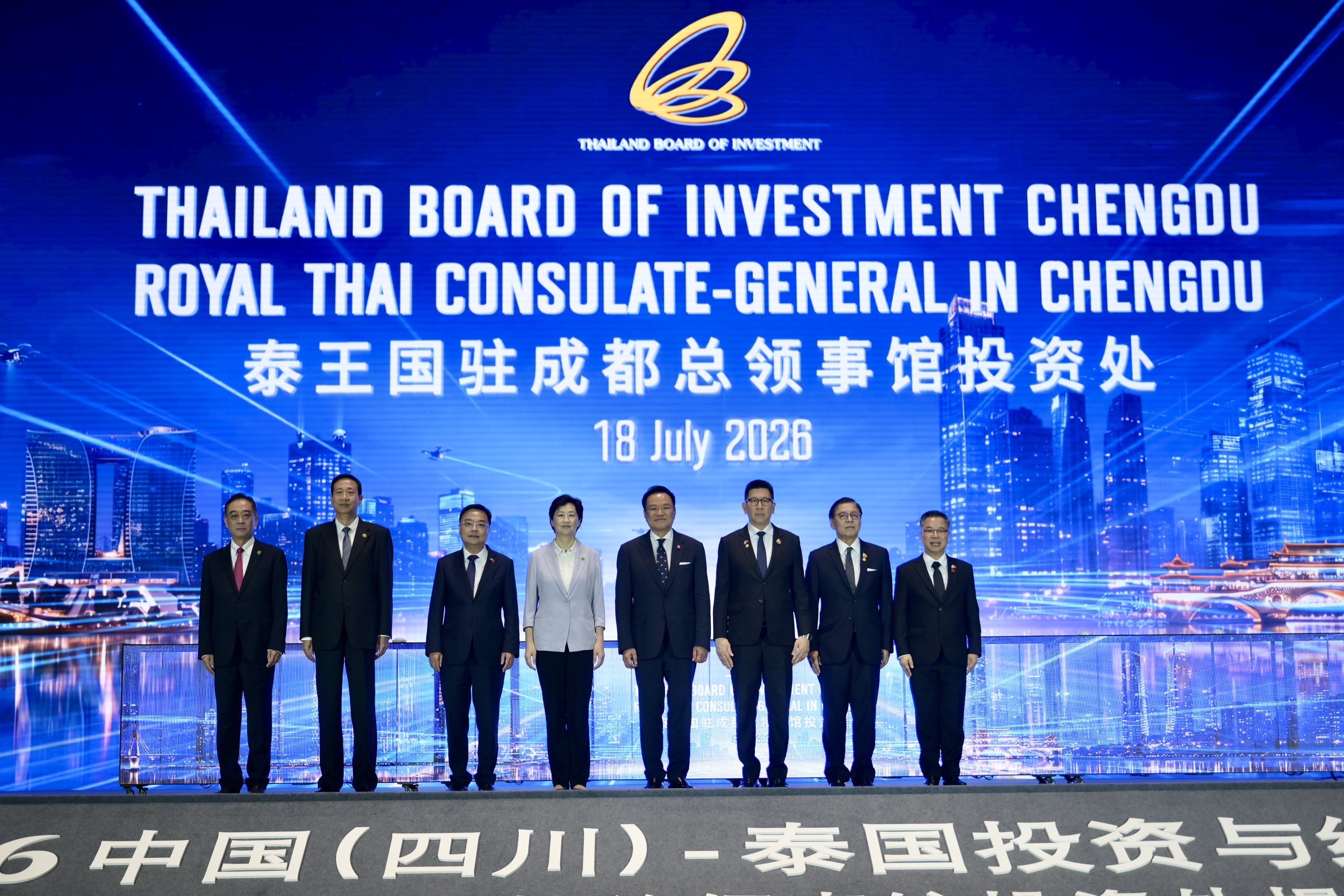
Reporting in a government statement, On 18 July 2026, Deputy Prime Minister and Minister of Foreign Affairs Sihasak Phuangketkeow accompanied Prime Minister Anutin Charnvirakul to the Thailand–China (Sichuan) Investment and Economic Forum in Chengdu, Sichuan Province. This event, attended by over 750 participants including representatives from Thai private sector industries such as agriculture, food and beverages, and clean energy, signals a deliberate effort by the Thai government to actively court foreign investment—particularly from China—to drive economic reform. The scale of the Thai delegation – one of the largest ever for a government-organized overseas activity – reflects a prioritization of attracting significant capital flows.
Background
The forum and subsequent events were organized by the Board of Investment (BOI) in collaboration with the Sichuan Province Government. The statement does not mention the specific timeline or previous discussions leading to this event, but it references a “20-Year ‘5S’ Foreign Affairs Masterplan,” suggesting a long-term strategic framework for Thailand’s foreign policy. The BOI’s opening of a section in Chengdu indicates a sustained effort to establish a physical presence and facilitate investment within Sichuan—a region identified by the Prime Minister as one of China’s key markets with high-potential companies.
Analysis
The Prime Minister’s actions, as outlined in the statement, represent a three-pronged approach to economic reform. Expediting government procedures is a standard measure intended to reduce bureaucratic hurdles for investors. Capacity building of Thai entrepreneurs and the workforce aligns with broader efforts to enhance Thailand’s competitiveness. Strengthening the domestic economy “in parallel” suggests an understanding that foreign investment alone will not resolve Thailand’s structural challenges—particularly regarding debt levels and reliance on specific sectors. The inclusion of Xiaomi Corporation, ChangAn Automobile, InnoLight Technology, and Eoptolink Technology highlights targeted industries for attraction – advanced technology and clean energy. This suggests a strategic focus on sectors aligning with China’s own industrial policy.
Implications
The visit carries significant implications for Thailand’s regional standing. The focus on Chinese investment demonstrates a willingness to engage with Beijing, potentially altering the balance of influence within ASEAN. It also highlights Thailand’s ambition to leverage its strategic location at the heart of ASEAN—with its large market and infrastructure—to attract broader foreign capital. However, the scale of the delegation and the targeted nature of the engagement raise questions about diversification; over-reliance on a single economic partner could expose Thailand to significant risk. The event’s reflection that Sichuan Province is “home to many high-potential companies” demonstrates an understanding of China’s emerging technological prowess.
Outlook
Should the visit yield successful investment agreements, particularly with Xiaomi Corporation and ChangAn Automobile, it would represent a positive step for Thailand. If the Prime Minister’s commitment to expediting government procedures is genuinely implemented as described, this could demonstrably reduce investor uncertainty. However, should negotiations fail to secure substantial commitments from Chinese companies in key sectors—particularly regarding clean energy or advanced technology – the event’s objectives will not be met. Should the capacity building initiatives prove ineffective, Thailand risks perpetuating a skills gap that hinders long-term economic growth.
Conclusion
The Sichuan visit and subsequent discussions demonstrate a proactive approach to economic reform by the Thai government. Yet, the statement does not address the underlying structural issues of Thailand’s economy – specifically concerning debt levels or the need for diversification beyond traditional industries. The long-term success of this strategy hinges on tangible outcomes from these engagements, raising questions about whether Thailand can truly achieve sustainable growth through a renewed focus on attracting foreign investment.