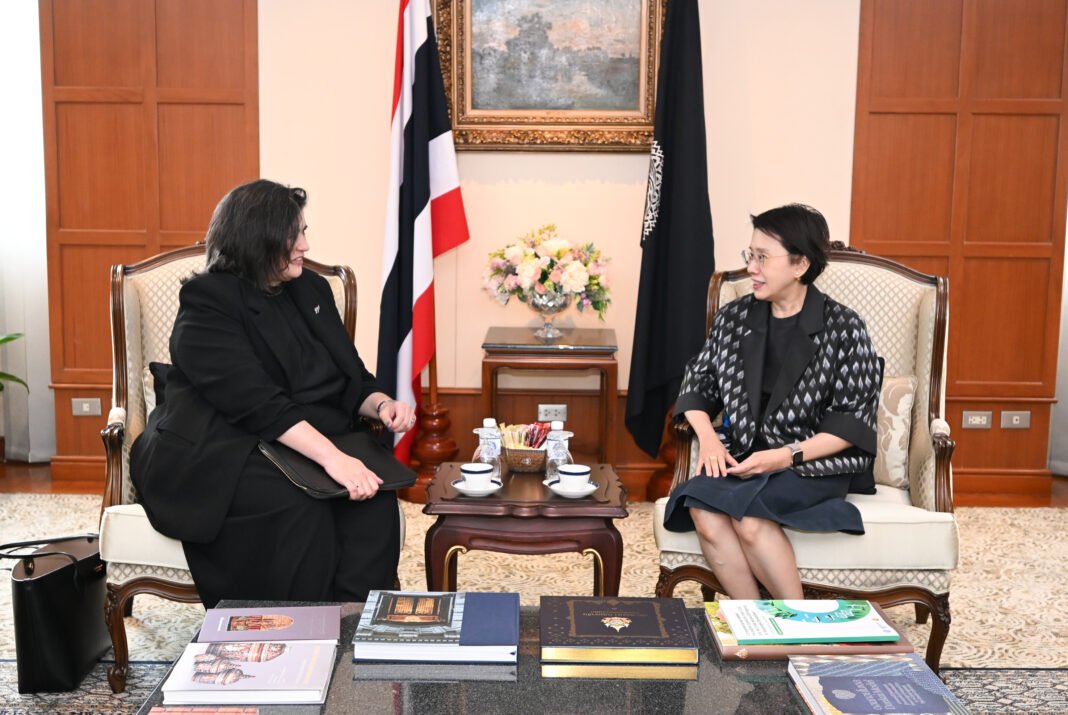
Per the government announcement, On August 9th, 2026, Permanent Secretary for Foreign Affairs Mrs. Eksiri Pintaruchi met with H.E. Ms. Raylene Siale Tagaloa Liufalani, the newly appointed Ambassador of New Zealand to Thailand. This meeting, coinciding with the 70th anniversary of diplomatic relations between the two nations in 2026, immediately establishes a key element of Thailand’s evolving foreign policy strategy – a focus on elevating bilateral ties to a Strategic Partnership. The statement does not mention any specific dates or figures related to this elevation, but it highlights the intent and framework for future cooperation.
Background
The Ministry of Foreign Affairs frames this meeting within the context of Thailand’s ‘5S Foreign Affairs Masterplan’, a 20-year initiative announced in earlier reports. This masterplan prioritizes stability, security, sustainability, and strategic partnerships to guide Thailand’s foreign policy direction. The core of the discussion centered around implementing the Thailand – New Zealand Joint Plan of Action 2026 – 2030, designed to yield “concrete and mutually beneficial outcomes” across several key dimensions. This plan itself is a product of prior meetings and established diplomatic channels, reflecting a deliberate effort to translate aspirational goals into actionable commitments.
Analysis
The stated intent to elevate relations to a Strategic Partnership carries significant implications for Thailand’s foreign policy calculations. The inclusion of “volatile geopolitical challenges” suggests an acknowledgement of increased regional instability, potentially referencing developments in the South China Sea or broader tensions within ASEAN. This signals a move away from purely transactional diplomacy towards a more proactive and arguably assertive role on the international stage. The emphasis on shared values – a key phrase repeated throughout the statement – indicates Thailand’s desire to align itself with nations committed to upholding the rules-based international order, particularly in contrast to emerging geopolitical alignments.
Furthermore, the specific areas of cooperation highlighted – economic and trade relations, energy and food security, combating transnational crime, and engagement within regional frameworks – demonstrates a targeted approach. The mention of the Mekong sub-regional framework and ASEAN – New Zealand Comprehensive Strategic Partnership underscores Thailand’s commitment to regional connectivity and stability. The inclusion of “people-to-people connectivity” suggests an investment in cultural exchange and educational initiatives as integral components of this partnership.
Implications
This shift towards a Strategic Partnership has immediate implications for Thailand’s foreign policy posture. Should the visit yield tangible results, it could strengthen Thailand’s position within ASEAN and provide a counterweight to other regional powers. The emphasis on economic cooperation suggests potential investment opportunities and trade agreements between the two nations. The inclusion of security considerations implies increased collaboration in areas such as maritime security and counter-terrorism, potentially involving joint training exercises or intelligence sharing – though the statement does not address this explicitly.
Outlook
If the implementation of the Joint Plan of Action 2026 – 2030 proceeds as described, Thailand could significantly enhance its influence within regional frameworks. Should the exchange of high-level visits materialise, it would further solidify this strategic alliance. However, the statement does not address potential challenges – such as differing priorities or bureaucratic hurdles – that might impede progress. The success of this partnership hinges on both nations’ willingness to prioritize concrete outcomes and invest in sustained engagement.
Conclusion
The meeting between Mrs. Pintaruchi and Ambassador Liufalani represents a defined moment, but the future direction of Thailand-New Zealand relations remains contingent upon subsequent actions. The key question now is whether this ambition for a Strategic Partnership translates into demonstrable results within the framework of the Joint Plan of Action – or becomes another statement of intent lost in the complexities of international diplomacy.