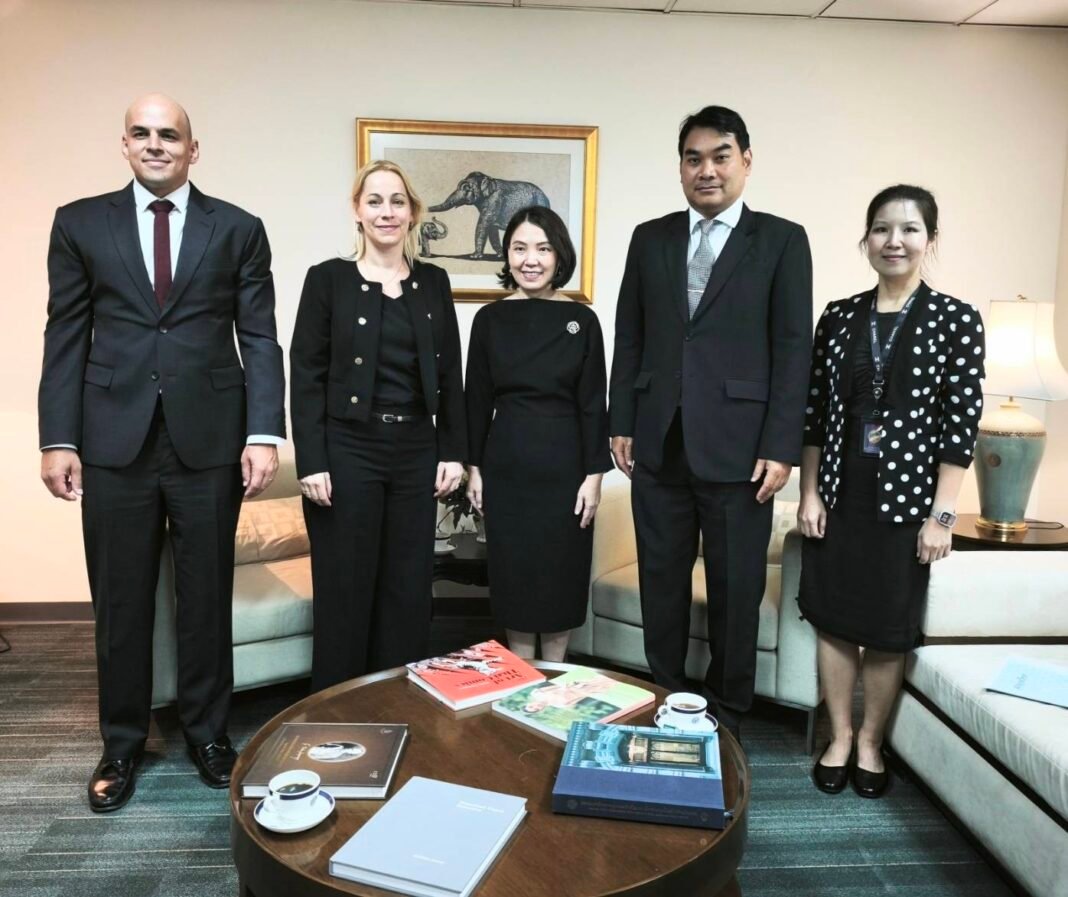
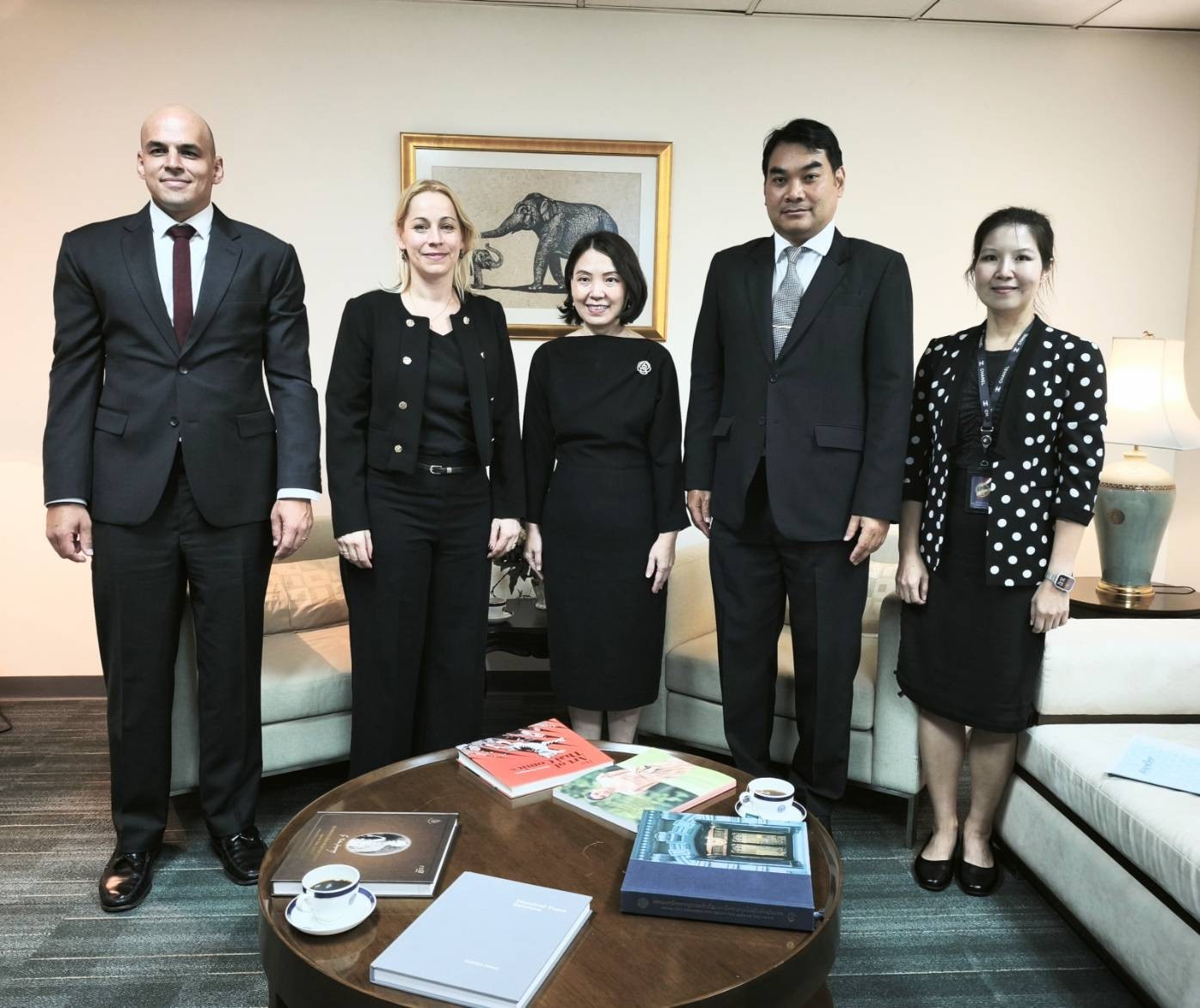
The official readout frames the trip as On 26 August 2026, Ms. Somrudee Poopornanake, Director-General of the Department of European Affairs, held discussions with Mrs. Christine Löw, Chargé d’Affaires a.i. of the Embassy of the Switzerland in Thailand regarding preparations for the official visit of H.E. Mr. Guy Parmelin, President of the Swiss Confederation (the statement does not mention dates). This meeting underscores Thailand’s intention to actively engage with key international partners during the 2026 Annual Meetings of the International Monetary Fund and the World Bank Group; a critical opportunity to advance bilateral cooperation.
Background
The Ministry of Foreign Affairs has articulated a “5S” Foreign Affairs Masterplan, prioritizing strategic partnerships. The Department of European Affairs plays a key role in executing this plan, coordinating engagements with nations within the European Union and beyond. This meeting specifically focused on aligning preparations for Mr. Parmelin’s visit – an event that provides a platform to elevate Thailand – Switzerland relations. The statement does not mention previous discussions or agreements related to these areas of cooperation.
Analysis
Thailand’s strategic objective, as outlined in the 20-Year “5S” plan, is to strengthen economic ties with nations offering significant trade and investment opportunities. Leveraging the Thailand-EFTA Free Trade Agreement (Thai-EFTA FTA) represents a key element of this strategy. The willingness to advance cooperation across multiple sectors – economy, trade, investment, science, technology, innovation, education, climate action, and the green transition – suggests a broader commitment than simply securing investment deals. The focus on these diverse areas indicates an attempt to diversify Thailand’s economic portfolio beyond traditional markets.
Implications
Should the visit yield positive outcomes, as intended, it would bolster Thailand’s position within the EFTA bloc and signal a commitment to modernizing its economy. The agreement to leverage the Thai-EFTA FTA could lead to increased trade flows and potentially attract foreign investment in sectors aligned with sustainable development goals. Furthermore, discussions on climate action and the green transition represent an increasingly important element of international relations, reflecting global pressures for environmental responsibility. The statement does not address potential geopolitical implications or Thailand’s broader engagement within the IMF/World Bank framework.
Outlook
If the visit yields a commitment to further discussions on science, technology and innovation, it could unlock opportunities for Thai firms to access Swiss expertise and technological advancements. Should the agreement regarding climate action be formalized, Thailand would be expected to align its national policies with international standards in this area. However, the success of these initiatives hinges entirely on the subsequent implementation of agreed-upon measures – a factor not directly addressed by the press release.
Conclusion
The meeting between Thai and Swiss officials represents an initial step in what is likely to be an extended effort to deepen bilateral relations. The extent to which this engagement translates into tangible benefits for Thailand remains contingent on subsequent negotiations and a sustained commitment from both sides, leaving open the question of concrete outcomes.