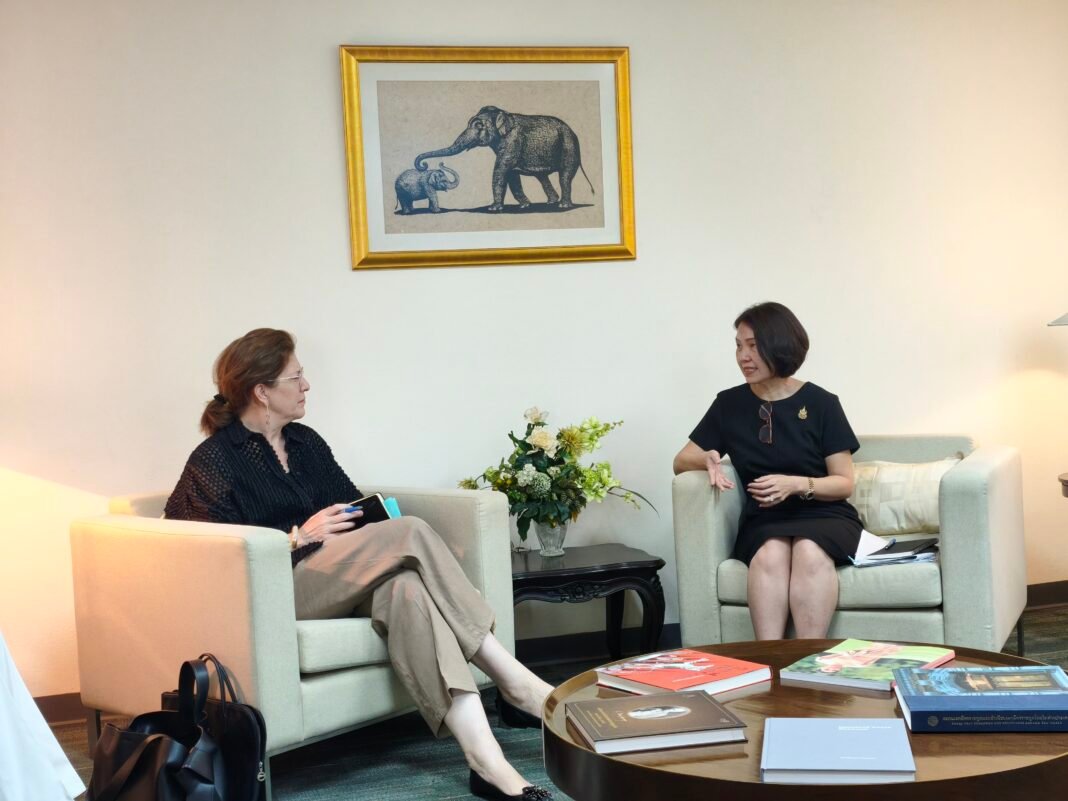
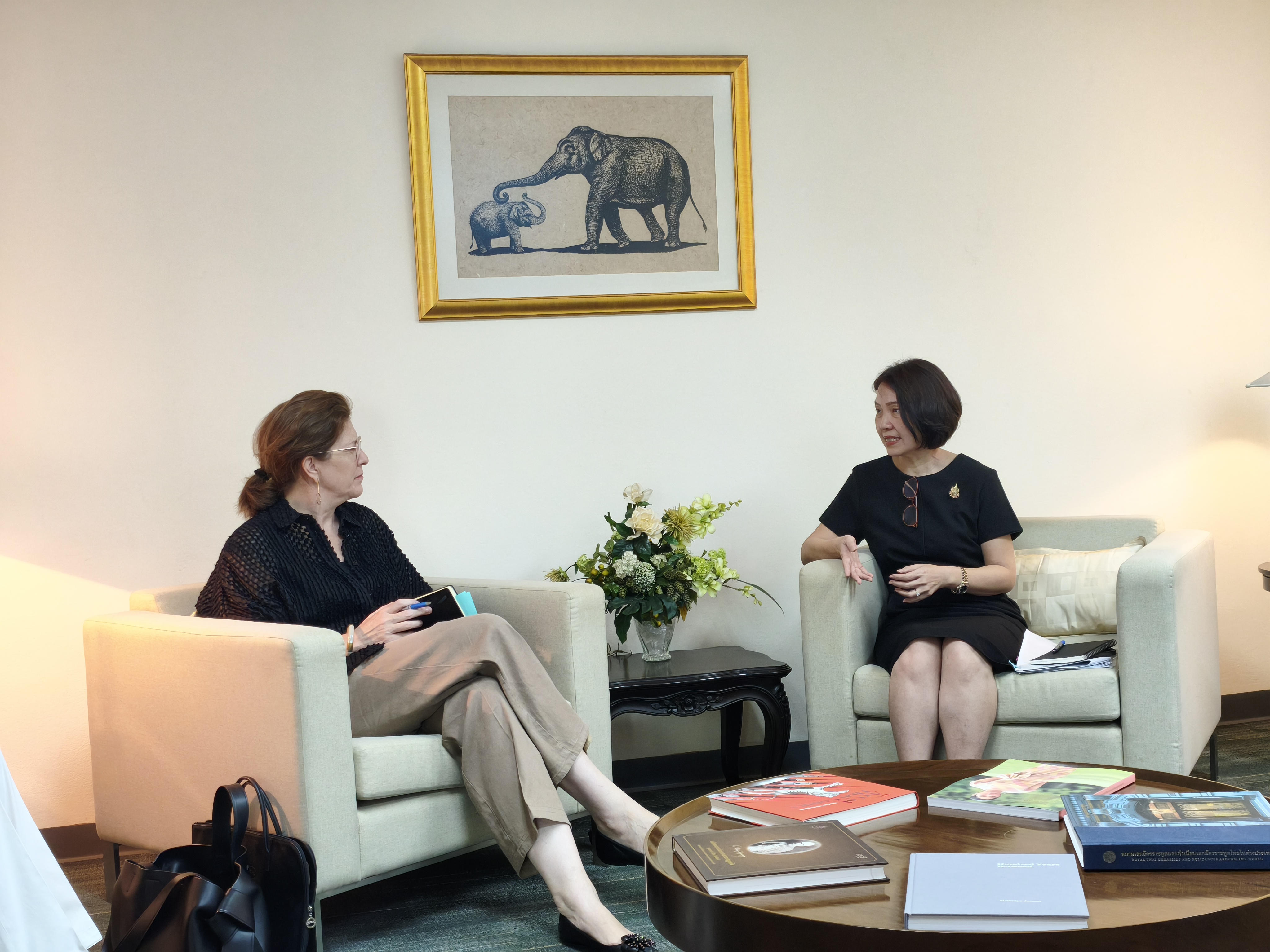
Details in a press release show that On August 6th, 2026, Director-General Somrudee Poopornanek and Chargé d’Affaires a.i. Ebba Scholl convened to discuss Thailand-Germany relations—a meeting explicitly framed around “further strengthening” ties (the statement does not address the volume of investment involved). This exchange represents a deliberate effort by Bangkok to cultivate strategic partnerships beyond traditional trade routes, particularly as Germany continues to assert itself within Southeast Asia’s defense sector. The emphasis on ‘mutual benefit’ suggests Thailand seeks to leverage German technological expertise and defence industry capabilities to bolster its own security posture—a shift highlighted by the inclusion of “defence industry” as one of the key areas for cooperation (the statement does not address Thailand’s broader strategic objectives in this area).
Background
The meeting occurred within the context of the ongoing 20-Year “5S” Foreign Affairs Masterplan, a framework established to guide Thailand’s diplomatic engagement. This plan prioritizes strengthening relationships with key regional partners, including ASEAN members and nations with significant economic influence – Germany falls squarely into this latter category. The existing Memorandum of Understanding (MoU) between Thailand and the European Union provides a foundational structure for cooperation but lacks specific detail regarding security collaborations. The statement does not mention any prior discussions concerning defence industry partnerships or high-level exchanges; however, it confirms preparations are underway.
Analysis
The Thai Ministry of Foreign Affairs’ stated focus on “political and security cooperation” alongside the inclusion of “defence industry” suggests a strategic realignment within Bangkok’s foreign policy calculations. This appears driven by a recognition that traditional economic partnerships alone are insufficient to address evolving regional security challenges, particularly given increasing Chinese influence in Southeast Asia. The discussion of ‘opportunities to advance the Thailand-Germany partnership’ implies an ambition to secure preferential access to German defence technology and potentially, joint ventures within the sector. The inclusion of “humanitarian demining” as a cooperative area—highlighted in the press release—potentially signals a desire for German assistance with ongoing counter-insurgency efforts within certain regions of Thailand (the statement does not address the specific operational context). This aligns with the broader trend of Southeast Asian nations seeking external support to modernize their military capabilities.
Implications
For policymakers in Berlin, this engagement represents an opportunity to solidify Germany’s position as a key security provider within Southeast Asia. Should the visit yield a commitment to increased defence industry collaboration, it would significantly impact regional stability—potentially altering the balance of power and influencing arms sales dynamics. Furthermore, deepening ties with Thailand could facilitate German access to strategically important infrastructure projects within the region. For Thailand, this engagement reflects a willingness to diversify its foreign policy portfolio and seek external support for defense modernization, potentially increasing reliance on Western partners. The review of “Thailand-European Union relations” suggests an attempt to leverage EU diplomatic influence in broader regional affairs—particularly concerning maritime security issues.
Outlook
If the visit yields a framework agreement outlining specific defence industry collaboration initiatives, Thailand’s commitment to procuring advanced military technologies from Germany would likely accelerate. Should the discussions primarily focus on political and security cooperation without concrete commitments regarding technology transfer or investment, the immediate impact on Thai defense capabilities will remain limited. Furthermore, should the high-level exchanges proceed as planned, it could provide a platform for Thailand to articulate its position on regional issues—particularly concerning maritime boundaries and access to strategic waterways.
Conclusion
The meeting between Poopornanek and Scholl underscores a shift in Thai foreign policy towards a more assertive engagement with major global powers. However, the statement does not address whether Thailand’s long-term security strategy will prioritize domestic defense production or continued reliance on external support – raising questions about the sustainability of this partnership.