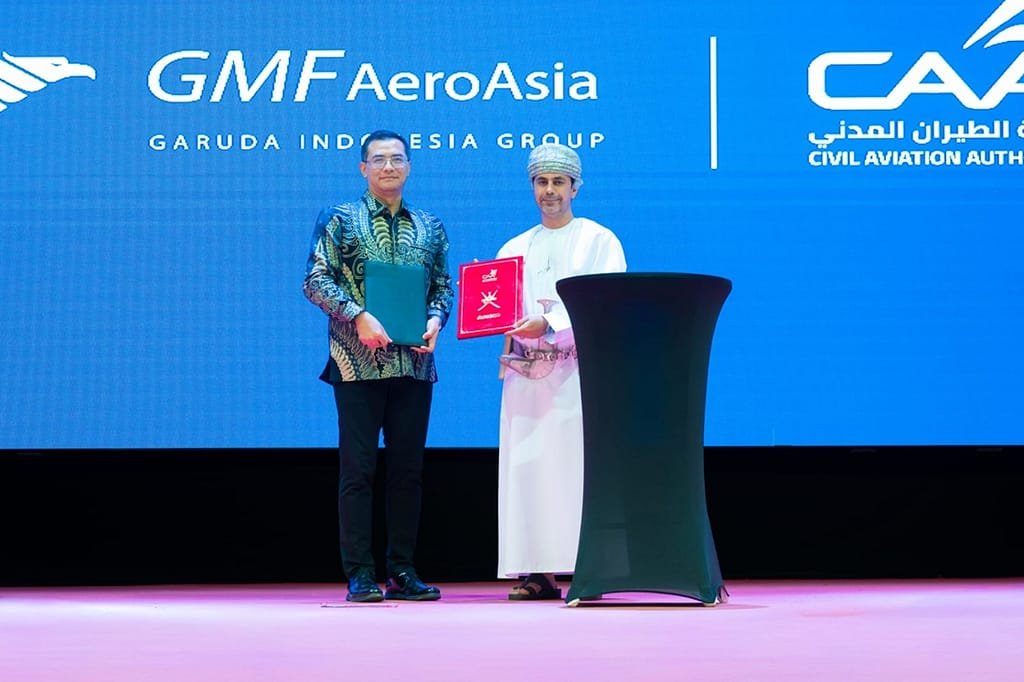
Per the government announcement, An agreement and memorandum of understanding (MoU) were signed by GMF AeroAsia with the Civil Aviation Authority (CAA), along with an agreement between GMF AeroAsia and Mach Aerospace International, during an investment forum organised by the CAA. The agreements represent a strategic step towards strengthening the aviation sector in the Sultanate of Oman. They aim to localise international technologies and expertise and develop national capabilities in aircraft engineering, maintenance and component manufacturing, in line with Oman Vision 2040 and the National Aviation Strategy 2040.
Background: Dr Abdullah bin Masoud Al Harthi, Chairman of Mach Aerospace International, said the partnership marks a shift in Oman’s aviation sector from transport and operational services towards an integrated ecosystem encompassing maintenance, repair and overhaul (MRO), engineering training, and the manufacture of aircraft components and structures. The statement does not mention prior meetings or agreements. The National Aviation Strategy 2040 identifies private investment, the development of aviation services, the localisation of maintenance activities and human capital development as key priorities, providing a favourable environment for these projects to grow and expand.
Analysis: This initiative seeks to reduce Oman’s reliance on external providers for aircraft maintenance and manufacturing. If implemented as described, this represents a concerted effort to bolster the national economy by creating high-skilled jobs and generating value within the Sultanate. The stakeholder incentives are linked to attracting private sector investment and developing national capabilities, directly aligning with objectives outlined in Oman Vision 2040. The agreement is predicated on a recognition of the existing skill gaps within the Omani aviation sector.
Implications: The potential investment of approximately OMR 25.4 million (USD 66 million) could significantly reshape Oman’s aviation landscape. For policymakers, this represents an opportunity to diversify the economy beyond oil and gas, bolstering infrastructure and stimulating related industries. The shift towards localised maintenance activities will reduce reliance on imports and could position Oman as a regional hub for aviation services, particularly if the projects are successful.
Outlook: Should the visit yield the desired outcomes regarding investment and technology transfer, the establishment of the aircraft wheels and brakes maintenance centre will provide a vital component of the aviation ecosystem. If the Aviation Engineering Academy successfully trains Omani engineers and technicians to international standards, it will contribute to a sustainable industrial and technical base combining GMF AeroAsia’s expertise with Mach Aerospace International’s local investment and development capabilities.
Conclusion: The agreement between GMF AeroAsia and Mach Aerospace International, focused on a multi-faceted ecosystem, leaves open the question of how quickly the preparatory, technical and regulatory work can be completed and the Aviation Engineering Academy’s implementation phased in during 2027.