

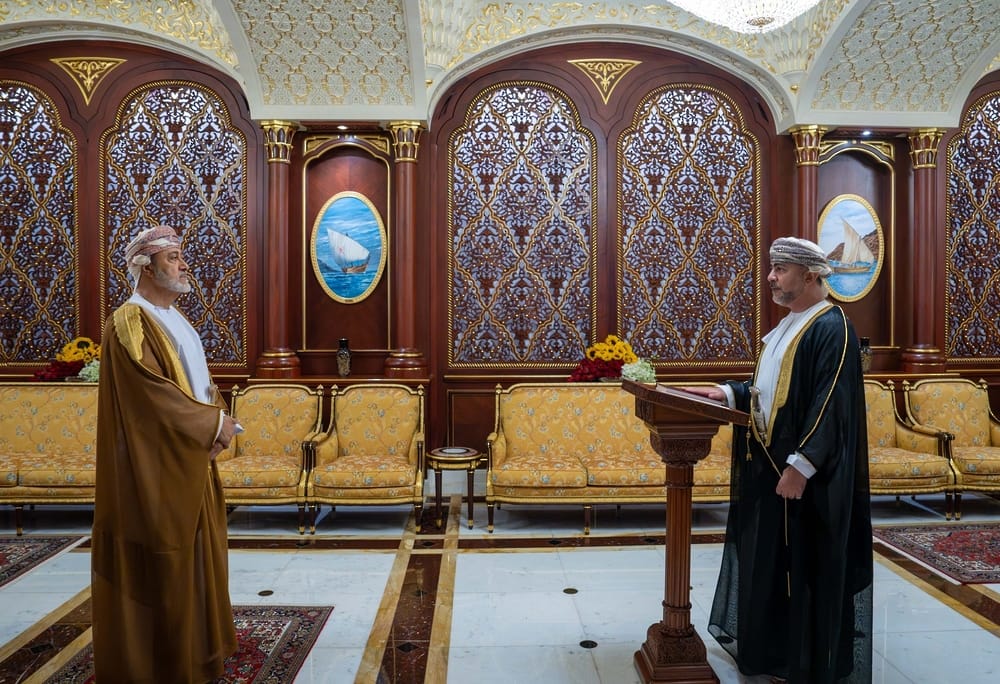
The foreign ministry readout describes On September 10, 2026, the Ministry of Foreign Affairs announced the formal appointment of twelve new Ambassadors, marking a significant expansion of Oman’s diplomatic presence. This action, witnessed by Foreign Minister Sayyid Badr Albusaidi at Al Hosn Palace in Salalah, underscores a commitment to strengthening bilateral relations across a diverse range of countries. The selection of ambassadors – including Sheikh Nasser bin Sulaiman bin Hamad Alharthy to Belarus, Faisal bin Omar bin Said Al Marhoon to Syria, and Anwar bin Ahmed bin Mohammed Muqaibal to China – reflects Oman’s continued focus on strategic partnerships in regions vital to its economic and security interests.
Background
The event follows a pattern established in September 2026 when His Majesty Sultan Haitham bin Tarik received the credentials of nine Ambassadors. This practice, detailed in the Ministry’s statement, signifies a consistent approach to bolstering Oman’s international network. The Ministry’s previous statement, dated September 10, 2026, detailed the reception of nine Ambassadors, highlighting a deliberate strategy to diversify diplomatic engagement. The formal oath-taking ceremony itself is a standard diplomatic protocol, signifying the ambassadors’ official appointment and acceptance of their responsibilities.
Analysis
The appointment of these ambassadors suggests a deliberate effort by the Sultanate to deepen ties with nations across Eurasia and Africa. The inclusion of ambassadors to China, Malaysia, Japan, Austria, Kazakhstan, Somalia, Senegal, Rwanda, and the Syrian Arab Republic demonstrates a strategic prioritization of economic and political relationships. The selection of Belarus, Syria, and Kuwait – nations currently navigating complex geopolitical landscapes – indicates an interest in maintaining channels of communication and potentially facilitating diplomatic solutions. The expansion of the diplomatic corps, as outlined in the Ministry’s statement, aligns with Oman’s broader policy of active engagement in regional affairs and reflects a desire to promote stability and cooperation. The statement does not address the criteria used for selecting these ambassadors, nor does it outline specific objectives for each posting.
Implications
This expansion of Oman’s diplomatic network carries several implications. For policymakers, it represents a commitment to proactive engagement in a volatile global environment. Regionally, the increased diplomatic presence could facilitate dialogue and cooperation on issues such as trade, security, and maritime security. The appointments to nations like Syria and Belarus, particularly, suggest a willingness to engage with countries facing significant challenges, potentially offering a platform for mediation and support. The statement does not address the potential impact of this expansion on Oman’s trade relations or its role in regional security initiatives.
Outlook
Should the visit by the newly appointed ambassadors yield positive initial engagements, Oman could strengthen its position as a facilitator of dialogue in the region. If the Ministry continues to prioritize engagement with nations facing geopolitical instability, it could solidify Oman’s role as a neutral actor. If the Ministry’s stated objective is to diversify Oman’s trade partnerships, then the appointments to countries like China and Malaysia will be crucial. The success of these missions will depend on the ability of the ambassadors to establish trust and build relationships with their host governments.
Conclusion
The appointment of these ambassadors presents a visible manifestation of Oman’s diplomatic strategy, but the ultimate impact of this expansion remains contingent on the execution of their roles. The question remains: will this broadened network translate into tangible advancements for Oman’s economic and security interests, or will it simply represent a further layering of diplomatic engagements?


