
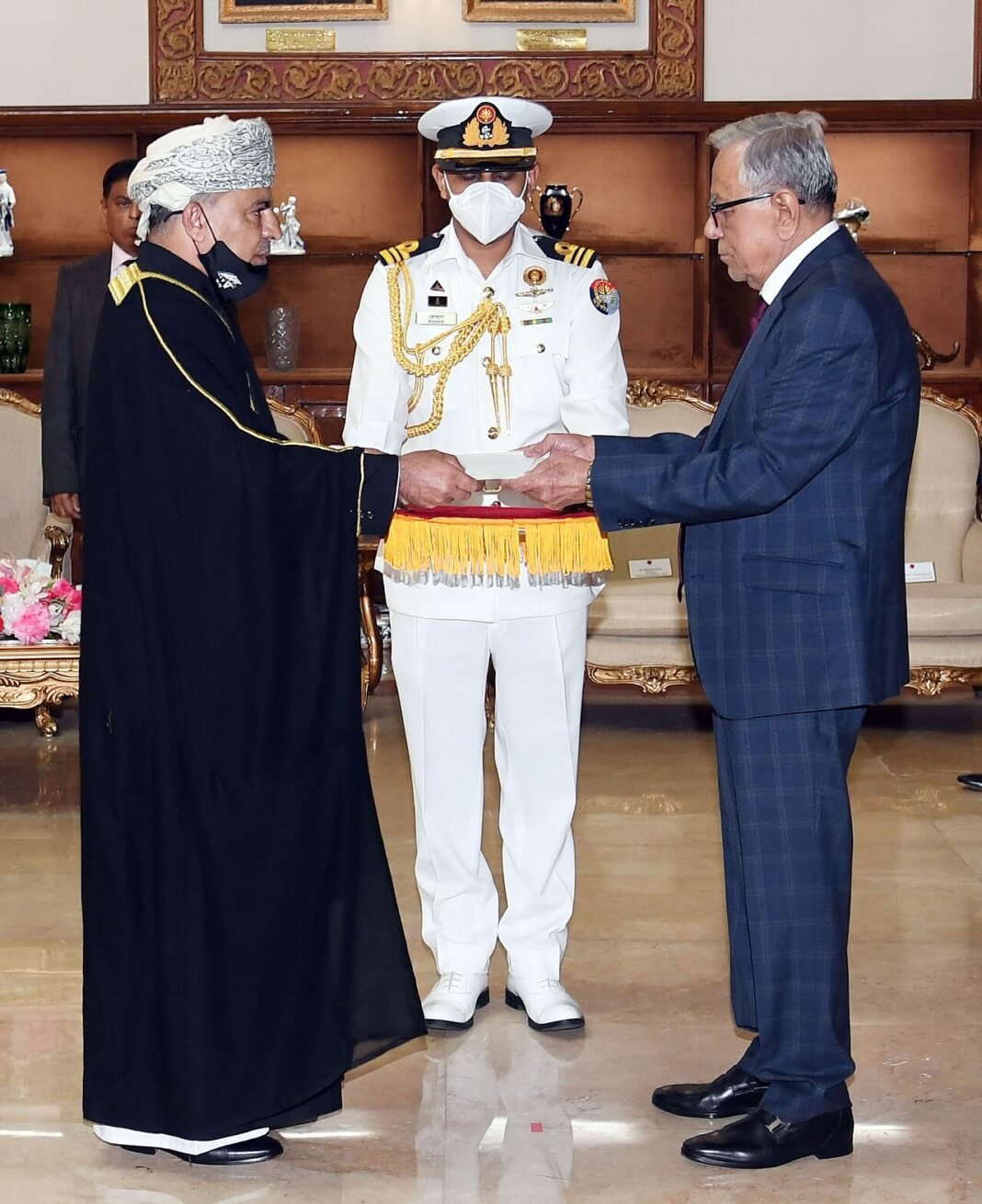
Details in a press release show that On 23 August 2026, Saleh Alrawahi, Head of the Sultanate of Oman’s Mission to Australia, presented his letter of appointment to Jonathan Muir, Chief of Protocol at Australia’s Department of Foreign Affairs and Trade. This action represents a deliberate move by Muscat to formalize its diplomatic presence in Canberra, a shift not immediately apparent from recent statements on regional security.

Background
The appointment follows previous announcements regarding visa exemption agreements – specifically, the 21 August 2026 announcement of exemptions for travel to Botswana. These measures, alongside the 14 July 2026 speech by the Minister calling for a new Gulf security policy, suggest a broadening of Oman’s diplomatic outreach beyond traditional partners. The Ministry’s condemnation of Israeli settlement activities in the West Bank and Colombian recognition of Israeli sovereignty over Syrian Golan further underscore Oman’s position on key international conflicts.
Analysis
The move to appoint an ambassador reflects a calculated strategy by Oman, one that prioritizes strategic engagement across multiple regions. The timing coincides with the ongoing discussions regarding a new Gulf security policy, as articulated by the Minister on 14 July 2026. This suggests a desire for influence within evolving regional dynamics, potentially leveraging Australia’s position within international forums such as the Pacific Islands Forum.
The visa exemption agreements, particularly with Botswana, present an opportunity to expand Oman’s economic footprint and facilitate trade relations. However, the statement does not address the potential impact of this expansion on existing trade partnerships or the broader geopolitical implications of increased connectivity within Africa.
Implications
For policymakers in Canberra, the appointment of an ambassador necessitates a reassessment of Oman’s strategic priorities and its role within the Indo-Pacific region. The deepening engagement could be interpreted as a subtle alignment with Western security interests, particularly given Oman’s longstanding relationships with countries impacted by regional instability. The statement does not address potential implications for Australia’s existing defense cooperation agreements with nations in the Gulf.
The move signals an attempt to diversify Oman’s diplomatic portfolio beyond its traditional partnerships. Should the visit yield a clearer understanding of Australia’s approach to regional security challenges, it could strengthen Oman’s hand in mediating disputes within the broader Middle East context. The statement does not address potential opportunities for collaboration on counter-terrorism efforts.
Outlook
If the visit to Australia yields a shared understanding of the escalating tensions surrounding regional security, Oman may seek to leverage its position as a neutral mediator. Should this occur, it could provide a platform for dialogue between key stakeholders and contribute to de-escalation efforts. The appointment itself does not guarantee any specific outcomes.
Conclusion
The appointment of an ambassador represents a step in Oman’s ongoing diplomatic recalibration – but the extent to which it translates into tangible influence remains uncertain. The continued prioritization of regional security initiatives, as evidenced by recent statements, will ultimately determine the long-term significance of this engagement.


.jpg)