
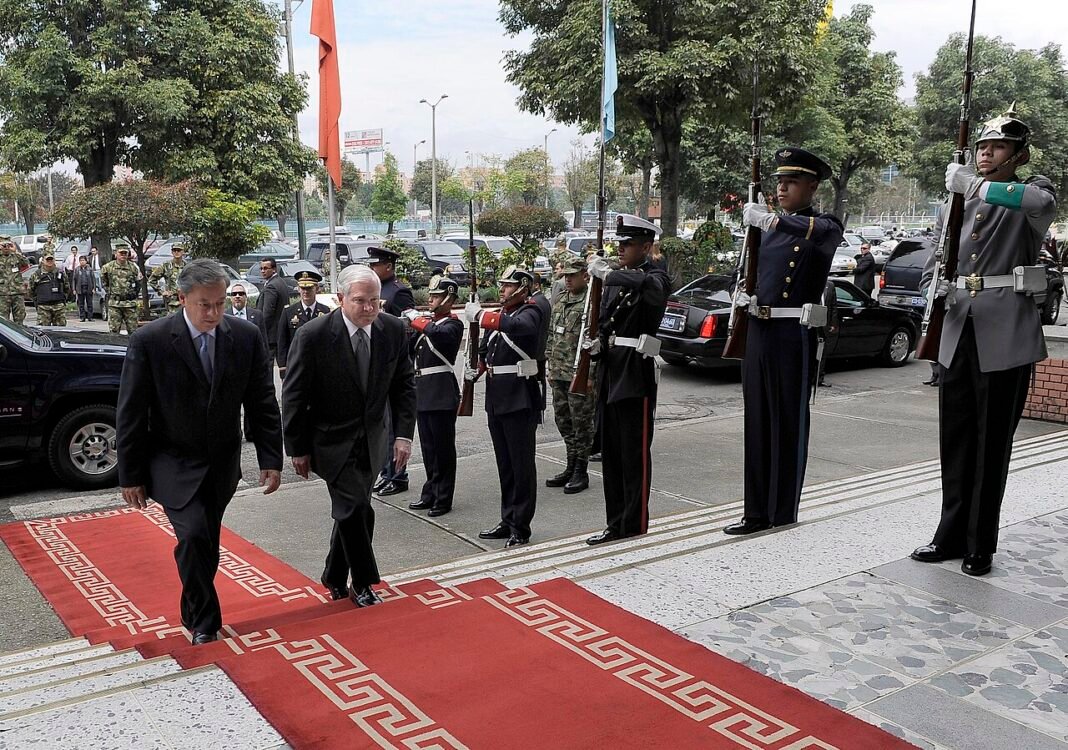
Per the government announcement, The Sultanate of Oman has formalized its diplomatic ties with the Republic of Austria through the presentation of credentials by Ambassador Salem Alhabsi on 24 September 2026. This event, detailing the Ambassador’s appointment, matters because it represents a continuation of Oman’s established practice of engaging in bilateral discussions and strengthening relationships with European nations. The statement does not address the specific topics of discussion that may occur during this engagement.

Background
This meeting follows a series of recent diplomatic engagements undertaken by Oman’s Foreign Minister. On 25 September 2026, the Minister continued meetings and consultations in New York, and engaged with the Belarusian counterpart. Prior to this, on 25 September 2026, the Minister met with counterparts from Hungary, Algeria, and Austria. These engagements reflect a broader strategy of multilateral engagement, as evidenced by the joint statement from Oman and Angola on 18 September 2026, and the joint statement from Oman and Botswana on 17 September 2026. The statement does not address the strategic rationale behind this particular diplomatic initiative.
Prior to this, in September 2026, His Majesty the Sultan was scheduled to make state visits to Botswana and Angola, as announced on 14 September 2026. The ministry’s engagement with Hungary was further demonstrated on 24 September 2026, when Zsolt Sándor, State Secretary for Digital Transformation and Cybersecurity at the Ministry of Defence, received Ambassador Malallah bin Mahmood Al Balushi, Head of the Mission of the Sultanate of Oman to Hungary. These engagements align with a pattern of diplomatic activity established in September 2026, as outlined in a state visit by His Majesty to Botswana and Angola on 19 September 2026.
Analysis
The consistent pattern of meetings and consultations, across diverse geographic locations, suggests a deliberate effort to maintain and expand Oman’s diplomatic network. The focus on established partners – Austria, Hungary, Angola, and Botswana – indicates a prioritization of existing relationships rather than a rapid expansion of diplomatic ties. This approach aligns with the ministry’s stated commitment to diplomacy as a key tool for advancing national interests, as articulated in a speech on 4 September 2026. The engagement with Austria is particularly notable given Austria’s position within the European Union, a strategically important trading partner for Oman. The statement does not address the economic implications of this engagement.
The continued meetings suggest a desire to maintain open lines of communication, potentially addressing ongoing regional challenges and exploring opportunities for collaboration. The meetings with counterparts from Hungary, Algeria, and Austria indicate a broader commitment to multilateral engagement, reflecting a desire to influence international discussions and shape regional dynamics. The consistent engagement, regardless of the specific counterpart, reinforces a commitment to proactive diplomacy. This suggests a conservative, measured approach to foreign policy, prioritizing established relationships and strategic partnerships.
Implications
The ongoing diplomatic activity has implications for Oman’s regional influence and trade relations. Continued engagement with the European Union, particularly Austria, could facilitate increased trade and investment flows. The maintenance of relationships with African nations, such as Angola and Botswana, supports Oman’s diversification efforts and strengthens its position within the Southern African Development Community (SADC). The statement does not address the potential impact of these engagements on Oman’s broader geopolitical strategy.
From a broader regional perspective, Oman’s diplomatic efforts contribute to stability and cooperation within the Gulf region and beyond. The ministry’s commitment to dialogue and engagement, regardless of political tensions, underscores Oman’s role as a facilitator of peace and security. The continued meetings demonstrate a commitment to maintaining open communication channels, which is crucial for addressing shared challenges and promoting regional integration.
Outlook
Should the visit yield further opportunities for collaboration with Austria on areas such as technology or renewable energy, as suggested by the ongoing discussions regarding cybersecurity, Oman’s diplomatic strategy would be strengthened. If the Minister continues to meet with counterparts from across Europe and Africa, it would indicate a sustained commitment to multilateral engagement and a willingness to adapt to evolving geopolitical dynamics. The statement does not address potential shifts in Oman’s diplomatic priorities.
Conclusion
The consistent pattern of diplomatic engagements highlights Oman’s ongoing commitment to a proactive foreign policy. However, the lack of detail surrounding the specific objectives of these meetings raises questions about the long-term strategic direction of Oman’s diplomatic efforts. The continued pursuit of bilateral relationships, while valuable, necessitates a clear articulation of Oman’s broader foreign policy goals.

.jpg)