
The official readout frames the trip as Minister Sayyid Badr Albusaidi met Maxim Vladimirovich Ryzhenkov, Minister of Foreign Affairs of the Republic of Belarus, during the 81st session of the United Nations General Assembly in New York. This meeting, focused on cooperation programmes and the economic and investment partnership between the two countries, matters because it represents a continuation of Oman’s engagement with a strategically important, if currently isolated, regional actor.
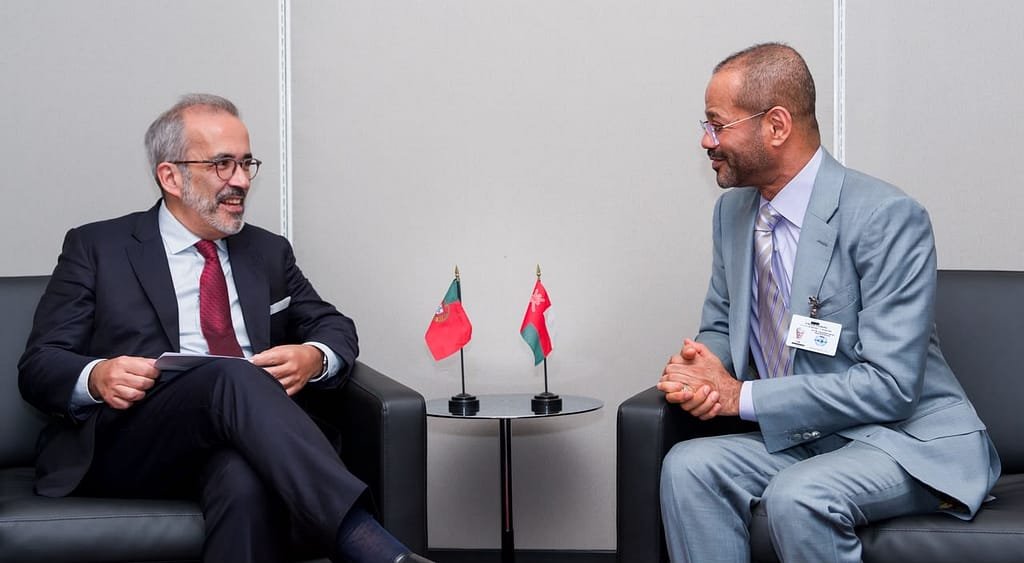
Background: The meeting occurred alongside the United Nations General Assembly, a setting frequently utilized by Omani diplomacy for multilateral engagement. Prior to this meeting, on 24 September 2026, Minister Albusaidi met with Dr Badr Abdelatty, Minister of Foreign Affairs, International Cooperation and Egyptian Expatriates of the Arab Republic of Egypt, and with Ed Miliband, the United Kingdom’s Secretary of State for Foreign, Commonwealth and Development Affairs. Furthermore, in March the ministry said Minister Albusaidi met with Paulo Rangel, Minister of State and Foreign Affairs of the Portuguese Republic. These meetings underscore a consistent pattern of engagement across a range of international partners, demonstrating Oman’s commitment to a networked diplomatic approach. The Joint Committee for Cooperation and Investment, established to advance projects and partnerships between relevant institutions, remains a key element of this ongoing relationship.
Analysis: The stated focus on boosting trade and tourism suggests a desire to diversify Oman’s economic portfolio and mitigate risks associated with over-reliance on hydrocarbons. The discussion of reciprocal travel measures indicates a recognition of the limitations on travel within the region and a proactive effort to overcome these obstacles. The ministers’ review of regional and international developments, highlighting the importance of addressing them through dialogue, reflects Oman’s traditional approach to conflict resolution – prioritizing diplomacy and peaceful means. This approach is consistent with previous statements by the Ministry, particularly the emphasis on diplomacy as a more important tool than military force, as articulated in September 2026. The stated intent to utilize the Joint Committee for Cooperation and Investment suggests a commitment to tangible outcomes, although the specific projects under consideration remain undisclosed.
Implications: The meeting’s emphasis on trade and tourism carries implications for Oman’s economic strategy, particularly if implemented as described. A successful revival of trade relations with Belarus could provide access to new markets and diversify Oman’s export base. The discussion of reciprocal travel measures could benefit the tourism sector, particularly if Belarus eases travel restrictions for Omani citizens. The review of regional developments, specifically addressing them through dialogue, is likely to have broader implications for regional stability, particularly given ongoing tensions in the wider Middle East. The statement does not address the potential impact of this engagement on Oman’s relationships with other regional actors, such as the Gulf Cooperation Council.
Outlook: Should the visit yield positive outcomes regarding trade and investment, Oman will likely continue to prioritize this relationship with Belarus. If the Joint Committee for Cooperation and Investment successfully advances projects, this could lead to increased economic activity and job creation. However, should Belarus’s political situation remain unstable, or if trade barriers persist, the economic partnership could face significant challenges. The statement does not address the potential impact of broader geopolitical shifts on Oman’s foreign policy priorities.
Conclusion: The meeting between Albusaidi and Ryzhenkov represents a measured step in Oman’s ongoing efforts to diversify its partnerships and engage with nations operating outside traditional Western alliances. The continued emphasis on dialogue and peaceful resolution, however, remains the central pillar of the nation’s foreign policy strategy.