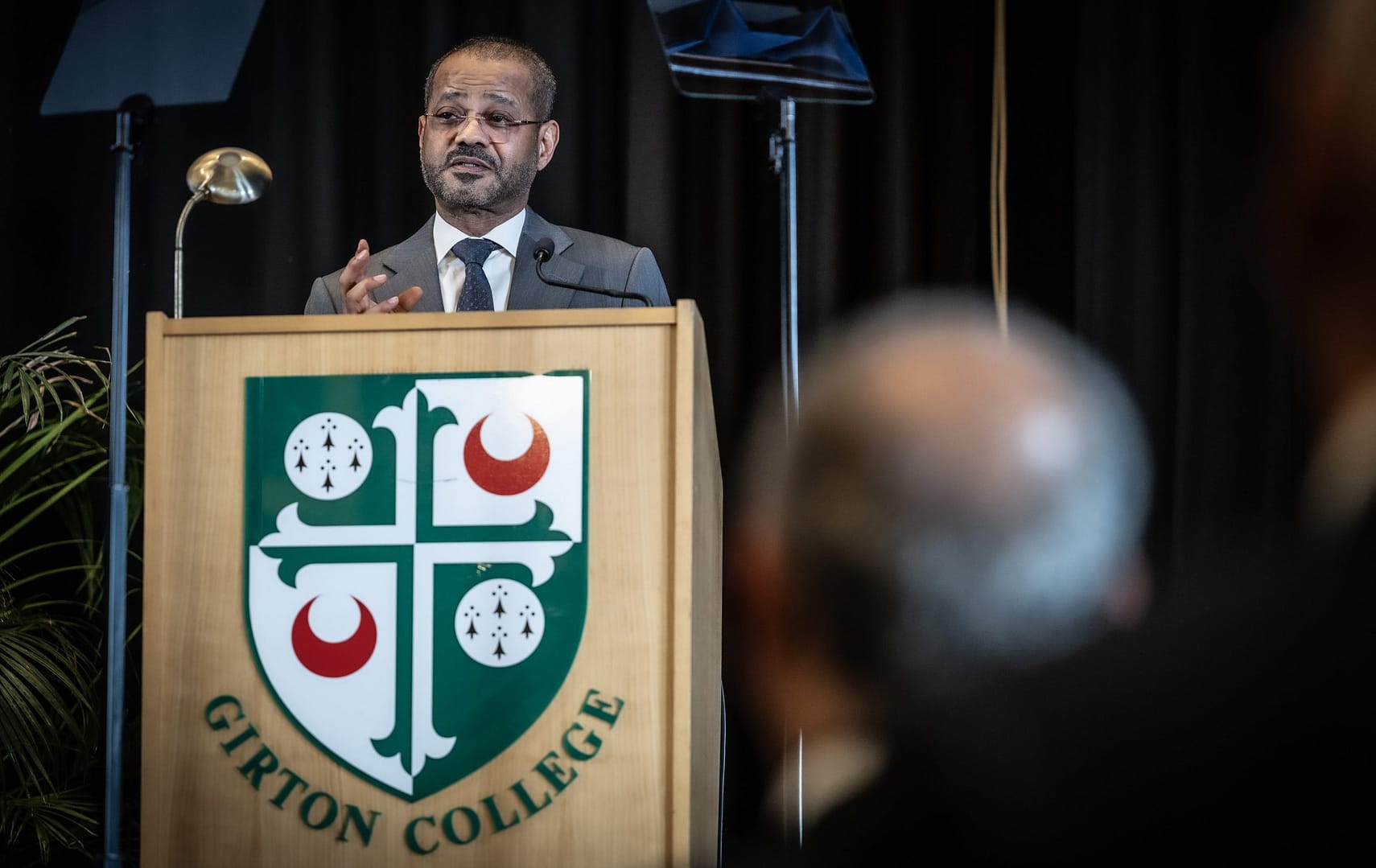
The foreign ministry readout describes The Sultanate of Oman’s Foreign Minister, Sayyid Badr Albusaidi, has issued a forceful call for the Gulf Cooperation Council states, alongside Iran and Iraq, to collectively assume responsibility for their own security. The statement, delivered at Girton College, University of Cambridge, on October 26, 2026, centers on the urgent need for a new regional framework, a proposition underscored by the significant outcomes of His Majesty Sultan Haitham bin Tarik’s recent State visit to the UK at the invitation of His Royal Highness King Charles III.
Background
The statement builds upon the ambitions of the 1976 Muscat meeting of the Foreign Ministers of the eight Gulf states, a gathering aimed at establishing a collective regional security structure. This meeting, as Albusaidi noted, serves as a renewed impetus for dialogue. Previous statements by the Ministry, dated October 25, 2026, outlined the Minister’s intention to make a major foreign policy speech addressing Gulf security. This current lecture expands on that commitment, explicitly advocating for a framework absent external powers.
Analysis
Albusaidi’s argument rests on a fundamental critique of the region’s security architecture, arguing that prolonged reliance on external partnerships has limited the Gulf states’ ability to develop arrangements rooted in their own needs. The rejection of a fundamental antagonism between Iran and the Arab states of the Gulf is a key element, reflecting a desire to move beyond decades of mistrust. The Minister’s insistence that the security of Oman depends on the security of its neighbours highlights a pragmatic concern for regional stability. This suggests a recognition that the Strait of Hormuz, a critical maritime waterway, is a central point of contention, complicated by longstanding issues regarding Iran’s nuclear programme. The statement does not address the potential economic implications of this shift or any specific mechanisms for achieving a non-aggression pact.
Implications
The call for a Gulf-led security framework carries significant implications for regional stability. Should the visit yield a renewed commitment to the 1976 Muscat meeting, it could potentially de-escalate tensions and provide a foundation for constructive dialogue. The shift in emphasis – from external partnerships to regional self-reliance – could reshape the dynamics of alliances and influence within the region. The statement does not address the potential impact on trade flows through the Strait of Hormuz or the broader geopolitical landscape surrounding the Persian Gulf. However, it could reshape the UK’s strategic priorities in the region.
Outlook
If the Gulf states were to embrace a non-aggression pact, the framework’s success hinges on the ability of all eight states to commit to its principles. Should the dialogue initiated by Albusaidi prove fruitful, a shared understanding of arrangements for maritime traffic through the Strait of Hormuz could be established. This would not necessitate abandoning partnerships with external powers, but rather redefining their role to focus on economic cooperation and investment. The Minister’s argument, if implemented as described, would necessitate a fundamental shift in the regional power balance, potentially creating new opportunities and challenges for all involved.
Conclusion
Albusaidi’s call for a regionally-driven security architecture reflects a long-held concern about external influence in the Gulf. The question remains whether the historical ambition of the 1976 Muscat meeting can be reignited, and whether the Gulf states are willing to relinquish their reliance on external powers to achieve a lasting peace.