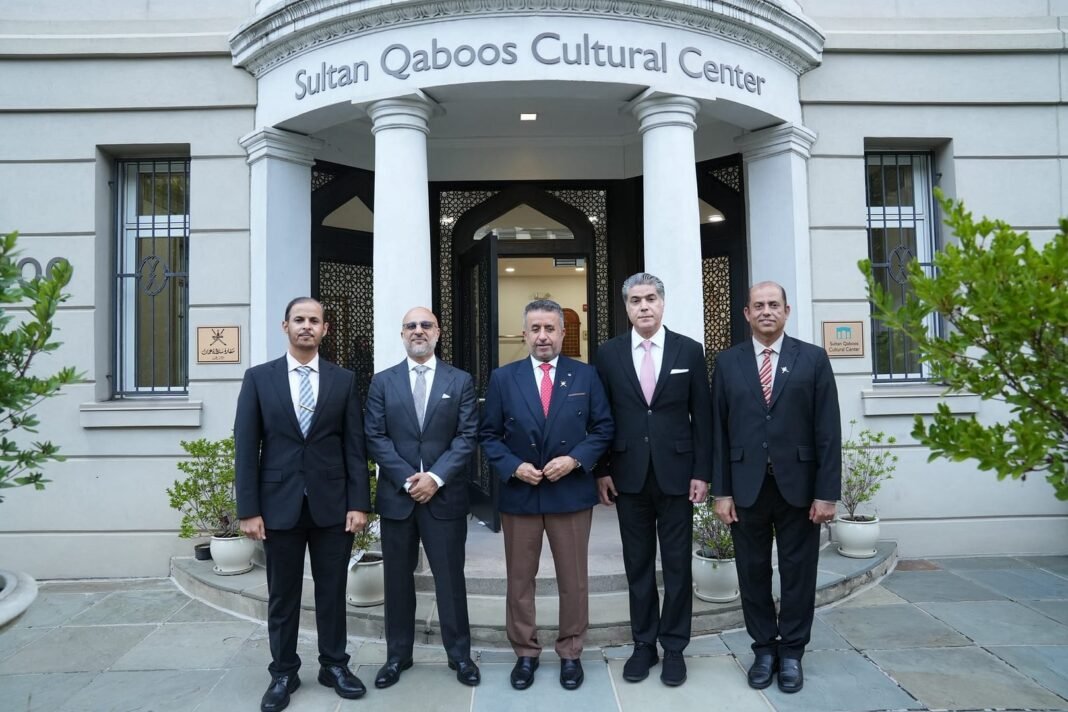
In a published statement ahead of the visit, The postponement of the regional meeting in Salalah, announced via social media by Foreign Minister Sayyid Badr Albusaidi, represents a tactical shift rather than a fundamental change in Oman’s regional strategy. The statement, released on Monday, September 13, 2026, indicates a prioritization of “constructive dialogue” – a phrase repeatedly emphasized by the Ministry of Foreign Affairs – over immediate engagement. This action, framed as creating “appropriate conditions,” suggests an assessment that the current circumstances are not conducive to productive discussions aimed at securing regional security and stability.

Background
The statement does not address the specific context driving the postponement. However, recent events, including the reported targeting of a pipeline in Saudi Arabia on September 12, 2026, and ongoing diplomatic engagements (the September 10th call with Algeria, the September 8th welcome of a joint statement), demonstrate a volatile regional landscape. The statement does not mention the ongoing discussions surrounding Israeli settlement expansion, or the broader security concerns within the Gulf. The Ministry’s repeated invocation of “constructive dialogue” points to a strategy of measured engagement, attempting to maintain channels of communication despite heightened tensions. The press release does not detail the composition of the intended regional meeting, nor does it specify the nations involved, only referring to “the region”.
Analysis
Oman’s decision to postpone the meeting highlights the challenges inherent in its role as a mediator within the region. The statement’s emphasis on “consensus” suggests a recognition that a fundamental lack of agreement exists among the parties involved. The postponement does not inherently represent a weakening of Oman’s commitment to regional stability, but rather a recalibration of its approach. If implemented as described, the postponement allows the Ministry to buy time, potentially to assess the impact of recent events – such as the pipeline incident – on the negotiating positions of key actors. The statement does not address the potential incentives driving the postponement; it is unclear whether this is a purely reactive measure, or a calculated step to shape the terms of future discussions. This suggests a strategic need to manage the current environment, mitigating potential escalation while seeking opportunities for renewed dialogue.
Implications
The postponement carries implications for regional security and trade. Should the meeting proceed as planned, it could represent a step towards de-escalating tensions and fostering cooperation. However, the delay itself signals uncertainty, potentially disrupting planned economic initiatives and impacting trade flows. The postponement does not directly address the broader security concerns within the Gulf, nor does it offer any indication of a revised approach to managing those concerns. The statement does not address Oman’s role as a transit hub, nor does it address the potential impact on regional trade routes.
Outlook
If the meeting is rescheduled within the next month, and if the conditions for “constructive dialogue” are genuinely met, it could signal a renewed commitment to regional cooperation. Should the situation in Saudi Arabia remain unstable, or if further escalations occur, the postponement may be extended indefinitely. The postponement does not offer any new insights into Oman’s broader diplomatic calculus, but it underscores the Ministry’s continued prioritization of dialogue, a strategy likely to remain in place until a more favorable environment emerges.