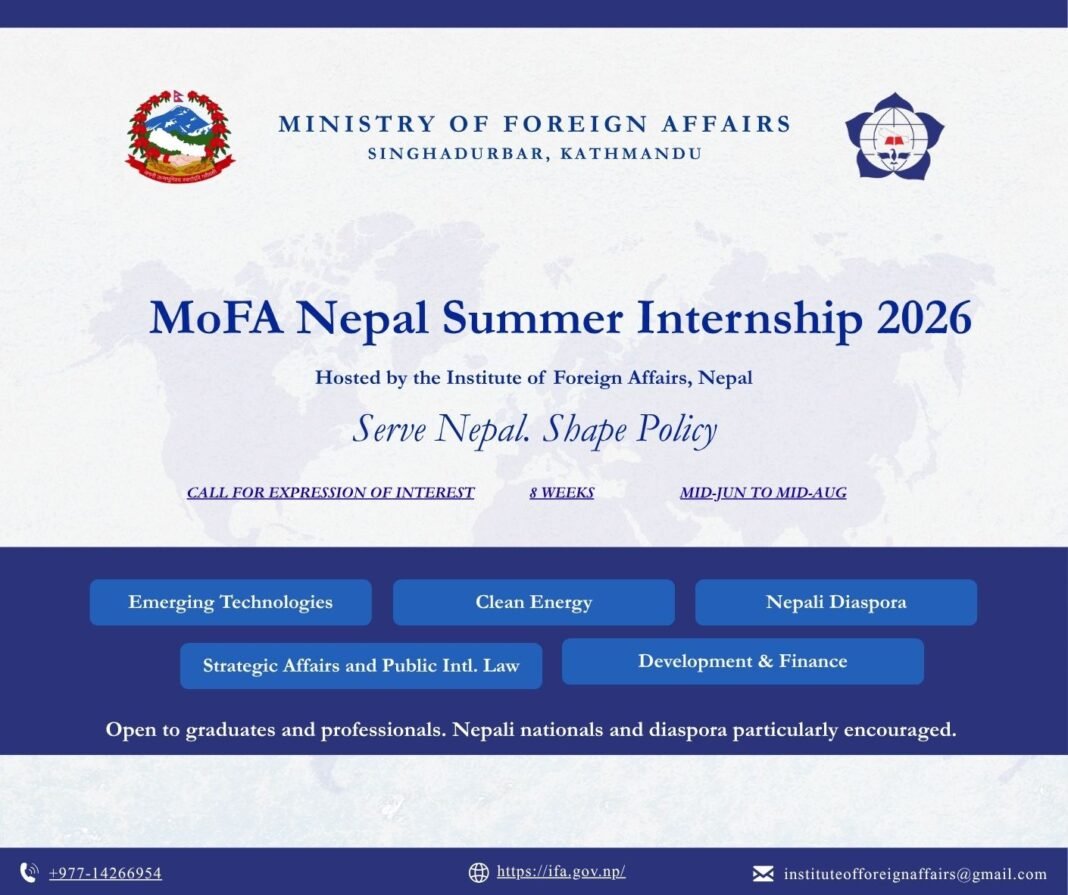
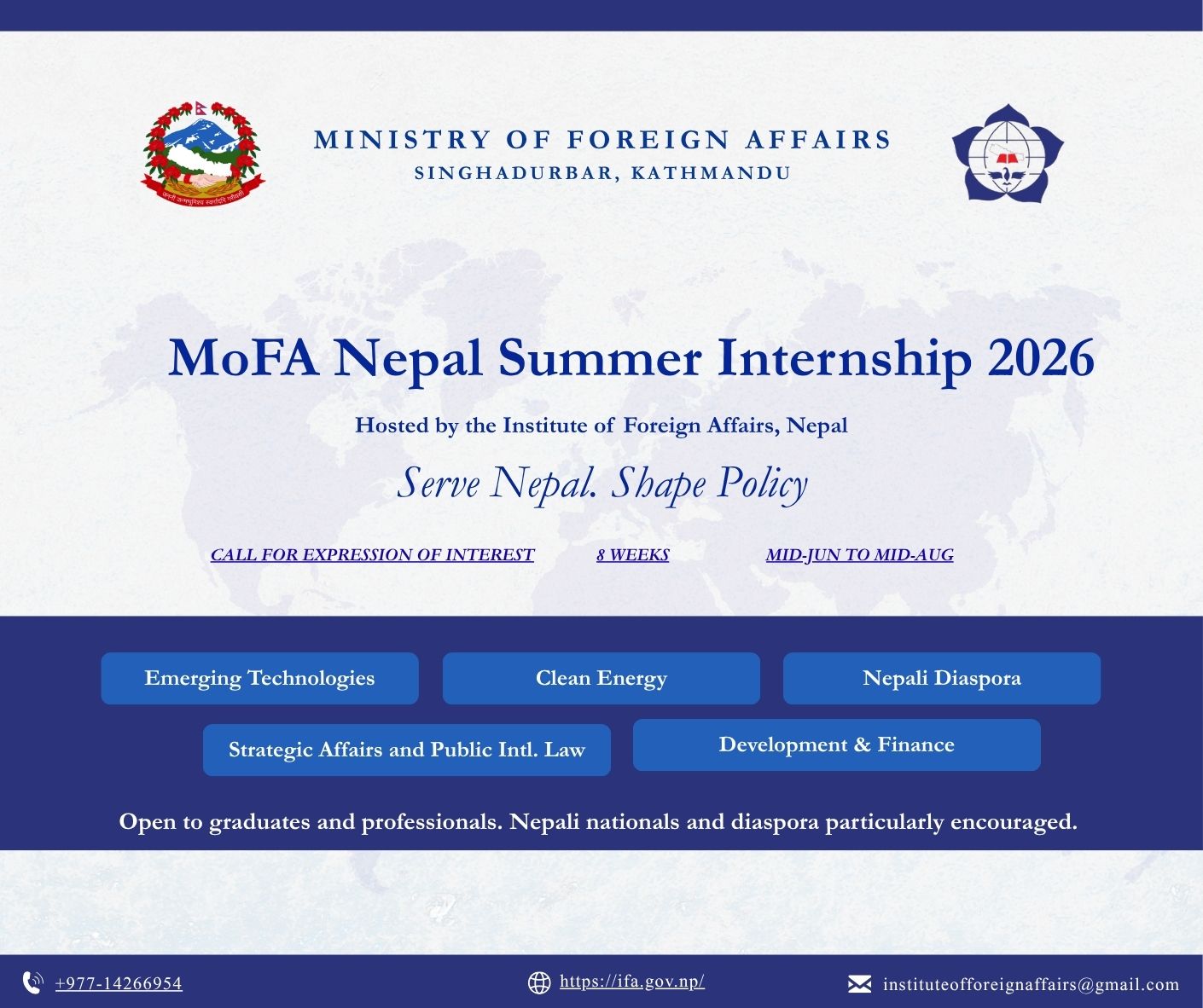
Reporting in a government statement, The Ministry of Foreign Affairs launched a summer internship program yesterday, focusing on policy research related to the ongoing Bhote Koshi flood situation. This action, announced via a press release, aims to support the development of expertise within the Nepali diplomatic corps. The statement does not mention specific numbers of internships or the duration of the program – a significant omission considering the scale of the disaster and the need for sustained engagement.
Background
The launch of this internship program is framed within a series of press briefings and statements issued by the Ministry regarding the Bhote Koshi floods. These include daily updates on the situation, a fifth press briefing specifically on the flood, and a fourth briefing concerning the floods. The Ministry also released a note from the Foreign Secretary, dated Sunday, 2:00 PM, 30 August 2026, detailing further briefings. This suggests an ongoing effort to manage information and maintain public confidence amidst the crisis.
Furthermore, the press release references several previous communications related to the floods, including “Latest Updates on Flash Floods- 28 August 2026” and “Latest Updates on Flash Floods-27 August 2026”. The Ministry also released a notice regarding an Emergency Control Room (ECR) established for assistance with foreign nationals affected by the flood. The statement does not address the specific resources allocated to this ECR or its operational procedures.
Analysis
The introduction of a summer internship program represents a deliberate attempt to bolster Nepal’s capacity for strategic policy research, particularly in response to immediate crises. However, the press release provides scant detail about the program’s scope, funding mechanisms, or selection criteria. The absence of this information raises questions about the program’s effectiveness and sustainability. It is unclear whether sufficient resources have been allocated to adequately support a meaningful number of interns.
The timing of the announcement – coinciding with ongoing press briefings on the floods – appears strategically motivated. This suggests an effort to present a proactive image, demonstrating that the Ministry is not only responding to the immediate disaster but also investing in long-term solutions. The inclusion of references to prior communications highlights a consistent messaging strategy intended to provide reassurance and transparency.
Implications
The launch of this internship program carries several implications for Nepal’s foreign policy landscape. Should the initiative prove successful, it could contribute to improved crisis response planning and more informed decision-making in future diplomatic engagements. However, without adequate funding and clear objectives, the program risks becoming a symbolic gesture rather than a substantive contribution.
The program’s focus on “policy research” implies an intention to move beyond reactive disaster management towards a more strategic approach to Nepal’s international relations. This suggests a potential shift in priorities, particularly concerning regional security and economic cooperation. The initiative could also provide valuable training for young diplomats, fostering a new generation of policy experts.
Outlook
If the Ministry secures sufficient funding – details remain absent from the press release – and establishes clear performance metrics for the program, it could generate positive outcomes. Should the program be implemented as described, with interns contributing meaningfully to policy analysis and recommendations regarding flood mitigation and disaster preparedness, it would represent a valuable investment in Nepal’s future diplomatic capacity.
However, should the Ministry fail to adequately resource the initiative or establish effective oversight mechanisms, the program risks becoming underutilized and ultimately ineffective. The lack of transparency surrounding the funding model raises concerns about accountability and potential misuse of resources – particularly given the sensitive nature of the situation.
Conclusion
The launch of this summer internship program signals an ambition to strengthen Nepal’s policy research capabilities, yet significant gaps in detail concerning its scope, funding, and governance remain. The Ministry’s continued focus on providing daily updates regarding the Bhote Koshi floods underscores the urgency of the situation, but without a clear roadmap for translating that response into sustained strategic advantage, the program’s long-term impact remains uncertain.