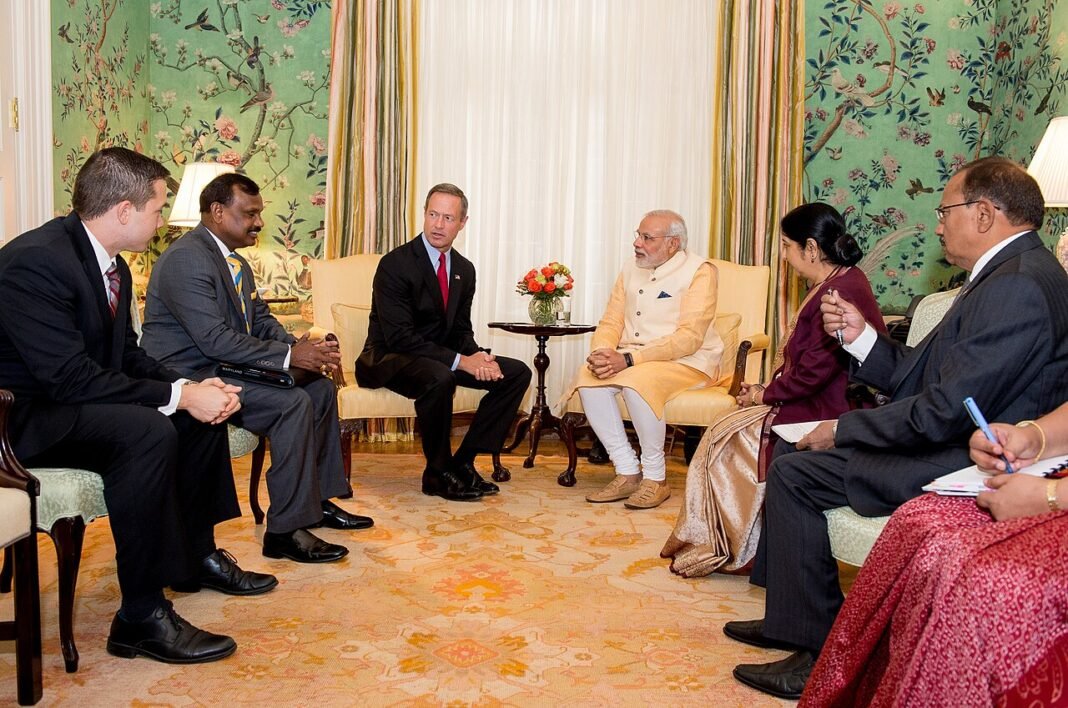
Reporting in a government statement, The press release, dated 30 August 2026, details a Sixth Press Briefing on Bhote Koshi Floods and confirms a Third Meeting of the Nepal-Australia Bilateral Consultation Mechanism (BCM) is scheduled. The statement does not mention any specific funding amount or project scope for the rail infrastructure development. This suggests a continued reliance on informal discussions rather than formally defined agreements.

Background
The Ministry of Foreign Affairs, via its spokesperson, outlined several recent engagements focused primarily on coordinating assistance related to the Bhote Koshi floods. The statement references a series of press briefings – Sixth, Fifth, Fourth, and a Press Briefing by the Spokesperson – all pertaining to the ongoing crisis. Furthermore, it cites a Press Briefing Note by Foreign Secretary on Bhote Koshi Flood (Sunday, 2:00 PM, 30 August 2026), indicating a sustained effort to manage the situation.
The release also references meetings concerning “सरकारी कार्यालयमा प्रयोग हने निवेदनको ढाँचा तथा सोको कार्यान्वयन मार्गदर्शन, २०८३” and “NOTICE: Emergency Control Room (ECR) for Assistance regarding Foreign Nationals Affected by the Bhote Koshi Flash Flood,” demonstrating an operational response to the immediate humanitarian needs. The statement does not address whether this BCM meeting is linked to broader infrastructure projects or solely focused on disaster relief.
Analysis
The Ministry’s communication reveals a prioritization of reactive measures—the establishment of an Emergency Control Room and ongoing press briefings—over proactive investment in Nepal’s long-term infrastructure. This suggests a cautious approach, potentially driven by budgetary constraints or concerns about securing favorable terms from Australia. The repeated references to the BCM meeting imply a need for continued dialogue, but the lack of concrete details regarding the rail project raises questions about its feasibility and timeline.
The inclusion of notices related to assistance for foreign nationals affected by the floods highlights the immediate humanitarian priorities. However, it does not indicate any commitment to long-term development or strategic partnerships beyond disaster response. The absence of information on potential Australian technical expertise or financial contributions is notable – the statement does not address this.
Implications
The limited detail surrounding the BCM meeting has implications for Nepal’s broader efforts to attract foreign investment and modernize its infrastructure. A lack of transparency could deter potential partners, particularly Australia, which is known for its high standards in infrastructure projects. Should the visit yield no firm commitments regarding funding or technical assistance, it risks further delaying critical investments.
Furthermore, the continued focus on immediate crisis response – as evidenced by the ECR and press briefings – suggests a potential shortfall in resources dedicated to preventative measures and long-term planning. This could exacerbate vulnerabilities to future natural disasters and hinder Nepal’s economic development. The statement does not address how this situation affects broader trade relations with Australia.
Outlook
If the BCM meeting produces a preliminary agreement outlining key project parameters, including funding levels and timelines, then further negotiations could commence. However, should the visit yield no concrete commitments regarding financial resources or technical support, Nepal will remain reliant on emergency assistance and potentially face significant delays in infrastructure development.
Given the ongoing humanitarian crisis and the lack of immediate investment signals, a continued reliance on bilateral partnerships remains conditional upon the Ministry’s ability to demonstrate tangible progress – specifically, securing firm commitments from Australia regarding the rail project.
Conclusion
The press release offers little in the way of actionable intelligence regarding Nepal’s strategic priorities or its approach to attracting foreign investment. The continued focus on reactive measures suggests a prolonged period of uncertainty surrounding critical infrastructure development, leaving open the question of how Nepal will bridge the gap between immediate needs and long-term economic goals.