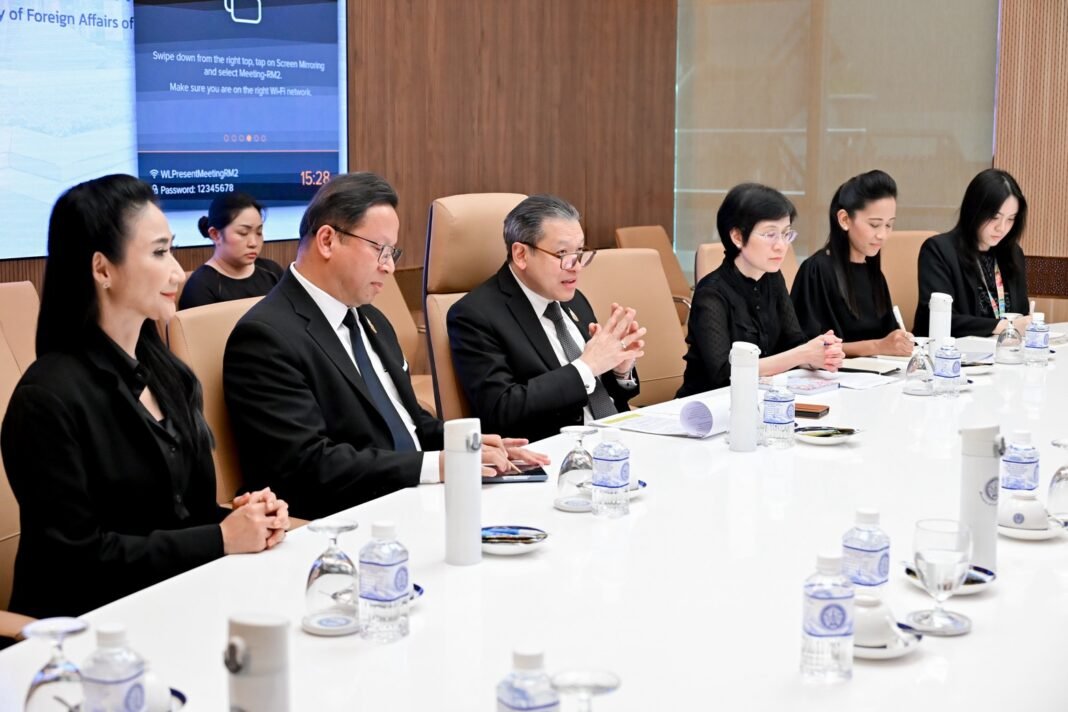
Per the government announcement, The Ministry of Foreign Affairs announced Sunday, August 30, 2026, that the Spokesperson held a Press Briefing on Bhote Koshi Floods. This event, attended by the Hon. Minister for Foreign Affairs and the Foreign Secretary, focused on the immediate aftermath of the flash floods impacting the region. The briefing addressed measures taken to assist Nepali nationals abroad and outlined ongoing efforts to facilitate their return home. This activity underscores Nepal’s commitment to safeguarding its citizens facing humanitarian crises, a priority articulated within the statement.

Background
The statement references several prior engagements undertaken by the Foreign Ministry during the month of Asar 2083 (August 2026). These included the Third Meeting of the Nepal-Australia Bilateral Consultation Mechanism (BCM), a recurring forum for discussing strategic cooperation. Furthermore, the release details exchange of congratulatory messages between the Foreign Ministers of Nepal and the Russian Federation, alongside ongoing telephone conversations between the Foreign Secretary and various international counterparts. The statement also notes preparations related to the issuance of visas for Nepali nationals seeking higher education opportunities in the UAE.
Analysis
The focus on the Bhote Koshi floods reveals a dual imperative for Nepal: immediate humanitarian assistance and ongoing diplomatic engagement. The inclusion of the UK Defence Secretary’s meeting suggests a continuation of discussions concerning long-standing entitlements owed to Gurkha veterans, a complex issue with significant historical and political ramifications. This signals an attempt by the Nepali government to proactively manage relationships with key allies while addressing persistent claims related to service personnel. The operationalization of the Emergency Control Room (ECR) indicates a formalized structure for coordinating responses to international crises, reflecting a heightened awareness of potential risks.
Implications
This briefing highlights Nepal’s vulnerability to natural disasters and necessitates continued investment in disaster preparedness and response capabilities. The engagement with the UK Defence Secretary carries broader implications for Nepal’s diplomatic strategy, particularly concerning veteran affairs and maintaining strong relationships with countries that historically supported its security interests. The operationalization of the ECR could also influence future crisis management protocols within the Ministry of Foreign Affairs, potentially impacting resource allocation and coordination mechanisms across government agencies.
Outlook
Should the visit yield further progress on Gurkha veteran entitlements, as suggested by the meeting with the UK Defence Secretary, it would represent a significant step towards resolving a long-standing issue. If the ECR proves effective in coordinating assistance efforts following future disasters, it could enhance Nepal’s reputation for humanitarian responsiveness within the South Asian region. However, should the negotiations on veteran benefits stall, this could exacerbate tensions and potentially impact broader diplomatic relations with the UK.
Conclusion
The briefing concludes with a reiteration of the ECR’s function – providing assistance to foreign nationals affected by the Bhote Koshi floods. This highlights the immediate priority, but leaves open the question of sustainable long-term strategies for mitigating the impact of climate change and ensuring effective disaster response capabilities within Nepal.