
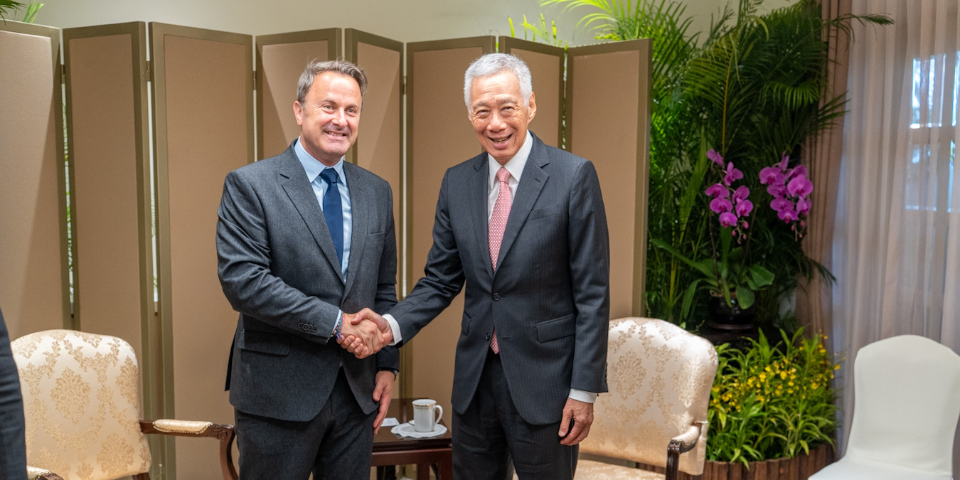
Details in a press release show that The inauguration of the Grand-Duchy of Luxembourg’s embassy in Singapore on July 25th, 2026, marks a tangible step for the nation’s foreign policy. This event, attended by Singapore’s Minister Principal, Lee Hsien Loong, and Foreign Affairs Minister Vivian Balakrishnan, represents the second leg of Vice-Premier and Minister of Foreign and European Affairs, Defence, Development Cooperation and Foreign Trade, Xavier Bettel’s trip to Southeast Asia. The statement does not mention the specific countries visited previously.
Background
Prior to this visit, Luxembourg has maintained diplomatic relations with Singapore through its embassy in the region. The establishment of a resident embassy is intended to facilitate closer cooperation. The Ministry of Foreign and European Affairs, Defence, Development Cooperation and Foreign Trade indicates that the partnership is “founded on common values and shared objectives.” This suggests an ongoing effort to strengthen ties following previous discussions regarding bilateral relations.
Analysis
The opening of the embassy reflects Luxembourg’s evolving strategic priorities. The statement does not address whether this move signals a shift in economic engagement, particularly given Singapore’s role as a regional trade hub and technological innovator. If implemented as described, the presence of a resident embassy creates opportunities for deepened collaboration with Singapore across multiple sectors. This suggests that the government intends to leverage Luxembourg’s strengths – including its financial sector and expertise in international law – within this dynamic Southeast Asian market.
Implications
The establishment of a permanent embassy has implications for regional stability, particularly concerning discussions regarding international affairs. The conversations between Bettel and Balakrishnan included an examination of the situation in Asie du Sud-Est, the Middle East, and Ukraine. This indicates Luxembourg’s continued involvement in global diplomacy and its willingness to contribute to resolving complex geopolitical challenges. Furthermore, this action strengthens Luxembourg’s position as a key player in international trade discussions.
Outlook
Should the visit yield positive outcomes regarding increased economic cooperation, the government would likely prioritize further engagement with Singapore. If the discussions concerning regional and international affairs prove productive, it could lead to collaborative efforts on issues such as sustainable development or conflict resolution. This suggests a continued commitment to multilateralism within the Southeast Asian context.
Conclusion
The opening of the Luxembourg embassy in Singapore presents an opportunity for expanded bilateral ties. The question remains whether this will translate into concrete economic benefits for Luxembourg, or remain primarily focused on diplomatic engagement within a region facing significant challenges.