
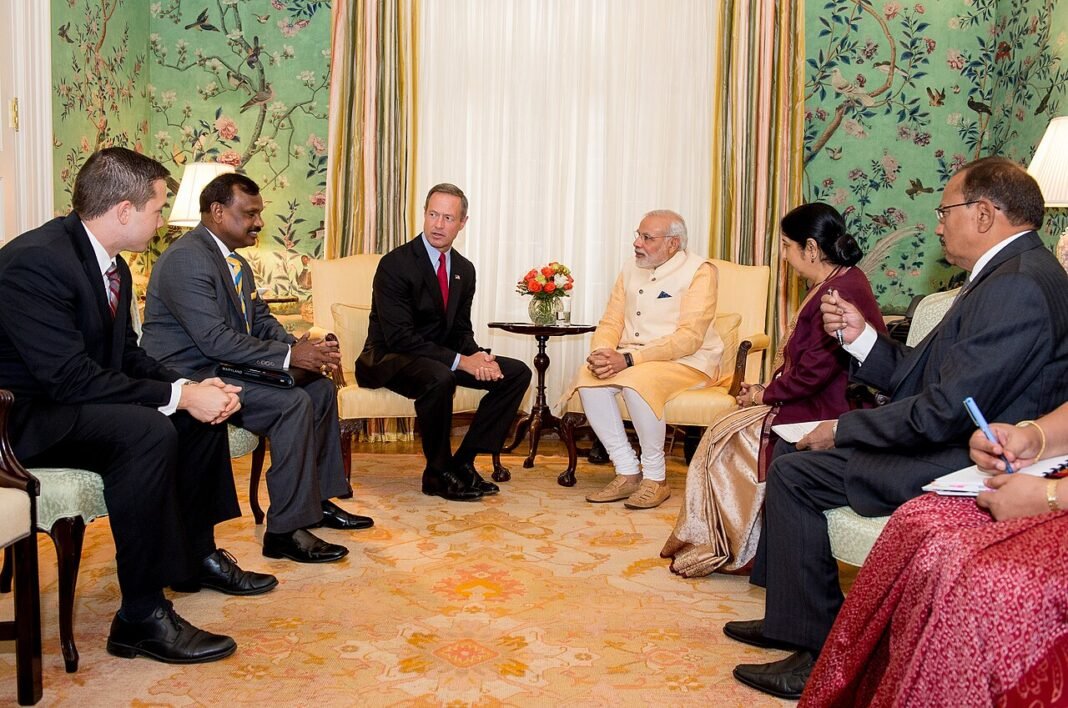
In a published statement ahead of the visit, On August 31st, 2026, Prime Minister Shri Narendra Modi met with the President of the Russian Federation, Vladimir Putin, in Bishkek, marking their first meeting of the year. This visit, coinciding with the 26th SCO Summit, underscores a continued commitment to strengthening the Special and Privileged Strategic Partnership between India and Russia. The statement does not address the underlying drivers of this partnership – primarily, a shared desire to insulate themselves from broader geopolitical instability, particularly in West Asia and the Black Sea region.

Background
The meeting followed a previous summit in Delhi on December 2025. This latest engagement follows the 27th India-Russia Inter-Governmental Commission on Trade, Economic and Cultural matters, convened in Moscow on August 24th, 2026. The statement highlights a pattern of high-level engagements intended to maintain momentum within this strategic relationship.
Analysis
The bilateral cooperation reviewed encompasses political, economic, defence, energy, space, mobility and people-to-people ties. The leaders’ focus on engagement in BRICS, with India assuming the Chairship for 2026, indicates a shared interest in promoting alternative multilateral forums. The inclusion of “the conflicts in West Asia and the Black Sea region” suggests a mutual recognition of heightened regional risks impacting maritime trade and Indian seafarers. This reinforces the strategic rationale behind the partnership: security considerations outweighing economic divergences.
Implications
Should the visit yield continued commitment to the Special and Privileged Strategic Partnership, it signals a deliberate choice by both nations to operate outside dominant geopolitical narratives. The willingness to exchange perspectives on “key regional and global issues” – including conflicts – suggests an expectation of sustained dialogue. This arrangement has implications for India’s engagement with Western allies, particularly regarding approaches to resolving disputes in the Black Sea region.
Outlook
If implemented as described, the agreement to remain engaged will be contingent on the continued resilience of this partnership against escalating geopolitical uncertainties. Should the situation in West Asia and the Black Sea region deteriorate further, India’s commitment may be tested. The planned visit to India for the 18th BRICS Summit on September 12-13, 2026, represents a key opportunity to solidify this strategic alignment.
Conclusion
The meeting in Bishkek confirms an ongoing partnership rooted in mutual need. However, the statement does not address the long-term sustainability of this relationship, particularly given the evolving dynamics within BRICS or the potential for further escalation in regional conflicts.

.jpg)