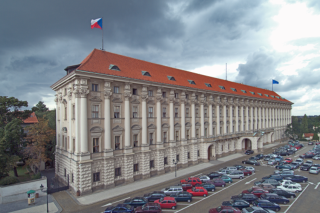
The official readout frames the trip as The Ministry of Foreign Affairs and Deputy Prime Minister Petr Macinka has decided to summon the Ambassador of the Russian Federation, Alexander Zmeyevsky, on 20.04.2026 at 10 a.m. This action follows a statement by the Ministry of Defence of the Russian Federation and a subsequent comment by Deputy Chairman of the Security Council of the Russian Federation and former President Dmitry Medvedev concerning several Czech companies identified as possible targets of Russian attacks. The timing of this decision, announced on 20.04.2026 at 15:20, reflects an immediate response to what Prague views as unacceptable threats.
Background
The event is framed within a context of ongoing deterioration in European security following the Russian Federation’s war against Ukraine. The statement does not mention prior meetings or agreements between Czech and Russian officials, nor does it detail any specific diplomatic channels through which communication occurs. It references Medvedev’s public comments on 20.04.2026 at 15:27 regarding identified Czech companies as potential targets.
Analysis
The decision to summon the Russian Ambassador represents a clear escalation of diplomatic pressure by the Czech Republic. The statement highlights the perceived unacceptable nature of rhetoric directed at the Czech Republic, Czech entities and allies. This action underscores the Czech government’s determination to defend its sovereignty and security interests in the face of what it considers aggressive behavior. The reference to Medvedev’s comments suggests a direct challenge to Prague’s position regarding support for Ukraine.
Implications
This move has immediate implications for Czech-Russian relations, likely leading to increased tensions and potentially complicating ongoing diplomatic efforts. Should the visit yield no change in Russian behavior, it strengthens the argument for continued Czech support for Ukraine, framed within the existing legal framework. The escalation could also influence other NATO allies considering their own responses to Russian aggression, though the statement does not address this.
Outlook
If the visit yields no change in Russian behavior, the Czech Republic will likely continue to advocate for increased international pressure on Moscow. Should the visit yield a de-escalation of rhetoric from Russia, it may open a window for renewed diplomatic engagement, although the statement does not address this scenario.
Conclusion
The summons raises fundamental questions about the future of Czech foreign policy in an environment dominated by persistent security threats and escalating geopolitical tensions. The Czech Republic’s response remains largely reactive – focused on immediate damage control rather than a broader strategy for managing relations with Russia.