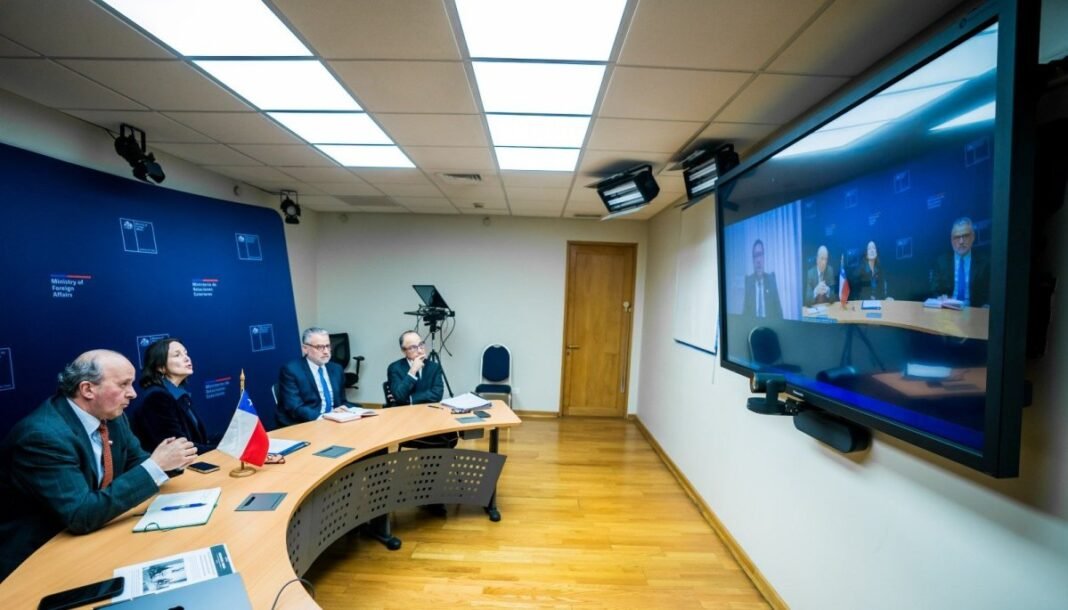
The most immediate consequence of this morning’s meeting – held via videoconference in Santiago— is Chile’s response to statements made by Brigadier General Gustavo Javier Valverde, head of the Argentine Air Force regarding the Strait of Magellan (https://www.minrel.gob.cl/sala-de-prensa/canciller-francisco-perez-mackenna-sostiene-reunion-de-coordinacion-con). This suggests a prioritization of diplomatic engagement given the contentious nature of the issue, even as the statement does not address the specific concerns raised by Argentina. The meeting also highlighted ongoing negotiations with Jeffrey Goettman, the representative adjunto of the office of the United States Trade Representative (USTR), focusing on issues previously discussed and outlining steps for continued dialogue over the coming weeks.
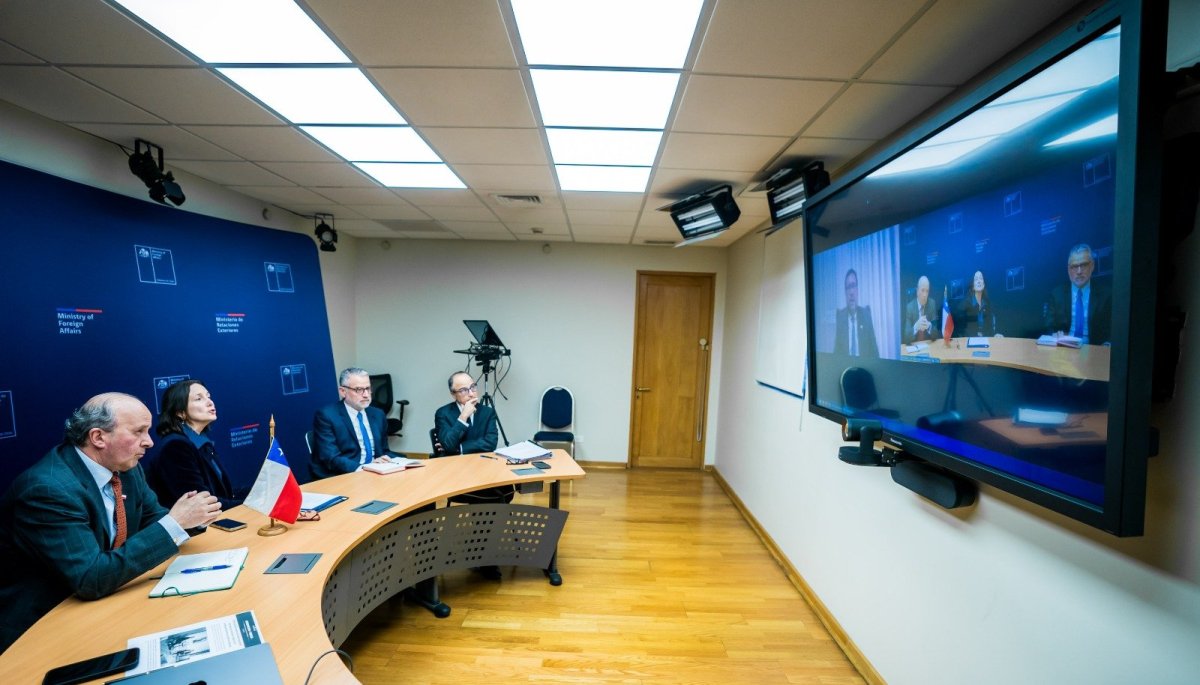
The Foreign Ministry’s coordinated approach—involving subsecretaries Patricio Torres and Paula Estévez—is part of a broader strategy initiated by Minister Francisco Pérez Mackenna. This strategy is currently framed as diversification commercial, aiming to mitigate Chile’s over-reliance on its largest trading partner, China. The statement does not mention the specific historical context driving this shift in trade priorities or the underlying economic rationale for seeking alternative partnerships.
Furthermore, ongoing negotiations with India regarding a Comprehensive Economic Partnership Agreement (CEPA) are central to this strategy. This suggests a willingness to pursue deeper economic integration across diverse regional markets. The visit of Rajesh Agrawal, Secretary of Commerce, and his team is intended to accelerate these talks, though the statement does not address any potential roadblocks or specific concessions being sought.
The simultaneous engagement with multiple nations—China, Vietnam, Japan—represents a calculated risk. While China remains Chile’s largest trading partner, achieving nearly 15% growth in bilateral trade reaching US$67 billion, the statement does not address any potential vulnerabilities arising from this concentration. The pursuit of deeper ties with Vietnam, a rapidly growing economy exceeding 100 million people and boasting an annual GDP growth rate above 8%, demonstrates a strategic interest in Southeast Asia. Similarly, Chile’s Strategic Economic Partnership Agreement with Japan—valued at US$11.062 billion—offers access to a sophisticated market and established infrastructure.
The prioritization of these relationships reflects a broader geopolitical assessment. The statement does not address the underlying motivations for diversifying trade, but if implemented as described, it indicates a recognition of shifting global power dynamics and potential risks associated with over-dependence on any single trading bloc. This suggests an attempt to enhance Chile’s strategic autonomy rather than simply pursuing economic growth.
The Foreign Minister’s tour has significant implications for regional stability, particularly in the South Atlantic. The ongoing dialogue with Argentina regarding the Strait of Magellan underscores existing tensions and highlights the need for robust diplomatic channels to manage disputes. Should the visit yield no tangible progress, further escalation remains a possibility.
Beyond this immediate issue, the pursuit of CEPA agreements with India and Japan will reshape Chile’s trade landscape. These agreements could boost Chilean exports and attract foreign investment, but they also raise questions about potential competitive pressures within domestic industries. The statement does not address these broader economic implications or outline any measures to mitigate potential negative impacts.
If the negotiations with the United States concerning trade imbalances continue successfully, it could provide Chile with greater leverage in its dealings with other trading partners. Should tensions escalate further with Argentina regarding the Strait of Magellan, a formal dispute resolution mechanism would likely be invoked, potentially involving international arbitration.
Furthermore, should the CEPA negotiations with India prove fruitful, Chile would gain access to a burgeoning consumer market and a significant source of technological innovation. The statement does not address the timeline for finalizing these agreements or any potential hurdles that could delay their implementation.
The Foreign Ministry’s current strategy – characterized by active engagement across Asia – leaves open the question of whether Chile can simultaneously advance its economic interests and maintain stability within a complex and increasingly competitive regional environment. The focus on diversification, while strategically sound, hinges on successfully navigating multiple diplomatic challenges.