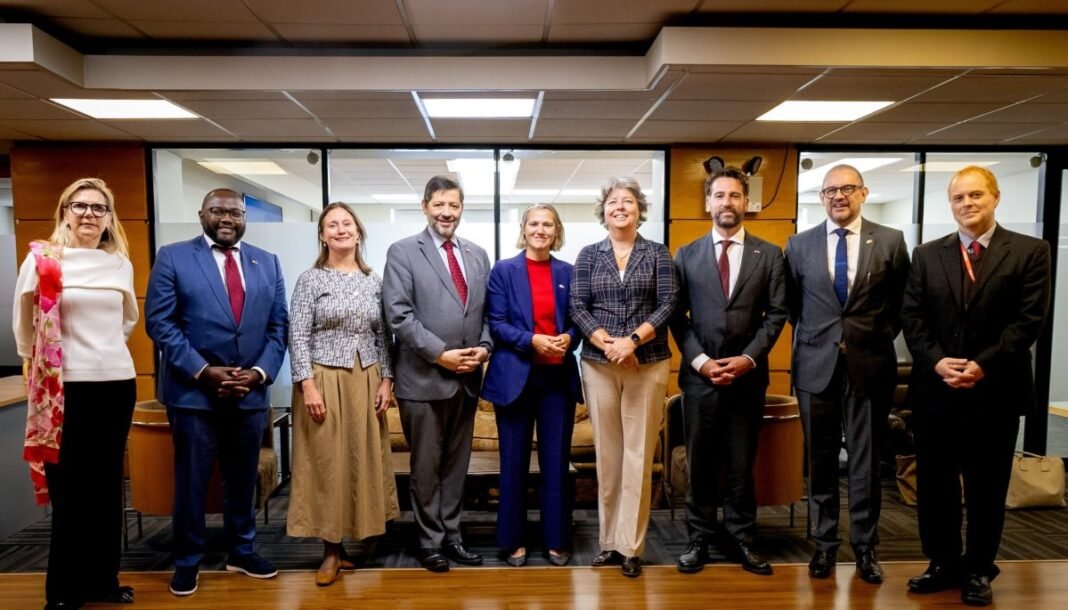
Reporting in a government statement, The Chilean Minister for Foreign Affairs, Francisco Pérez Mackenna, initiated a two-day visit to Shanghai this Friday, prioritizing the strengthening of relations with this key Asian commercial and development hub. This action matters because it represents a deliberate effort by Chile to leverage China’s vast market access—a move underscored by the presence of the Chilean Consulate General in the city since 1994 and its strategic role as a port for Chilean exports, according to the statement.

Background
The relationship between Chile and Shanghai is rooted in decades of trade. The consul general’s ongoing presence reflects a longstanding connection, while Shanghai’s logistical significance as an entry point for Chilean goods—particularly cherries, wine, salmon, and copper—is central to this new engagement. The Ministry’s stated goal is to deepen this relationship further, building upon existing commercial ties.
Analysis
The visit signals a strategic realignment for Chile, aiming to diversify its export markets beyond traditional partners while capitalizing on China’s burgeoning consumer demand. The meetings with the Vice-Mayor of Shanghai, Lu Shan, and subsequent interactions with representatives from diverse sectors—agricultural technology, construction, energy, manufacturing, robotics, technology, and transport—demonstrate a targeted approach to securing investment and trade opportunities. The announcement of “Choose Chile,” the government’s initiative to attract global companies, further reinforces this ambition, highlighting perceived advantages like a stable regulatory environment and skilled workforce.
The engagement with the China Council for the Promotion of International Trade (CCPIT), a state-run organization coordinating Chinese businesses globally, is particularly noteworthy. This suggests an effort to directly influence Chinese investment decisions and promote Chilean products within the CCPIT’s network—a key channel for accessing the Chinese market. The inclusion of companies specializing in copper, a critical export commodity, highlights Chile’s continued reliance on this resource.
Implications
This intensified engagement with China carries significant implications for regional stability and international trade dynamics. Should the visit yield positive outcomes regarding investment agreements and market access, it could bolster Chile’s economic growth prospects—dependent heavily on exports to China. However, the emphasis on attracting foreign companies also raises questions about potential shifts in control of strategic sectors and the overall balance of power within the Pacific Alliance. The growing trade relationship with China further complicates Chile’s existing geopolitical alignments.
Outlook
If the Ministry’s “Choose Chile” plan successfully attracts a significant number of foreign investments, particularly in resource extraction or technology sectors, it could exacerbate existing concerns about environmental sustainability and the concentration of economic power. Should the Chinese government increase its demand for Chilean copper—a commodity already heavily traded with China—it would further strengthen the country’s economic dependence on this single trading partner. This scenario suggests a need for Chile to proactively manage risks related to trade imbalances and geopolitical dependencies.
Conclusion
The Ministry’s Shanghai visit represents a significant step in Chile’s evolving relationship with China, but the statement does not address the potential implications of deepening trade ties with one of the world’s largest economies. The focus remains on attracting investment and promoting Chilean products—leaving open the question of how effectively Chile can navigate the complexities of this increasingly important partnership.