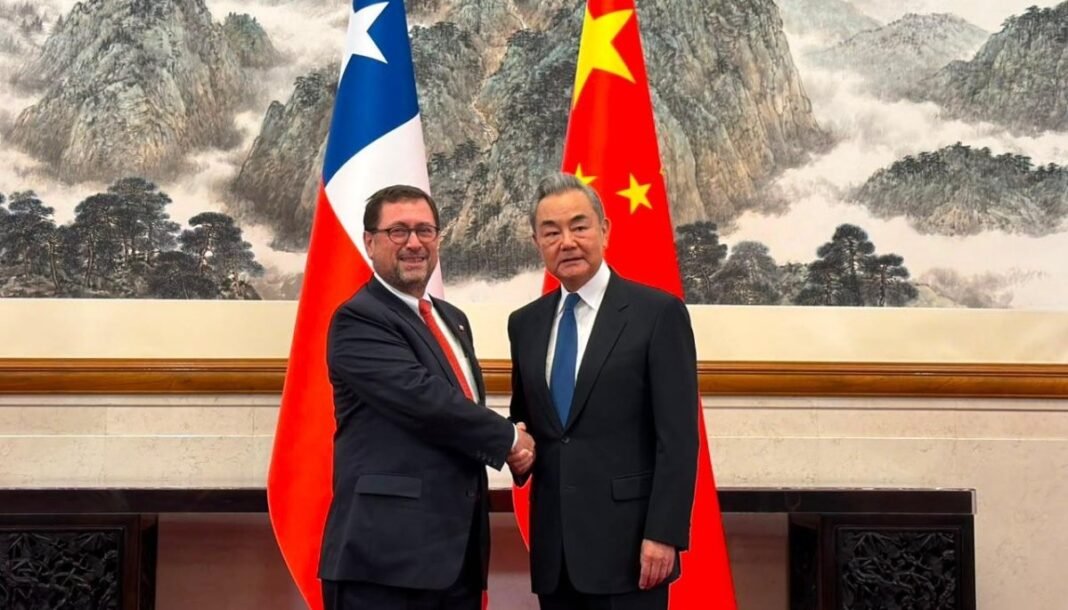
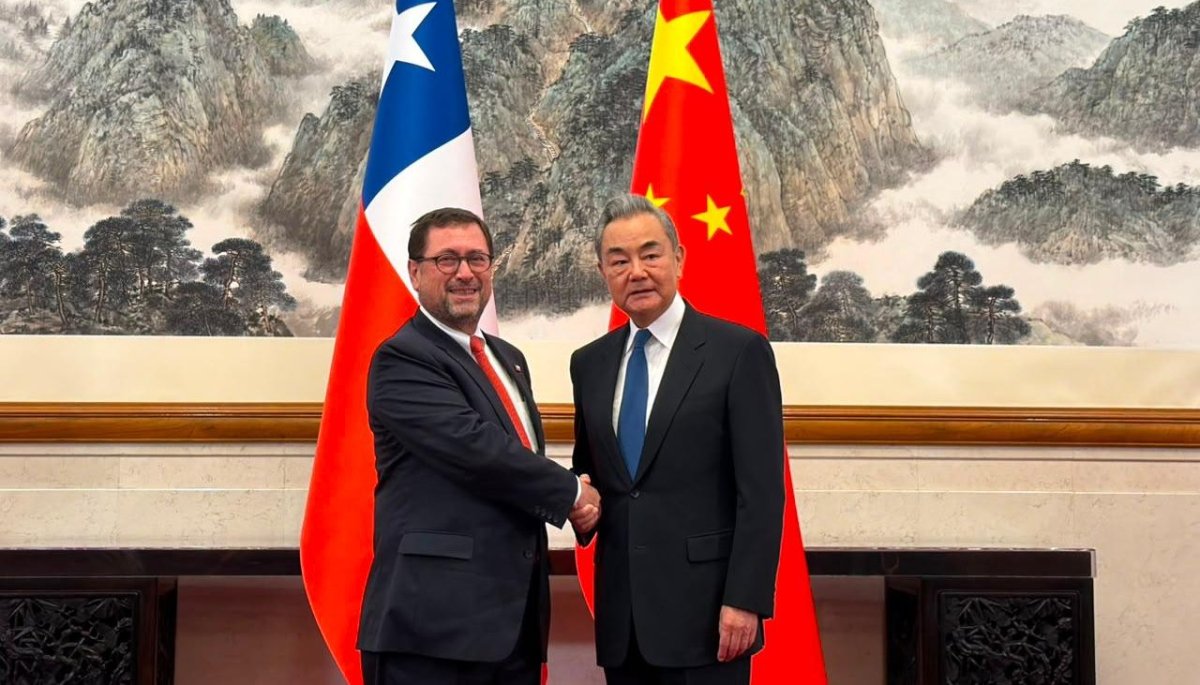
The official readout frames the trip as The most consequential concrete detail from the statement is that Foreign Minister Francisco Pérez Mackenna spent Wednesday meeting with Chinese officials in Beijing – Wang Yi, He Lifeng, Zhou Haibing, and Yin Hejun – to “afianzar las relaciones bilaterales” (strengthen bilateral relations). This matters because it represents a deliberate effort by Chile to deepen its economic partnership with China, a nation now its largest trading partner, accounting for over a third of Chile’s global commerce. The statement does not address the specific terms of any agreements reached.
Background
Chile’s relationship with China is built on a significant timeline of diplomatic milestones. Established in 1970, it was the first such link for any South American nation. Subsequent recognition in 1999 as an “economía de mercado” (market economy) and trade agreement in 2004 solidified Chile’s position as a pioneer in forging ties with Beijing within Latin America. The statement does not mention specific details of the ‘Asociación Estratégica Integral’ (Comprehensive Strategic Association) established in 2010, but highlights its success in achieving key objectives – intensified high-level contacts and sectoral exchanges.
Analysis
The meetings reflect a mutually beneficial alignment of economic priorities. For Chile, the statement does not address the primary driver of this renewed engagement: the need to stimulate economic growth following a period of relative stagnation. China’s role as a key trading partner and potential investor is presented as critical to achieving that goal. The Chinese delegation, represented by figures from the Commission for National Development and Reform (CNDR) – Zhou Haibing, specifically – signals Beijing’s interest in leveraging Chile’s renewable energy sector and stable investment environment. This suggests a strategic assessment of Chilean advantages as catalysts for Chinese capital.
The focus on “nuevas tecnologías” (new technologies), including artificial intelligence and robotics, indicates a deliberate attempt to diversify Chile’s economy beyond traditional commodities. The reactivation of the “Diálogo Estratégico en Cooperación y Coordinación Económica Chile – China” slated for 2027 is framed as crucial for this purpose. If implemented as described, it would signify a commitment to sustained economic cooperation and a shift away from solely resource-based trade.
Implications
This intensified engagement has significant implications for regional stability. Chile’s strengthening ties with China could subtly alter the geopolitical dynamics within Latin America, potentially reducing its reliance on traditional partners like the United States. The statement does not address any potential security concerns arising from this shift.
Furthermore, it impacts trade patterns globally. With China now representing over a third of Chile’s total trade, the country’s economic future is inextricably linked to the trajectory of the Chinese economy. Should China continue its current growth model, Chile will benefit significantly. Conversely, any slowdown in China would negatively impact Chilean exports and investment.
Outlook
Should the visit yield a renewed commitment to infrastructure projects and technological collaboration, as suggested by discussions with Zhou Haibing, it could accelerate Chile’s economic recovery. If, however, disagreements arise regarding trade practices or intellectual property rights – issues not addressed in the statement – tensions could emerge. The continued support of Beijing for the upcoming APEC summit in November is a positive indicator, but represents a delicate balancing act given Chile’s broader security commitments.
Conclusion
The renewal of this strategic partnership with China raises fundamental questions about Chile’s long-term economic trajectory. The statement does not offer any definitive answers to whether the alliance will deliver sustained growth or expose Chile to new vulnerabilities in a rapidly changing global landscape.