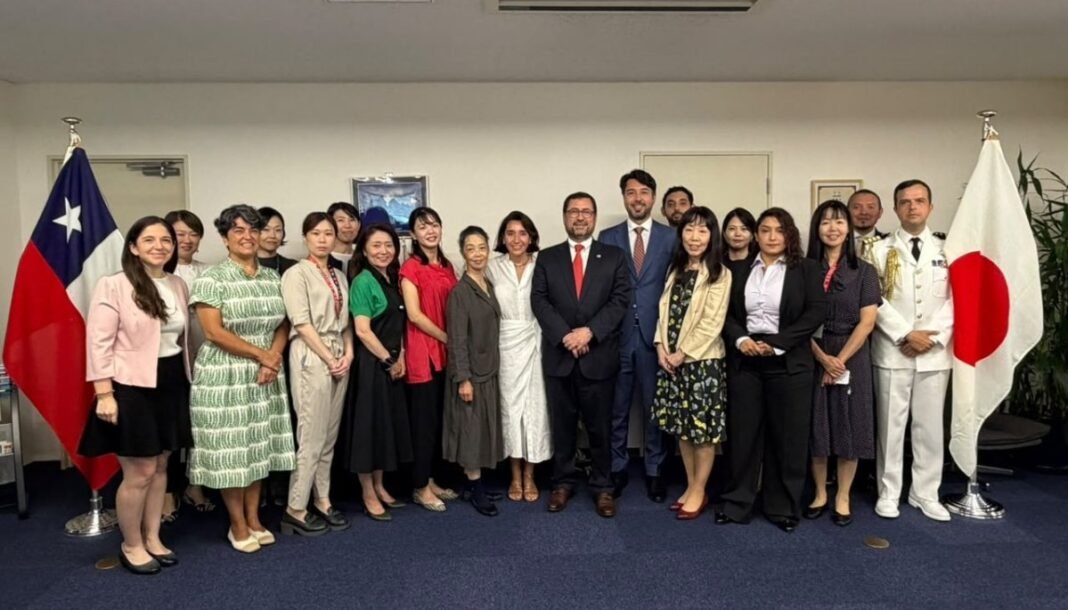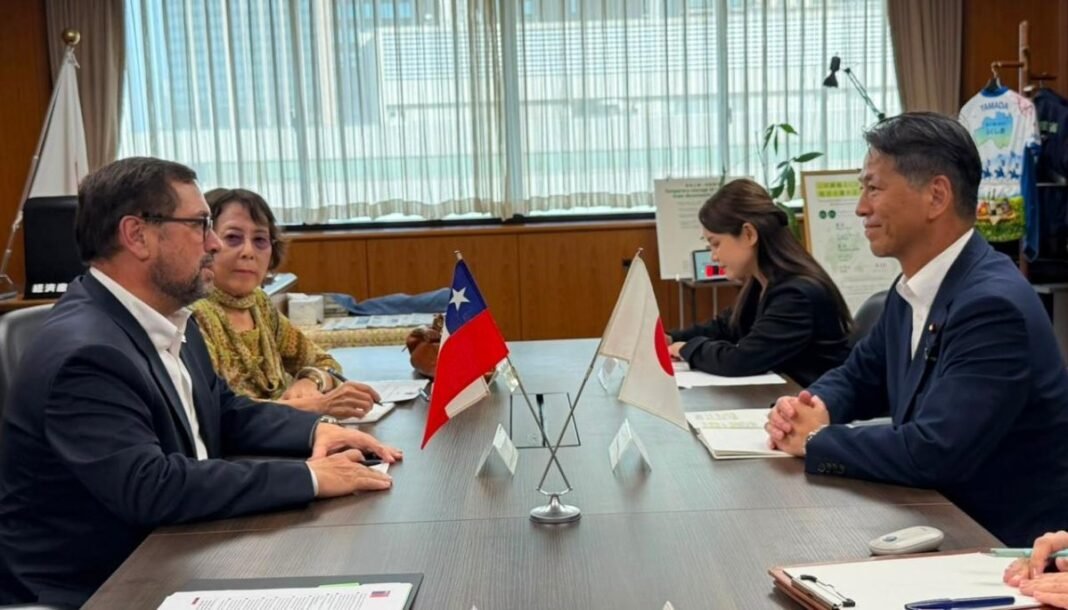
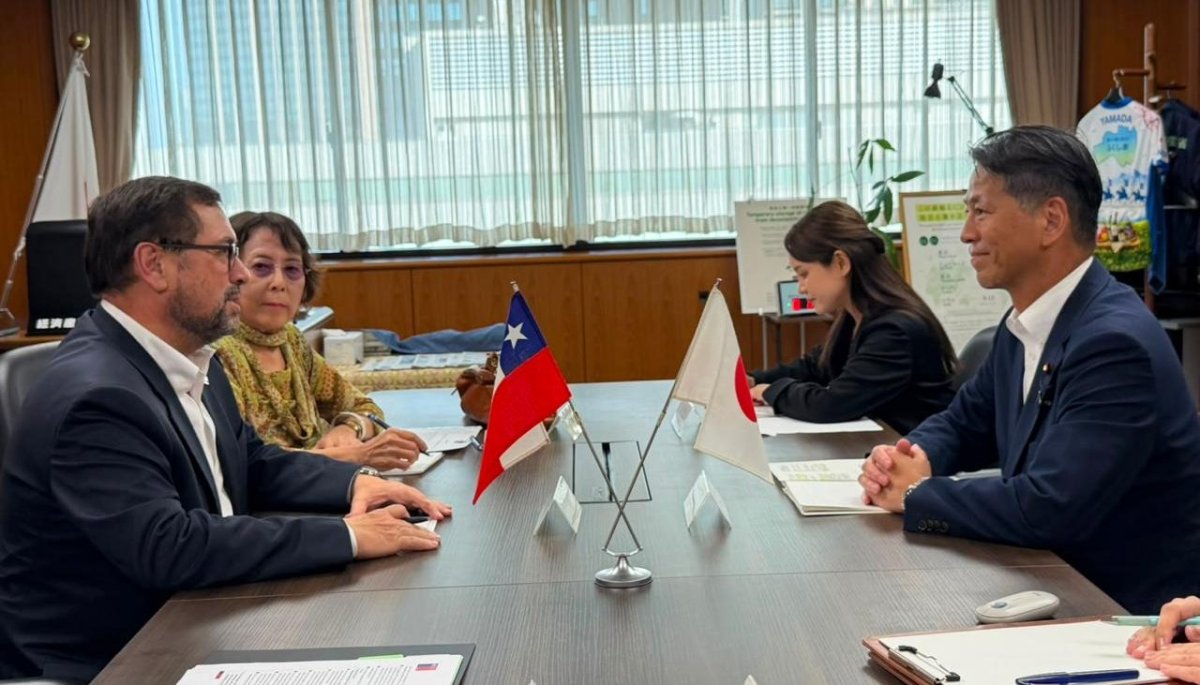
Details in a press release show that The Chilean Minister of Foreign Affairs, Francisco Pérez Mackenna, met this Wednesday with the Japanese Minister of State for Economy, Commerce and Industry, Yamada Kenji, to address the extensive commercial relationship between the two countries and explore new opportunities for Chilean products to enter the Asian market and Japanese investment in Chile.
Background
This meeting builds upon a longstanding partnership – nearly 130 years in duration – characterized by complementary economies and participation in global free trade initiatives, most notably the Comprehensive and Progressive Trans-Pacific Partnership (CPTPP). The relationship is formalized through the Strategic Economic Association Agreement established in 2007. Japan currently ranks as Chile’s fourth largest trading partner globally.
Analysis
The core of the discussion centered on leveraging the strengths of both economies, with Japan recognizing Chile’s significant exports – copper, molybdenum, salmon, and pork – while simultaneously identifying opportunities for Chilean products in sectors like automobiles, semiconductors, and technology. The statement does not address debt levels or specific investment amounts.
Crucially, the Japanese minister emphasized a strategic interest in Chile’s potential within critical minerals development, renewable energy, green hydrogen production, agrotechnology, and advanced technology. This aligns with Chile’s recent legislative reforms – specifically the Reconstruction Law – which aim to reduce taxes, provide tax stability for large projects, and streamline permitting processes, creating a more favorable business environment. The release highlights this as a key factor driving Japanese investment.
Furthermore, the meeting underscored Chile’s role as a provider of critical minerals—a sector where Japan is increasingly focused on processing, transforming, and industrializing these resources. This reflects a broader trend toward supply chain diversification and securing access to essential materials.
Implications
The deepened engagement between Chile and Japan carries significant implications for regional stability – particularly given the evolving geopolitical landscape—and represents a potential shift in trade patterns. Increased Japanese investment could bolster Chilean industrial capacity and accelerate its transition towards a green economy, potentially impacting South American commodity markets. The enhanced cooperation also strengthens Chile’s position within international trade agreements like the CPTPP.
Outlook
Should the visit yield further commitments regarding Japanese investment in critical minerals processing and renewable energy projects, Chile would be positioned to capitalize on global demand for these resources. If the Reconstruction Law continues to attract foreign capital, it could catalyze broader economic reforms within Chile, accelerating growth and diversification – contingent on sustained political stability.
Conclusion
The meeting between Pérez Mackenna and Yamada Kenji reveals a deliberate alignment of strategic priorities, but leaves open the question of how quickly Japan can translate its stated interest into tangible investments within Chile’s key sectors.