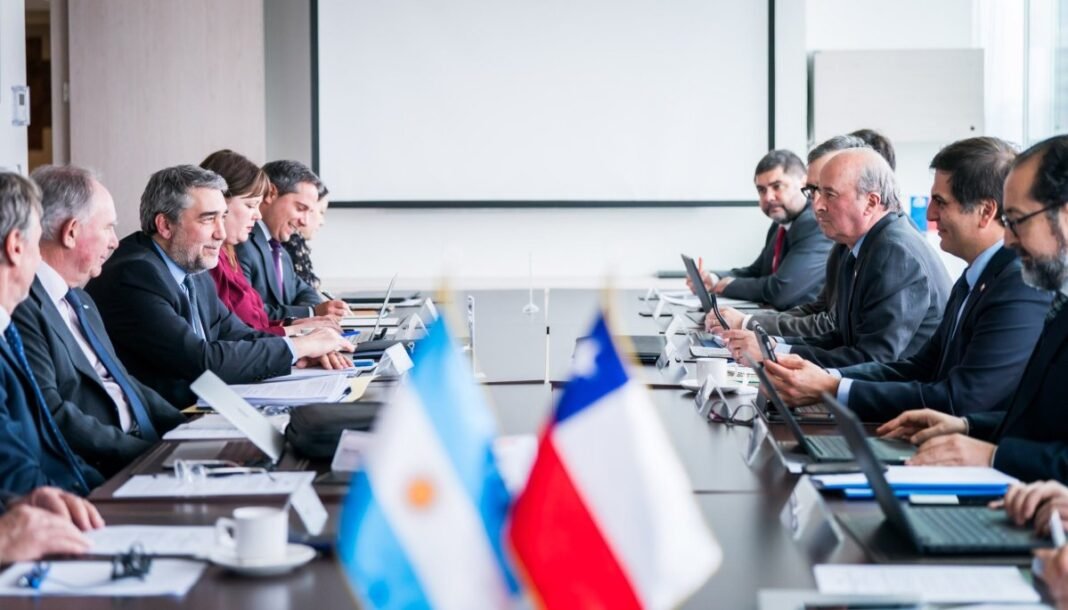
The foreign ministry readout describes Chile and Argentina have approved protocols governing the operation of three key mining projects—Vicuña, NexoAndino, and Filo Sur—a move driven by shared border resources and a desire to bolster regional economic activity. This action, announced on August 28th, 2026, marks the reactivation of the Commission Administrator Treaty for Argentin-Chilean Mining Integration, an initiative spearheaded by Foreign Minister Patricio Torres and Subsecretary of Mining Álvaro González. The statement indicates that these projects, situated in San Juan Province (Argentina) and the Atacama Region (Chile), will be developed with a coordinated approach, aiming to unlock significant growth opportunities for both nations.

Background
The Commission Administrator Treaty represents an established mechanism for cooperation between Chile and Argentina regarding mineral resources along their shared border. The initial agreement, dating back to , facilitated joint projects and streamlined regulatory processes. This renewed session of the commission, attended by Argentine Secretary of Mining Luis Lucero and Director of Latin American and Caribbean Economic Integration Marcos Stancanelli, underscores a commitment to continuing this historical collaboration. Furthermore, Subsecretary of Mining Frank Tressler’s recent visit to Puerto de Arica and the border zone highlights the Chilean government’s focus on strengthening coordination within the Ministry of Foreign Affairs.
Analysis
The approval of these operational protocols reflects a mutual recognition of significant mineral wealth concentrated across the Chile-Argentina frontier. The stated objective—facilitating “integrated project development”—suggests a prioritization of resource extraction and its potential economic benefits. However, the statement does not address the broader implications of this intensified cooperation. While the ministers highlight “great opportunities for growth,” the protocols themselves offer limited detail regarding environmental safeguards or revenue sharing arrangements between the two countries. This suggests a potential imbalance in power if implementation proceeds solely based on Chilean interests, considering the location of the projects within Argentina’s jurisdiction.
The renewed commission is predicated on the belief that coordinated action will “repotenciating the mining” along the border. The inclusion of projects like Vicuña, NexoAndino and Filo Sur—each with considerable potential—demonstrates a strategic alignment between Chile and Argentina’s resource development agendas. This signals an attempt to leverage shared assets for mutual benefit, but it does not detail how this will be achieved should there be disagreements regarding access or control.
Implications
The reactivation of the Commission Administrator Treaty carries implications extending beyond purely economic considerations. It strengthens a key bilateral relationship between Chile and Argentina, particularly at a time when regional geopolitical dynamics are evolving. The development of these mining projects could significantly impact local communities in both countries – potentially creating jobs but also raising concerns about environmental disruption and land rights. Furthermore, the agreement’s success hinges on effective coordination, which could influence broader trade flows and investment patterns across the Southern Cone.
Outlook
Should the visit yield a framework for transparent governance and equitable benefit-sharing, it would represent a positive step towards sustainable regional development. However, should disagreements arise concerning access to resources or regulatory oversight – particularly given the jurisdictional complexities involved—the situation could escalate tensions between Chile and Argentina. The statement does not address potential disputes regarding water rights or environmental standards; this suggests a reliance on informal agreements that may prove vulnerable in the long term.
Conclusion
The protocols’ approval represents a significant, albeit cautiously optimistic, development. However, the underlying details surrounding project governance remain conspicuously absent, leaving open questions regarding long-term stability and equitable benefit distribution for both Chile and Argentina. The future of this collaboration rests on the ability of both nations to navigate these complexities with transparency and mutual respect.