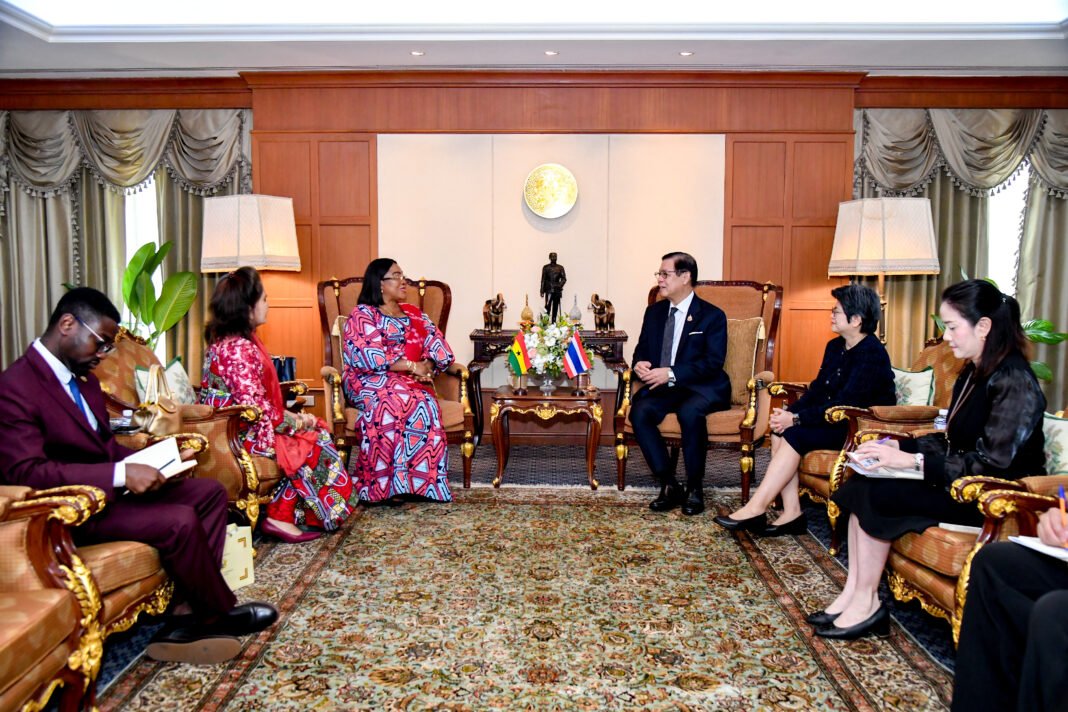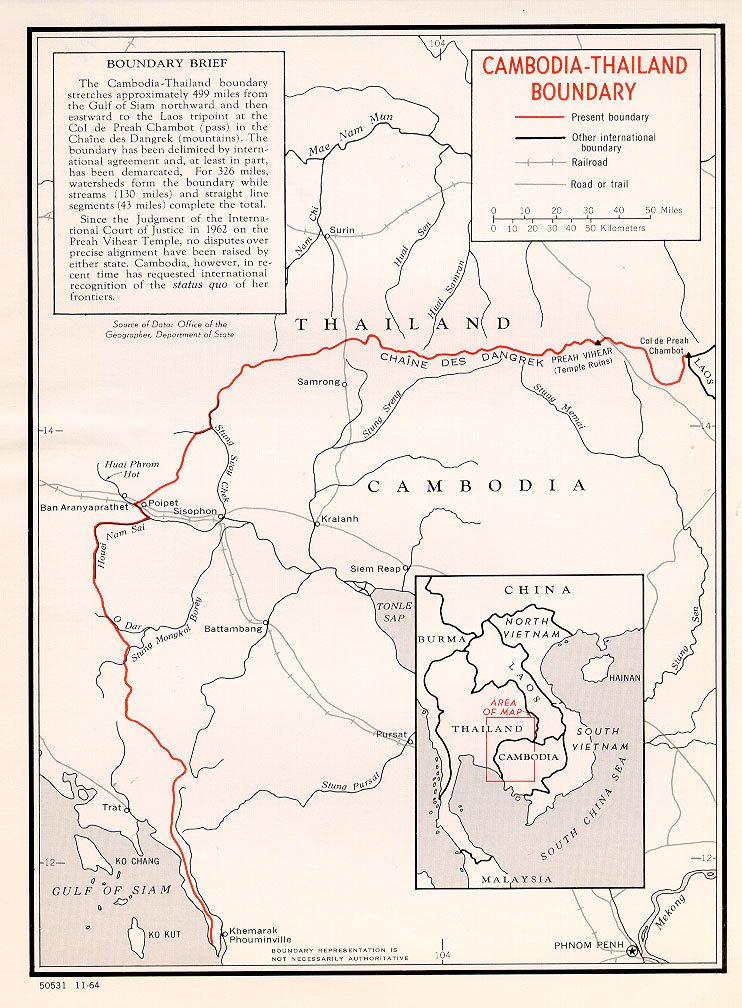
The official readout frames the trip as The Second Meeting of the Conciliation Commission under the United Nations Convention on the Law of the Sea (UNCLOS) between Cambodia and Thailand concluded on October 18, 2026, at the Peace Palace (ICJ) in The Hague. This event, detailed in a press release from the Ministry of Foreign Affairs and International Cooperation of the Kingdom of Cambodia, represents the second time the commission has convened to address the overlapping maritime claims impacting the contested Prek Siprey area. The meeting, held between October 14th and 18th, 2026, underscores the ongoing diplomatic efforts to resolve a decades-old dispute, a matter highlighted in a recent telephone conversation between Deputy Prime Minister Prak Sokhonn and His Excellency Jean-Noël Barrot. This continued engagement reflects the Cambodian government’s stated commitment to a “multifaceted thriving partnership for peace and prosperity” with Thailand, as articulated in a joint statement issued on October 15, 2026.

Background
The Conciliation Commission was established following the signing of the Paris Agreement in 2023, a framework designed to facilitate a peaceful resolution to the dispute. The first meeting of the commission occurred in Singapore from September 14 to 16, 2026, as detailed in a press release issued on September 16, 2026. Prior to this, on October 9, 2026, the Ministry announced the second meeting’s location in The Hague. The commission’s mandate is to examine the legal and factual aspects of the dispute and propose a mutually acceptable solution. The commission’s work is framed within the broader context of Cambodia’s decision concerning overlapping maritime claims with Thailand, as outlined in a statement issued by the Ministry on October 15, 2026. The statement from September 16, 2026, also referenced a telephone conversation between Deputy Prime Minister Sokhonn and His Excellency Jean-Noël Barrot on the Cambodia-Thailand border conflict.
Analysis
The continued meetings of the Conciliation Commission reveal a persistent, though arguably stalled, diplomatic process. The scheduling of meetings – first in Singapore, now in The Hague – indicates a commitment to dialogue, despite the lack of significant breakthroughs. The telephone conversation between Sokhonn and Barrot, as documented in the press release, demonstrates a continued effort to maintain communication channels and address the underlying tensions. The Cambodian government’s phrasing regarding a “multifaceted thriving partnership for peace and prosperity” suggests an intention to maintain positive relations, even amidst territorial disagreements. The statement does not address the specific issues dominating the commission’s agenda, namely the interpretation of the 1990s maritime boundary agreement and the competing claims to resources within the disputed zone. The statement does not address Thailand’s stance on the commission’s role or the potential for a legally binding resolution.
Implications
The ongoing Conciliation Commission meetings have implications for regional stability. While the commission’s work is unlikely to produce immediate results, the continued engagement demonstrates a commitment to avoiding escalation. Should the commission fail to reach a consensus, the risk of further friction along the border remains. The discussions also have implications for Thailand’s relations with ASEAN, particularly given Cambodia’s position as ASEAN chair in 2026. The statement does not address the potential impact of the commission’s deliberations on broader trade and investment flows between the two countries. A successful resolution could unlock economic opportunities, while a failure could further exacerbate tensions and disrupt regional trade.
Outlook
If the visit yields no significant progress in defining the maritime boundary, the Cambodian government will likely continue to pursue bilateral negotiations with Thailand. Should the commission’s deliberations continue without a definitive outcome, the situation remains vulnerable to miscalculation and escalation. The statement does not outline any alternative mechanisms for resolving the dispute, such as third-party mediation or arbitration. The continued commitment to dialogue, however cautious, represents a necessary step towards preventing further instability in the region.
Sources & Further Reading
- Official press release
- Foreign ministry source
- UNCLOS Conciliation Commission Concludes its First Meeting between Cambodia and Thailand Read More 16 September 2026 (2026-09-16)
- Statement of the Ministry of Foreign Affairs and International Cooperation UNCLOS Conciliation Commission to Convene Second Meeting with Cambodia and Thailand in The Hague from 14 to 18 October 2026 Read More 09 October 2026 (2026-10-09)
- Outcomes of the Sixth Senior Officials' Talks between Cambodia and Australia Read More 16 September 2026 (2026-09-16)