
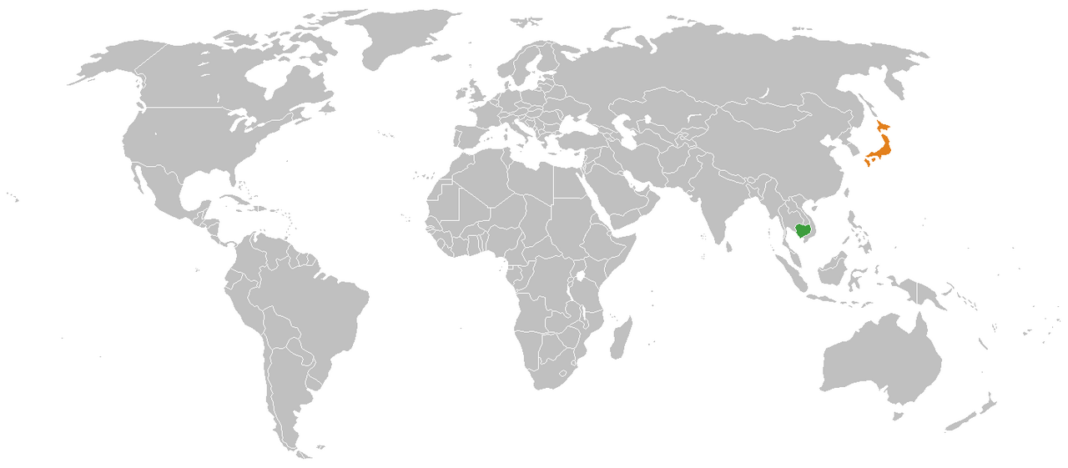
Per the government announcement, The Ministry of Foreign Affairs and International Trade of the Kingdom of Cambodia and Japan today, 27 October 2026, signed an Exchange of Notes pertaining to the extension of a Japanese Yen loan for enhancing economic resilience and stable energy supply. The agreement, formalized through the signing of related documents, focuses on two primary projects: flood protection and drainage improvement, and a water supply project. This signifies a continuation of existing Japanese Grant Aid, further cementing a strategic partnership between the two nations. The statement does not mention the specific loan amount or the total value of the Japanese Grant Aid.

Background
The Exchange of Notes represents the formal ratification of an agreement previously announced on 27 October 2026. This follows a series of related agreements, including the signing of Exchange of Notes for Japanese Grant Aid for Human Resource Development Scholarship Project and a Japanese Grant Aid for Water Supply Project. These initiatives are part of a broader trend of Japanese investment in Cambodia’s infrastructure development, primarily through grant aid and Yen loans. The statement does not address the prior timeline of these projects or the specific organizations involved in their management.
Analysis
The extension of the Yen loan underscores Cambodia’s continued reliance on external financing for key development projects. This suggests a prioritization of immediate needs – namely flood protection and energy infrastructure – over potentially longer-term economic reforms. The agreement’s focus on stable energy supply is particularly relevant given Cambodia’s expanding energy demands and vulnerability to climate change impacts. The statement does not address the potential implications of increased debt obligations for Cambodia’s fiscal stability.
Implications
For policymakers, the loan extension presents both opportunities and challenges. It allows for the immediate implementation of crucial infrastructure projects, potentially mitigating the effects of flooding and bolstering energy security. However, the continued reliance on external borrowing raises concerns about long-term debt sustainability and Cambodia’s economic autonomy. The agreement could further solidify Cambodia’s alignment with Japan’s regional economic strategies, particularly within the broader context of Japanese investment in Southeast Asia. The statement does not address potential impacts on trade relations or regional security dynamics.
Outlook
Should the visit to Cambodia by the Japanese Ambassador yield further discussions regarding additional Japanese Grant Aid, the government’s approach to managing its debt obligations will become increasingly critical. If the loan is utilized effectively to improve flood protection and energy resilience, it could contribute to Cambodia’s long-term economic growth. The continued flow of Japanese Grant Aid, as outlined in the Exchange of Notes, will depend on the successful completion of project milestones and the ongoing commitment of both parties. The statement does not specify any conditions attached to the loan extension.
Conclusion
The signing of this Exchange of Notes marks another step in a long-standing development partnership between Cambodia and Japan. The continued reliance on Japanese financing, however, raises fundamental questions about Cambodia’s trajectory towards genuine economic self-sufficiency and its role within the evolving regional economic landscape.


