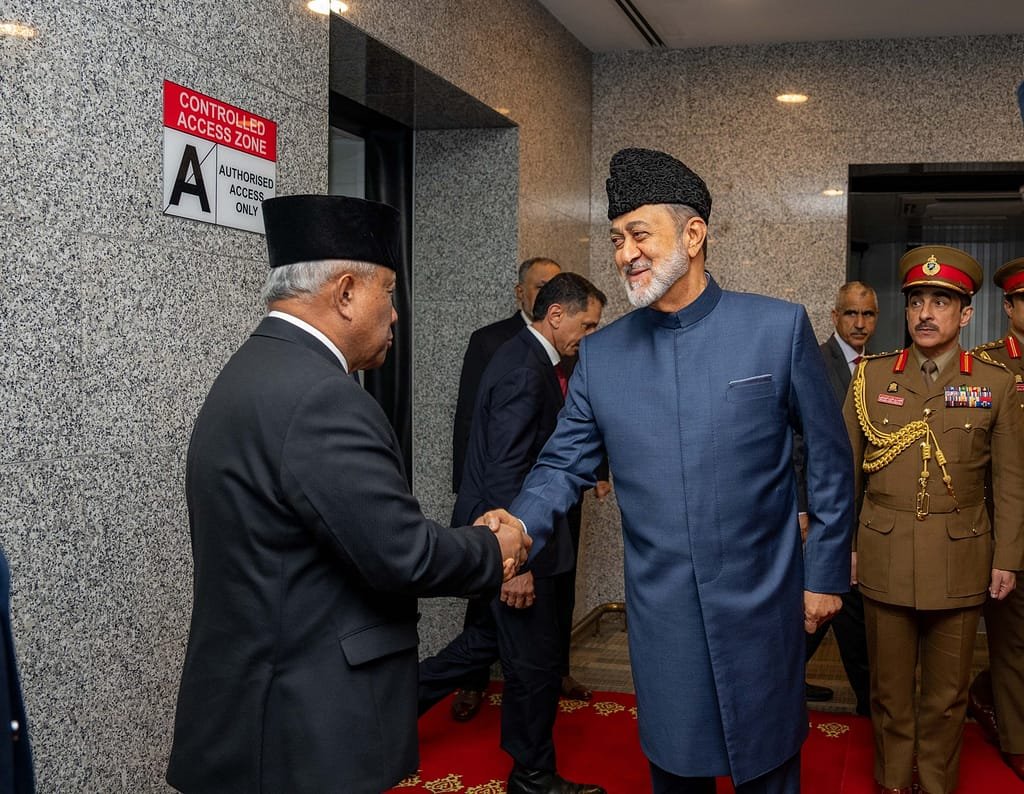
His Majesty Sultan Haitham bin Tarik arrived in Brunei Darussalam on November 2nd, 2026, in response to an invitation from Sultan Haji Hassanal Bolkiah. This marks the first state visit by His Majesty to Brunei, a key strategic partner for Oman, and underscores a renewed commitment to strengthening bilateral relations. The visit, intended to last three days, is occurring at a time of evolving regional dynamics, demanding focused diplomatic engagement. (Read the full statement.)

Background
Prior to this visit, Oman and Brunei had maintained a consistent diplomatic relationship, primarily focused on trade and security cooperation. The statement does not address the specific historical context of these relations. Previous engagements, including a state visit by His Majesty to China in November 2026, demonstrate Oman’s continued prioritization of strategic partnerships in the Asia-Pacific region. Furthermore, the ministry’s statement of November 1st, 2026, regarding His Majesty’s departure for China, confirms a similar pattern of engagement with major global powers. This signals an intention to diversify diplomatic efforts alongside established alliances.
Analysis
The arrival of the Omani delegation, led by His Majesty, presents a clear indication of Oman’s strategic priorities. The composition of the delegation – including the Foreign Minister, the Diwan of Royal Court, and representatives from the Investment Authority – suggests a multi-faceted approach to the visit. The inclusion of key ministerial figures such as Sayyid Badr Albusaidi, Foreign Minister, highlights the importance Oman places on deepening discussions regarding regional security and trade. The presence of the Ambassador of the Sultanate of Oman to Brunei Darussalam, Erma Alkathiry, and the Omani Ambassador to Brunei, Erma bint Said Al Kathiri, further emphasizes the operationalization of this renewed engagement. The visit is taking place amidst a context of shifting geopolitical alliances, presenting Oman with opportunities to leverage its neutral position and strengthen its relationships with key regional partners. If implemented as described, this visit represents a deliberate effort to solidify Oman’s role as a stable and influential actor in Southeast Asia. The statement does not address any specific economic or security agreements that may be discussed during the visit.
Implications
The state visit carries implications for regional stability, particularly within the Gulf Cooperation Council. Oman’s relationship with Brunei, a significant energy producer, offers potential avenues for collaboration on energy security and diversification. The visit could also contribute to a broader effort to de-escalate tensions in the region, given Brunei’s neutral stance and its role as a facilitator in regional dialogue. From a trade perspective, increased engagement with Brunei could unlock new opportunities for Omani exports, particularly in sectors such as logistics and tourism. The visit strengthens Oman’s position within the broader context of China’s Belt and Road Initiative, offering a strategic gateway for Omani investment and trade. The statement does not address any potential implications for Oman’s relationships with other regional actors or any potential impact on existing trade agreements.
Outlook
Should the visit yield a framework for enhanced cooperation on maritime security, the implications could extend beyond Brunei’s immediate borders. If a joint statement is released outlining areas of collaboration, it would represent a tangible step towards bolstering regional stability. Should the visit be primarily focused on economic engagement, the statement does not address the specific sectors that might be targeted. Oman’s continued engagement with Brunei suggests a long-term commitment to strengthening bilateral ties, but the success of this strategy will depend on the willingness of both sides to address key challenges, including regional security concerns and economic diversification.