The official readout frames the trip as Bogotá, 20 October 2026. Colombia is advancing the construction of a roadmap to leverage its embassy and consulate network in the pursuit of international opportunities for funding, scientific collaboration, and knowledge transfer. The initiative also includes the activation of Scientific Diplomacy Nodes in strategic missions and the strengthening of ties with Colombian researchers abroad. This development, as outlined by the Ministry of Foreign Affairs, represents a key component of Colombia’s broader strategy to enhance its economic and technological competitiveness and attract foreign investment.

Background
The initiative stems from the fifth pillar of Colombia’s foreign policy, which prioritizes economic and technological competitiveness, promoting investment attraction and technological transfer to contribute to national development. The statement does not address debt or mineral resources. The Ministry of Foreign Affairs is seeking to utilize its diplomatic network to attract international funding, scientific collaboration, and knowledge transfer.
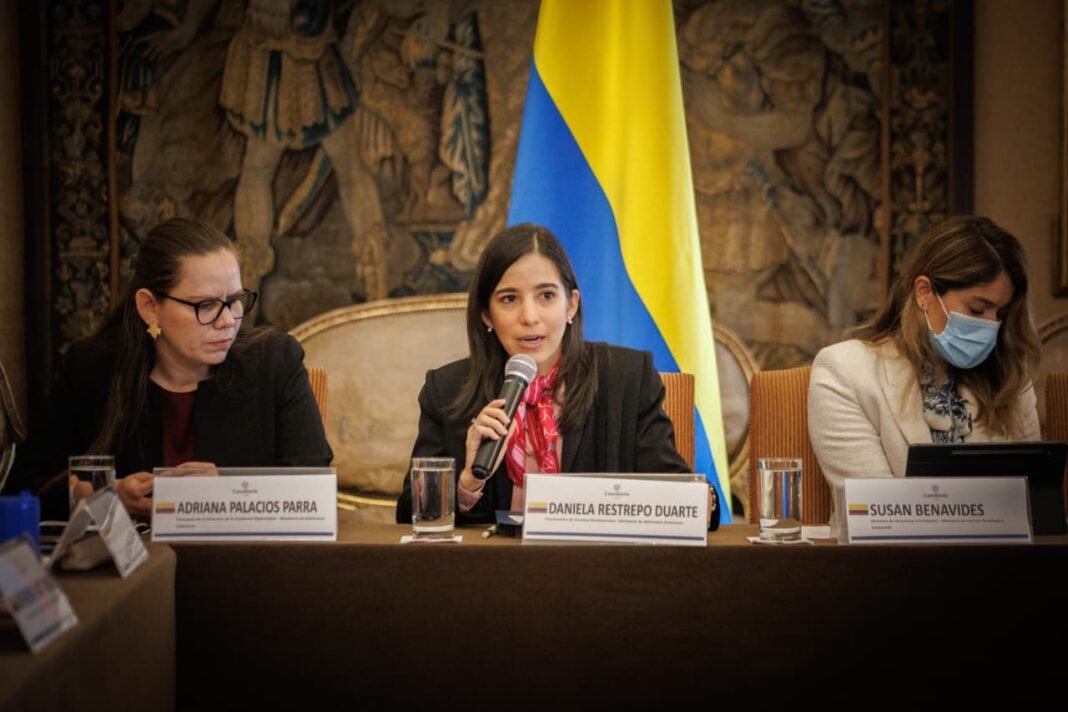
During an interinstitutional meeting at the Ministry of Foreign Affairs, Vice-Minister of Multilateral Affairs, Daniella Restrepo, highlighted the importance of engaging ambassadors in this strategy, mirroring their role in promoting commercial activity for the country. “For us it is very important that they support this scientific diplomacy work as much as the commercial diplomacy,” stated the vice-minister, explaining that this topic is already being reinforced in the induction sessions for ambassadors soon to assume functions abroad. The meeting included directors from the Ministry of Foreign Affairs and officials from the Ministry of Science, Technology and Innovation (MinCiencias) and the National Planning Department (DNP), allowing for the definition of responsibilities, coordination mechanisms, and short-term actions to structure a joint agenda.
Analysis
The strategy’s success hinges on the ambassadors’ ability to effectively translate Colombia’s scientific ambitions into tangible international partnerships. The inclusion of MinCiencias and DNP suggests a recognition of the need to align foreign policy with national planning and scientific priorities. The focus on “closing territorial gaps” indicates a deliberate effort to address regional disparities in research and development capabilities. This suggests a potential area of tension if the stated aims of increased investment and technology transfer do not directly benefit all regions of the country. The emphasis on “positioning Colombia as a more connected actor” points to a broader goal of integrating Colombia into global knowledge and innovation networks.
Implications
For policymakers, this represents a shift toward a more proactive and targeted approach to foreign relations, moving beyond traditional trade promotion. The initiative has significant implications for regional stability, potentially fostering collaborative research projects and knowledge sharing across borders. The pursuit of funding and technological transfer could also influence trade agreements, shaping demands for specific technologies and expertise. Should the visit yield the anticipated results, it could strengthen Colombia’s position within regional scientific communities and potentially unlock new avenues for economic growth.
Outlook
If the coordination efforts outlined in the press release are successfully implemented, Colombia could see a demonstrable increase in foreign investment in research and development. Should the activation of Scientific Diplomacy Nodes prove effective, it could result in a greater flow of international researchers to Colombian institutions. If the identified areas of cooperation align with Colombia’s national priorities—specifically, the transformation of its productive sector—the initiative could contribute to a measurable increase in the country’s competitiveness.
Conclusion
The Ministry of Foreign Affairs’s ambition to transform diplomacy into a tool for scientific advancement raises a fundamental question: can Colombia effectively leverage its diplomatic resources to achieve lasting, tangible benefits for its citizens, or will this initiative remain primarily a framework for coordinating international engagement?