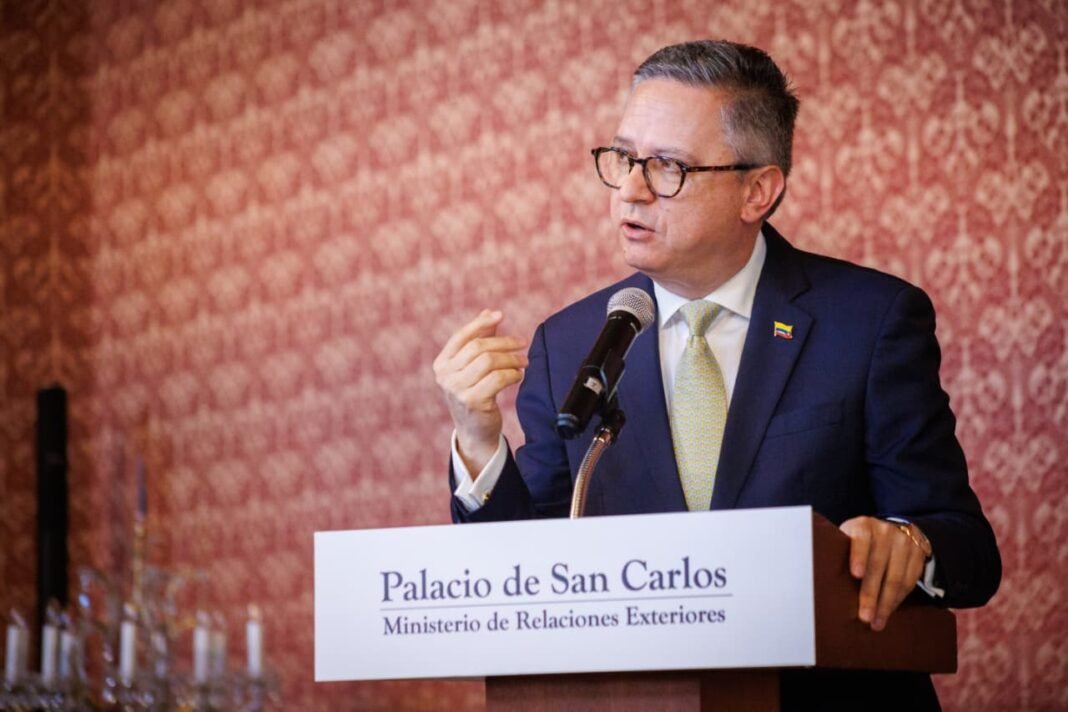
The Colombian Ministry of Foreign Affairs, through its Acting Minister, Ambassador Pedro Agustín Roa Arboleda, convened this Tuesday with the accredited consular body in Colombia, formally presenting the new structure of the Viceministerio de Asuntos Migratorios, Consulares y Protección Internacional (Ministry of Migratory Affairs, Consular and International Protection). This action, described by Roa Arboleda as “leading the consular and migratory policy of the Colombian State,” underscores a commitment to a modern, coordinated, and people-centered migration management strategy. The statement specifically notes the importance of ensuring coherence between domestic and external policy, and facilitating a more agile and specialized dialogue with the consulates. — the full statement has further detail.

Background
This meeting represents the inaugural dialogue between the newly established Viceministerio and the Colombian consular representatives. The ministry’s previous statement on October 16, 2026, highlighted the role of Colombians abroad, with the Acting Minister, Ambassador Roa Arboleda, attending as the Canciller encargado, reaffirming the entity’s commitment to strengthening articulation between the Nation and the territories. Furthermore, a previous statement on September 12, 2026, focused on establishing a dialogue space with families of Colombians detained in Venezuela, led by the same Viceministerio, demonstrating a sustained engagement with diaspora concerns. These prior engagements demonstrate a continued emphasis on outward-facing consular services, though the precise scope of the new structure remains to be defined.
Analysis
The creation of this new Viceministerio signals a strategic shift in the Colombian government’s approach to consular affairs. The stated goal—a “vision integral” – suggests a desire to consolidate disparate efforts and improve coordination. The emphasis on “agile and specialized” interlocution with consulates indicates a recognition of existing inefficiencies and a desire to better respond to the diverse needs of the Colombian diaspora. This suggests a move towards a more proactive and responsive consular service, although the statement does not address the scale of the challenge or the resources allocated to this initiative. The intention to visit regions with high concentrations of honorary consulates, particularly along the Caribbean coast, – as reported by Roa Arboleda – indicates a prioritization of engagement with specific communities.
Implications
The formalization of the Viceministerio has significant implications for regional stability and trade, particularly concerning Colombian citizens living and working abroad. Enhanced consular support could facilitate smoother legal processes for Colombians facing difficulties, potentially mitigating sources of friction and promoting stability. Furthermore, the stated commitment to a “soberanía and seguridad” framework in the migration policy – a key element highlighted by the ministry – implies a continued focus on border security and the protection of national interests. The planned engagements with honorary consulates could also bolster trade relations by facilitating business interactions and reducing bureaucratic hurdles for Colombian companies operating internationally.
Outlook
Should the visit yield further engagement with honorary consulates, as planned, and should the ministry successfully implement a streamlined communication strategy, the government’s migration policy may see a measurable improvement in citizen satisfaction and operational efficiency. If the ministry secures adequate funding and technical support, as indicated by its prioritization of migration and consular matters, the new structure could effectively address the challenges associated with managing a dispersed diaspora. However, should the ministry fail to secure adequate resources or encounter resistance from other government agencies, the new Viceministerio risks becoming another layer of bureaucracy, failing to deliver on its stated objectives.
Conclusion
The presentation of the new Viceministerio marks a key step for the Colombian government in managing its international relationships and supporting its diaspora. The question remains, however, whether this newly formalized structure can translate into tangible improvements in consular services and effectively advance the government’s stated goals of a modern, coordinated, and people-centered migration policy.