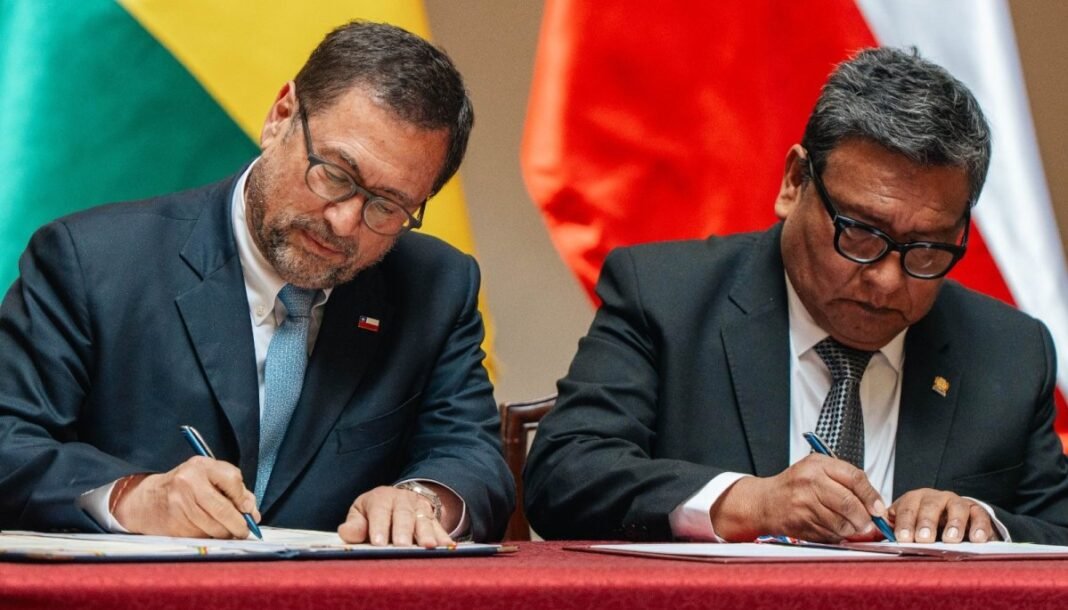
The most consequential outcome of the meeting between Bolivian President Rodrigo Paz Pereira and Chilean President José Antonio Kast Rist, as outlined in the joint declaration released on October 16, 2026, is the agreement to reactivate and strengthen bilateral mechanisms for dialogue, primarily focusing on trade and infrastructure development. This commitment, underpinned by a renewed emphasis on “a functional, stable and visionary future,” follows a period of strained relations largely stemming from disputes over access to the Pacific Ocean and trade routes. The statement does not address the specific details of the rail funding agreement, only referencing a “modernization of the Agreement of Complementary Economic Number 22 (ACE-22).” This suggests a gradual, potentially contentious, approach to addressing key infrastructure challenges, particularly the Corredor Bioceánico de Fibra Óptica Chile–Bolivia project, a long-term initiative aimed at connecting the two nations’ digital networks. — the full statement has further detail.
Background
The joint declaration reflects a concerted effort to rebuild the relationship between Chile and Bolivia, which has experienced periods of significant tension, largely driven by differing perspectives on resource access and regional trade dynamics. Prior meetings between the two presidents have largely focused on establishing a framework for dialogue, as documented by the visits of the Chilean Minister of Foreign Affairs and the Senate’s Committee on Foreign Relations. The statement references a series of specific engagements – including the 23rd and 24th of April 2026 meetings of the Chilean Minister of Foreign Affairs and the 3rd and 4th of September 2026 meetings of the Chilean Senate’s Committee on Foreign Relations – highlighting a sustained, albeit often unproductive, diplomatic effort to bridge the divide. The statement does not mention the ongoing disputes over access to Chilean ports, a persistent source of friction in bilateral relations.
Analysis
The renewed emphasis on “functional, stable and visionary” relationships indicates a strategic shift on the part of both governments, potentially driven by a recognition of mutual economic benefits and a desire to avoid further escalation of tensions. The reactivation of bilateral mechanisms, including the Mecanismo de Consultas Políticas and the Comisión Mixta Cultural y Educativa, suggests a commitment to addressing underlying disagreements through formal channels. However, the statement’s vagueness regarding specific funding allocations and project timelines raises concerns about the practical implementation of the agreement. This suggests a cautious approach, prioritizing dialogue over immediate action. The agreement’s focus on trade and infrastructure reflects a pragmatic assessment of shared interests, particularly in the context of regional integration efforts. The statement does not address the potential impact of this renewed dialogue on the ongoing dispute over maritime access, a critical component of Bolivia’s economic strategy.
Implications
For Chile, the renewed engagement with Bolivia presents both opportunities and risks. The potential for increased trade flows and investment could bolster the Chilean economy, particularly in the mining sector, as evidenced by the Memorándum de Entendimiento sobre Asuntos Mineros. However, the agreement also necessitates a delicate balancing act, navigating the ongoing dispute over maritime access while pursuing mutually beneficial economic cooperation. The agreement could contribute to regional stability, fostering dialogue and cooperation within the Southern Cone. Should the visit yield positive results in addressing trade disputes, it could also influence broader regional trade agreements. The statement does not address the potential impact on Chile’s relationships with other regional partners, such as Argentina and Brazil.
Outlook
The prospects for a fully functional relationship remain conditional on the willingness of both sides to compromise on key issues. If the reactivation of bilateral mechanisms proves effective in facilitating dialogue and building trust, it could pave the way for more substantial agreements. Should the Chilean government demonstrate a genuine commitment to addressing Bolivia’s concerns regarding maritime access, it could significantly accelerate the pace of cooperation. However, if the dispute remains unresolved, the agreement could simply serve as a temporary truce, punctuated by periodic diplomatic engagements. The statement does not predict the timeline for implementing the agreed-upon measures.
Conclusion
The joint declaration represents a tentative step forward in the historically complex relationship between Chile and Bolivia. The agreement’s success hinges on the ability of both nations to translate words into concrete actions, particularly regarding the resolution of longstanding trade and maritime disputes. The continued dialogue, however, raises the fundamental question of whether a truly equitable and mutually beneficial partnership can be forged, or whether the underlying tensions will continue to undermine efforts at integration.