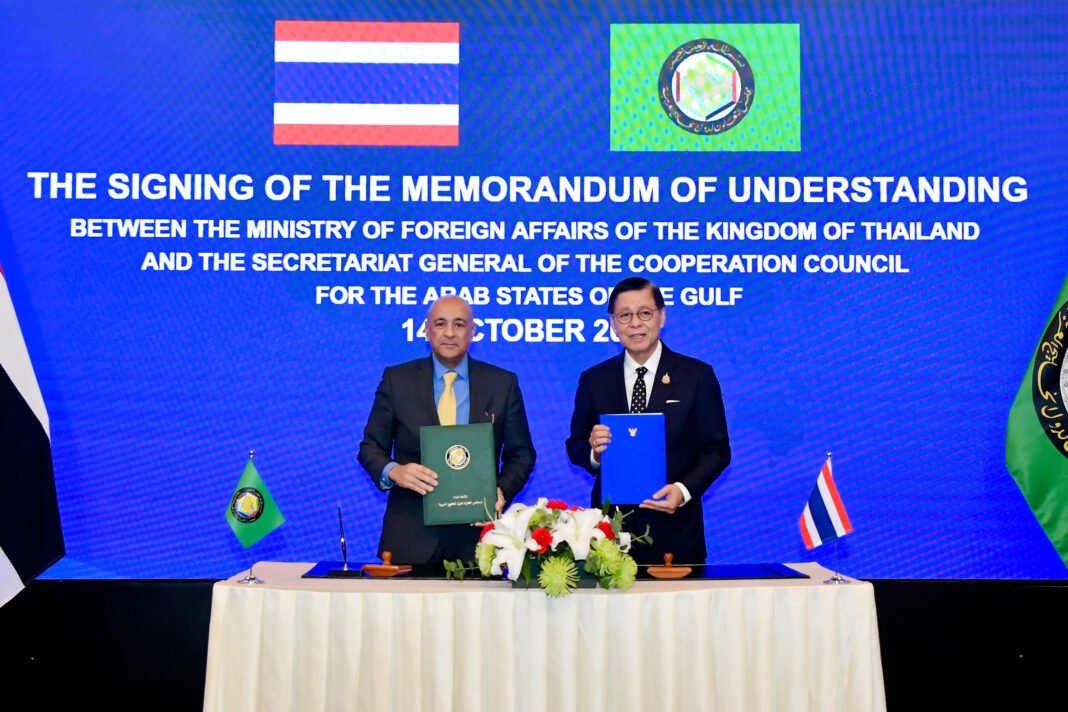
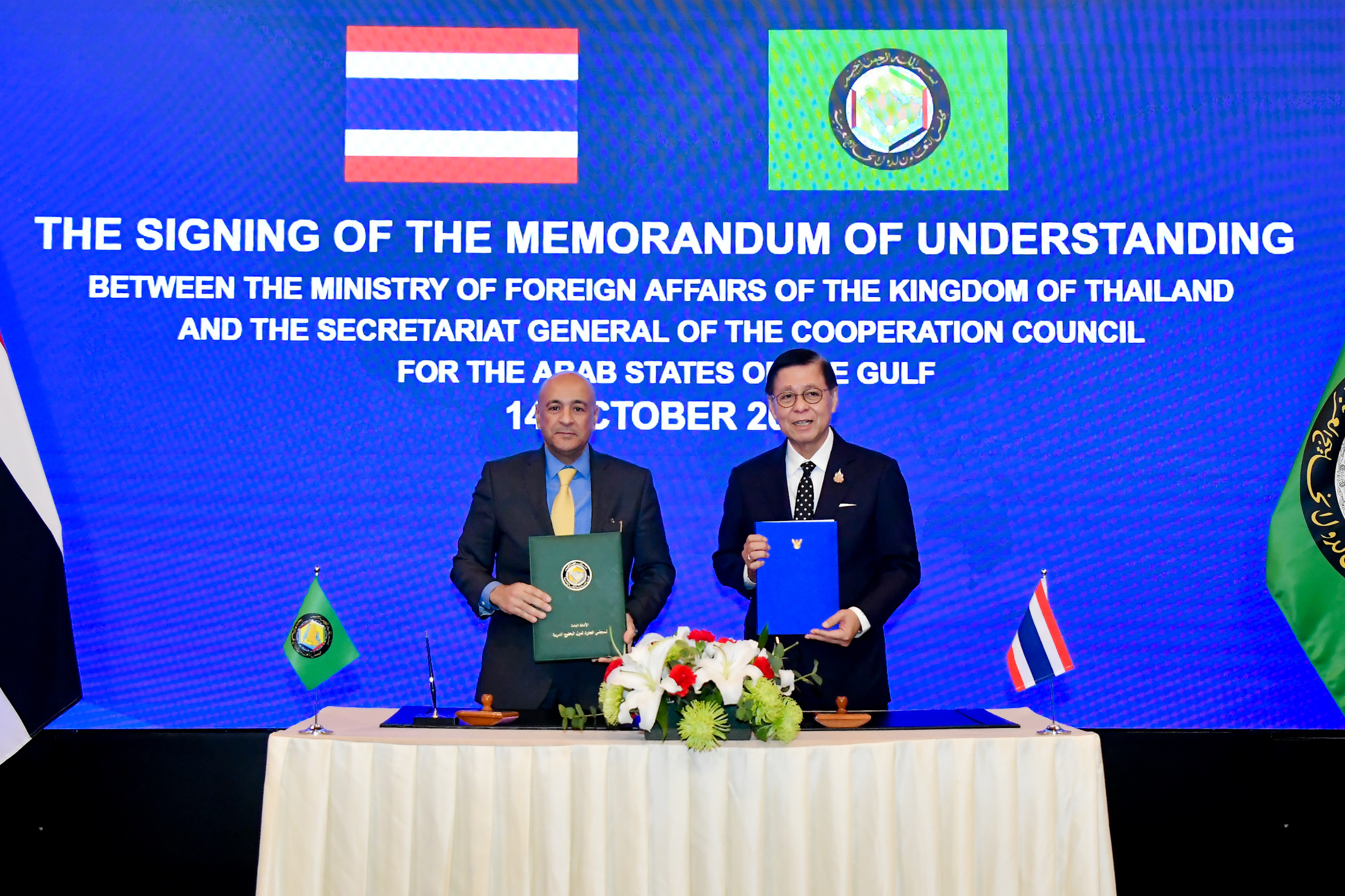
The official readout frames the trip as On 14 October 2026, Deputy Prime Minister and Minister of Foreign Affairs Sihasak Phuangketkeow and Secretary General of the Gulf Cooperation Council (GCC) Jasem Mohamed AlBudaiwi signed a Memorandum of Understanding (MoU) between the Ministry of Foreign Affairs of the Kingdom of Thailand and the Secretariat General of the Cooperation Council for the Arab States of the Gulf. The signing occurred as witnessed by the Ambassadors of the six GCC Member States – Bahrain, Kuwait, Oman, Qatar, Saudi Arabia, and the United Arab Emirates – alongside senior officials from the Ministry. This event marks a milestone in advancing relations between Thailand and the GCC, according to the statement. The MoU reflects the commitment of Thailand and the GCC to take their partnership forward and make use of this new framework to promote dynamic cooperation in the economic, political and other areas.
Background
Prior to this signing, the Ministry of Foreign Affairs of Thailand has articulated a “20-Year ‘5S’ Foreign Affairs Masterplan” – the specific details of which are not elaborated upon in the statement. Previous statements by the Ministry, dated 30 September 2026 and 4 September 2026, detail a visit by the Deputy Prime Minister and Minister of Foreign Affairs to Laos PDR and Malaysia respectively. These visits, alongside the 23rd Meeting of the Joint Commission (JC) on Bilateral Cooperation between Thailand and Lao PDR, demonstrate a sustained engagement with regional partners. The statement does not mention any previous formal agreements with the GCC Secretariat General.
Analysis
The signing of this MoU indicates a deliberate effort by Thailand to deepen its engagement with the GCC. The phrasing – “dynamic cooperation” – is deliberately broad, encompassing economic, political, and unspecified “other areas.” This suggests a desire to broaden the scope of collaboration beyond existing trade relationships, potentially including security or political alignment. The inclusion of the GCC Secretariat General as the primary point of contact is notable, potentially reflecting a shift in Thailand’s approach to regional diplomacy. The statement does not address the potential drivers behind this move, nor does it specify any concrete objectives of the MoU. The fact that the Ambassadors of the six GCC Member States were present suggests a level of importance attached to the agreement, but the statement does not elaborate on the rationale for this heightened attention.
Implications
For policymakers, the MoU represents an opportunity to diversify Thailand’s foreign relations beyond Southeast Asia. Should the visit yield progress in the areas outlined in the MoU, it could bolster Thailand’s standing within the Middle East. The agreement’s broad scope carries inherent risks, however, as the lack of specific deliverables could lead to frustration or misaligned expectations. Regionally, the deepening ties between Thailand and the GCC could contribute to greater stability in the region, though the statement does not address the geopolitical context of this relationship. Trade and security are key areas where cooperation could be developed, but the statement does not address potential investments or security concerns.
Outlook
If the visit yields a formal agreement to establish working groups focused on specific sectors, such as energy or infrastructure, it would represent a tangible step forward. Should the MoU result in a series of exploratory discussions, the statement does not specify a timeline for further action. The agreement’s success will hinge on the willingness of both parties to engage constructively and address any potential disagreements. The statement does not address the potential for disagreements or the mechanisms for resolving them.
Conclusion
The signing of the MoU marks a new phase in Thailand’s relationship with the GCC, but the statement provides little indication of the potential impact. The agreement’s success will ultimately depend on the practical implementation of its provisions, a factor the statement does not address.
Sources & Further Reading
- Official press release
- Foreign ministry source
- Deputy Prime Minister and Minister of Foreign Affairs to pay official visit to Lao PDR (30 Sep 202)
- Deputy Prime Minister and Minister of Foreign Affairs to pay a working visit to Malaysia (4 Sep 2026)
- Outcomes of the Deputy Prime Minister and Minister of Foreign Affairs’ Official Visit to the Lao PDR and the 23rd Meeting of the Joint Commission (JC) on Bilateral Cooperation between Thailand and Lao PDR (6 Oct 2026)