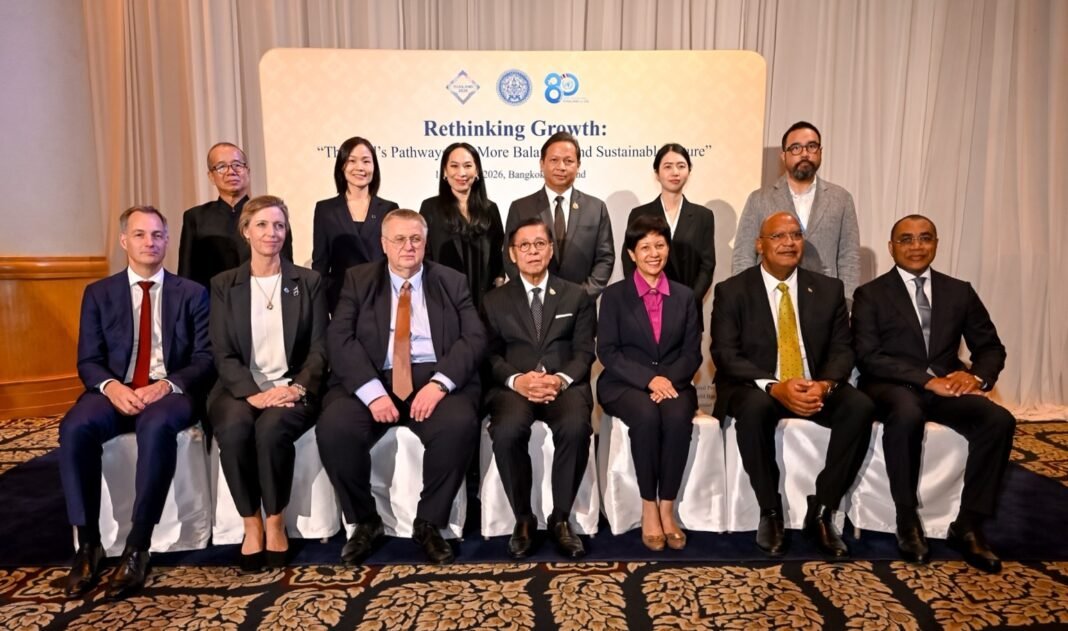
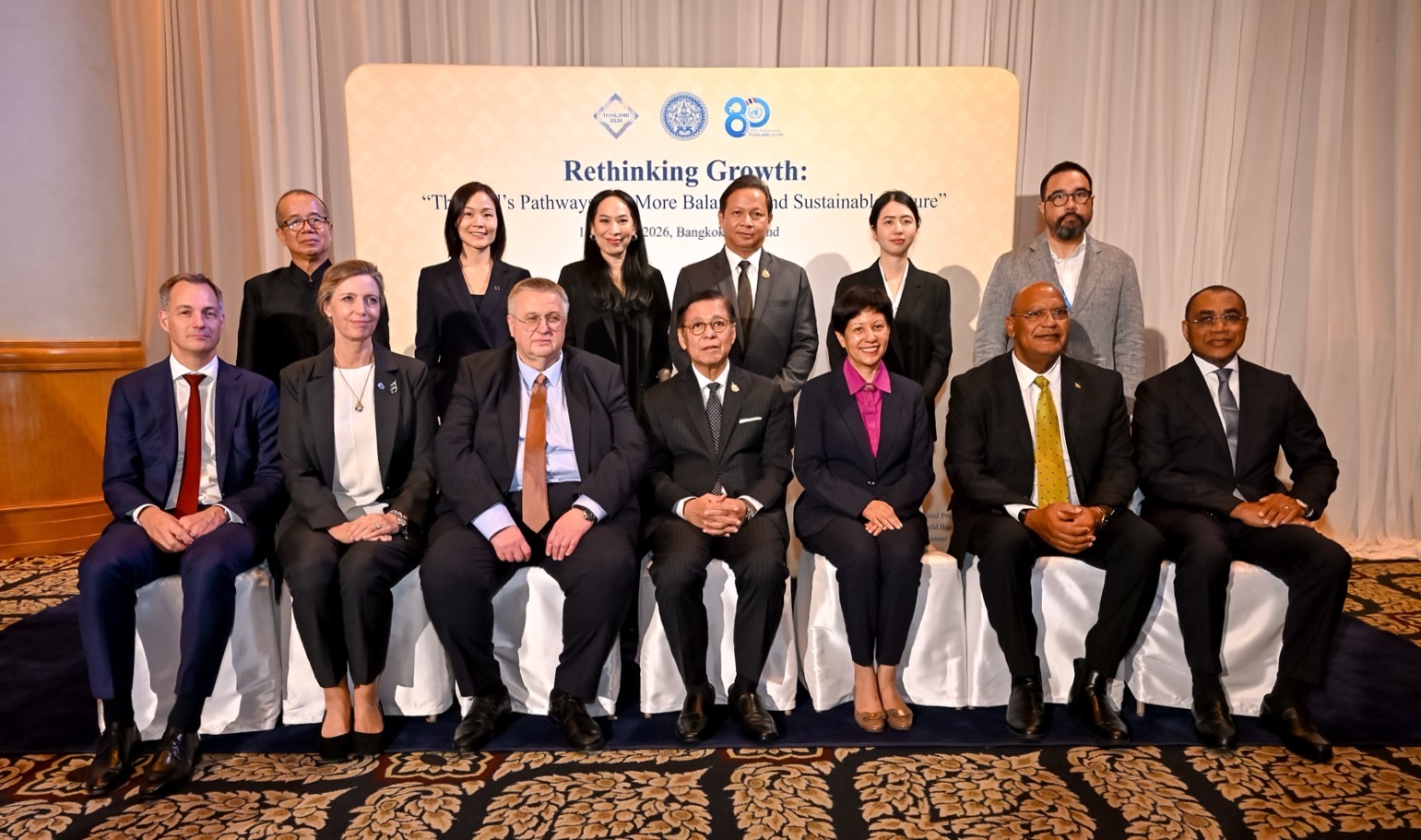
A ministry communiqué confirms that The Deputy Prime Minister and Minister of Foreign Affairs delivered welcoming remarks at the Dinner Talk on “Rethinking Growth: Thailand’s Pathways to a More Balanced and Sustainable Future” on 15 October 2026. This event, organized by the Ministry of Foreign Affairs at the Sheraton Grande Sukhumvit Hotel, brought together a diverse group including the Deputy Prime Minister of the Russian Federation, ministerial-level representatives from Singapore, Curaçao and Côte d’Ivoire, the United Nations Development Programme Administrator and the UN Resident Coordinator in Thailand. The event was part of the affiliated program during the 2026 Annual Meetings of the International Monetary Fund (IMF) and the World Bank Group. This marks a significant, if somewhat opaque, diplomatic engagement for Thailand.
Background: The Dinner Talk was part of a broader program coinciding with the 2026 Annual Meetings of the IMF and the World Bank Group. The Ministry of Foreign Affairs has been pursuing the 20-Year “5S” Foreign Affairs Masterplan, a strategic framework established in 2016. Prior to this event, in September 2026, the Deputy Prime Minister and Minister of Foreign Affairs attended a meeting between the Prime Minister and foreign Ambassadors and Consuls-General to Thailand, highlighting a continued focus on bilateral engagement. Furthermore, in September 2026, the ministry announced a visit to Malaysia, demonstrating a sustained effort to diversify Thailand’s diplomatic portfolio.
Analysis: The Deputy Prime Minister’s framing of the discussion – centered on achieving the Sustainable Development Goals (SDGs) by 2030 – reflects a persistent international pressure. The statement does not address the specific challenges Thailand faces in meeting these goals, particularly given the documented difficulties in achieving previous targets. The emphasis on the Sufficiency Economy Philosophy (SEP) as a guiding approach suggests a deliberate attempt to tailor international development agendas to Thailand’s unique national context and priorities. This approach, however, does not directly address the significant funding gaps often associated with large-scale sustainable development initiatives. The inclusion of the UN Resident Coordinator underscores a recognition of the need for external expertise and potentially, external financing. The event features a presentation by a representative of the Chaipattana Foundation, linking the SEP, the Bio-Circular-Green (BCG) Economy Model and the SDGs. The panel discussion, featuring representatives from One Bangkok, Wasteland BKK and Wat Chak Daeng, offers a practical, localized approach to sustainable development.
Implications: The event’s focus on the SDGs has implications for Thailand’s foreign policy, signaling a continued commitment to international cooperation on global challenges. Should the visit yield increased dialogue on financing mechanisms for sustainable development, it could potentially open pathways for international investment. The emphasis on the SEP, however, could also limit Thailand’s ability to secure funding from donors prioritizing specific SDG indicators. The inclusion of the UN Resident Coordinator raises questions about the potential for increased collaboration with the UN system on monitoring and reporting on SDG progress. The event highlights the ongoing effort to balance economic growth with environmental sustainability – a key priority for Thailand.
Outlook: If the visit yields commitments from international partners regarding technical assistance and knowledge sharing related to the BCG Economy Model, Thailand could gain a valuable advantage in attracting investment in green technologies. Should the Deputy Prime Minister’s focus on the SEP be successful in securing partnerships with countries already implementing similar philosophies, Thailand could accelerate its progress towards achieving the SDGs. The statement does not address whether Thailand will seek additional financing from multilateral development banks to support the implementation of its sustainable development strategies.
Conclusion: The Dinner Talk represents a carefully calibrated diplomatic effort, prioritizing Thailand’s national development priorities within the context of global sustainability goals. The event ultimately raises a fundamental question: can Thailand’s unique approach to sustainable development – rooted in the SEP – attract the necessary investment and support to achieve the ambitious targets set for 2030?
Sources & Further Reading
- Official press release
- Foreign ministry source
- Deputy Prime Minister and Minister of Foreign Affairs to pay official visit to Lao PDR (30 Sep 202)
- Deputy Prime Minister and Minister of Foreign Affairs to pay a working visit to Malaysia (4 Sep 2026)
- Deputy Prime Minister and Minister of Foreign Affairs attends a meeting between the Prime Minister and foreign Ambassadors and Consuls-General to Thailand (7 Sep 2026)